On this page
- What are the most common conversational marketing mistakes?
- Why does over-automation backfire?
- Should you ask for a visitor's contact details up front?
- Why does one generic opener fail on every page?
- How does poor routing lose deals?
- How do you fix a broken chat program?
- Conversational marketing mistakes: FAQs
- Key takeaways
- Sources
A buyer lands on your pricing page at 9 p.m., opens the chat widget, and types "does this work with Salesforce?"
A bot replies with a link to a help article that never mentions Salesforce, asks for their email before it will say more, then repeats the same line when they rephrase. The buyer closes the tab. Your team never learns they were there.
That is a conversational marketing program running exactly as built, and it is losing deals. The channel is supposed to catch interested people the moment their interest peaks and start a real conversation.
Set up carelessly, it does the opposite. It frustrates the exact visitors you spent budget to attract and trains them to ignore the widget.
This post covers the most common conversational marketing mistakes: over-automating the front line, asking for contact details too early, running one generic opener everywhere, routing hot leads too slowly, and treating chat volume as the goal. It closes with a practical way to fix a program that has already gone quiet.
What are the most common conversational marketing mistakes?
The most common conversational marketing mistakes are over-automation, demanding personal information before you have helped, reusing one generic prompt on every page, slow or broken routing, and measuring chat volume instead of pipeline.
Each one is easy to ship and expensive to leave in place, and they tend to travel together.
They share a single root cause. The program is built around the tool instead of the buyer. A widget goes live because it was quick to install, not because anyone mapped what a visitor on each page actually needs.
So the bot talks when it should listen, asks when it should answer, and stalls when it should escalate.
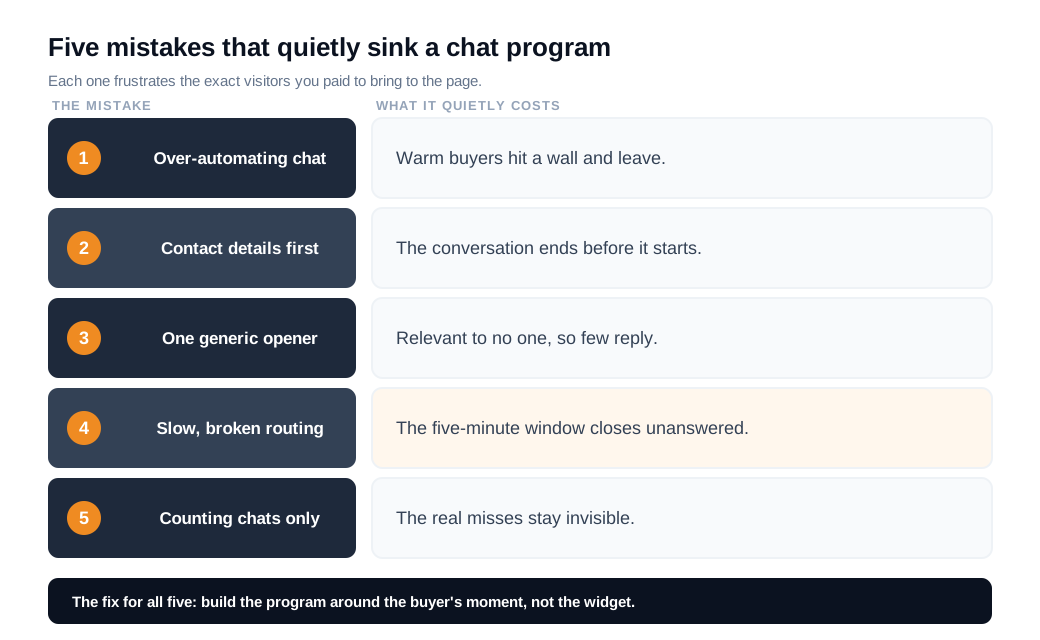
The rest of this post takes them one at a time, with the fix for each.
Why does over-automation backfire?
Over-automation backfires because a bot that cannot answer the real question, and will not pass the visitor to a person, turns a warm lead into a frustrated one.
Automation is strong on speed and coverage. It is weak on judgment, and buyers notice the difference within a message or two.
The preference data is consistent. In a survey covered by Forbes, 86 percent of consumers said they would rather deal with a human agent than a chatbot, as Gil Press reported.
More recent academic reporting found that 60 percent of customers say chatbots often fail to understand their issue and 84 percent believe human agents are more accurate, according to The Conversation.
None of this means bots have no place. It means a bot that blocks the path to a human is working against the visitor.
The specific failure is the trap. A bot handles a simple question well, then hits something it cannot resolve, and instead of escalating it recycles a canned line or asks the visitor to try again. A person who has to fight the bot to reach a human remembers the fight, not the answer, and closes the window.
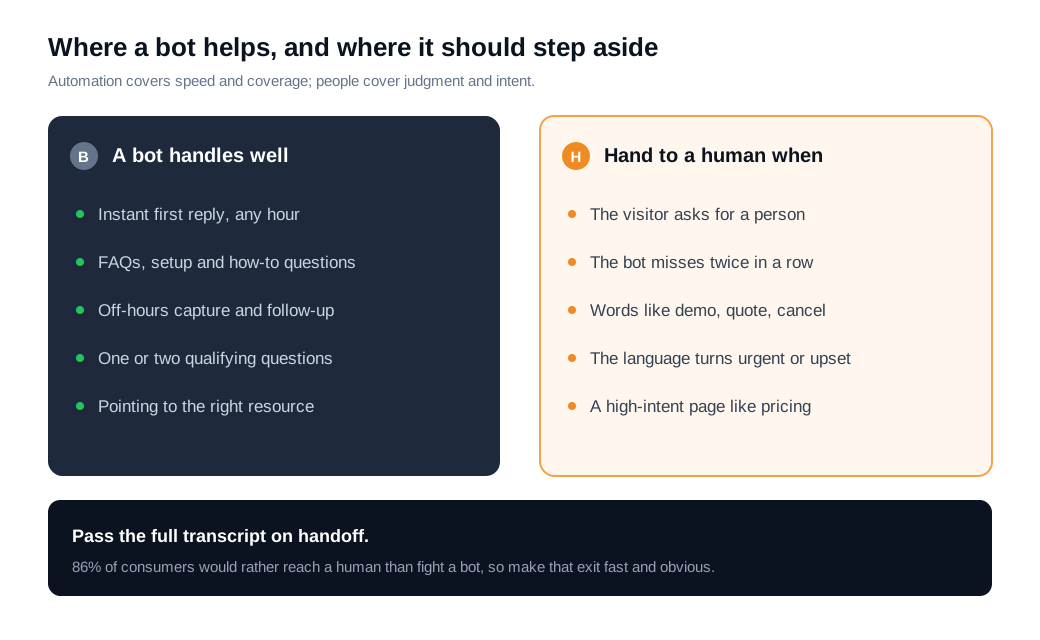
The fix is to decide up front when the bot steps aside. Three triggers cover most cases:
- The visitor asks for a person.
- The bot misses twice in a row.
- The language turns urgent or negative (words like "demo," "quote," "cancel," or "this is broken").
Wire those to an instant handoff that carries the full transcript so the buyer never repeats themselves.
Gartner reported that 85 percent of customer service leaders planned to explore or pilot a customer-facing conversational AI tool in 2025, in its late-2024 survey, so bots are not going away.
The teams that win with them make the exit to a human obvious and fast. An AI chat assistant earns its keep on the routine questions and off-hours coverage; the mistake is letting it be the only option.
Should you ask for a visitor's contact details up front?
No. Asking for an email or phone number before the bot has helped is one of the quickest ways to end a conversation, because you are charging a toll before you have delivered anything.
The visitor arrived with a question. A prompt that gates the answer behind a form reads as a bait and switch.
Buyers already dislike forms in this setting. Drift's State of Conversational Marketing research found that only 14 percent of people prefer filling out a form over using chat, per its report summary, which is the whole reason the channel exists. Rebuild the form inside the chat window and you throw that advantage away.
The pattern that works is value first, qualify in the middle, capture last. Answer the opening question, ask one or two qualifying questions inside the flow of the conversation (team size, use case, timeline), and request contact details only once the person has a reason to hand them over.
Salesforce found that 61 percent of customers feel most companies treat them as a number, in its State of the Connected Customer report; a bot that demands an email in its first breath confirms exactly that impression.
Why does one generic opener fail on every page?
One generic opener fails because a first-time blog reader and a pricing-page visitor sit at completely different moments, and a single "Hi, how can I help?" serves neither well.
The prompt that feels helpful on a comparison page reads as pushy on an introductory article, and the prompt that is polite everywhere is useful nowhere.
Intent lives in the page. Someone reading a top-of-funnel post wants a quick answer and no pressure. Someone who has opened your pricing table twice is close to a decision and will welcome a direct offer to talk.
Salesforce's research puts 65 percent of customers expecting companies to adapt to their changing needs, and the page a visitor is on is the clearest signal of what that need is right now.
Match the opener to the page:
- On educational content, run a light prompt that answers a question and points to a resource.
- On features and docs, offer to walk through a specific use case.
- On pricing, demo, and comparison pages, give a direct route to a person or a booked meeting.
A live chat widget that changes its opener by page turns one tool into three relevant experiences instead of one bland one.
How does poor routing lose deals?
Poor routing loses deals because speed is the entire advantage of conversational marketing, and a lead that waits is a lead that cools.
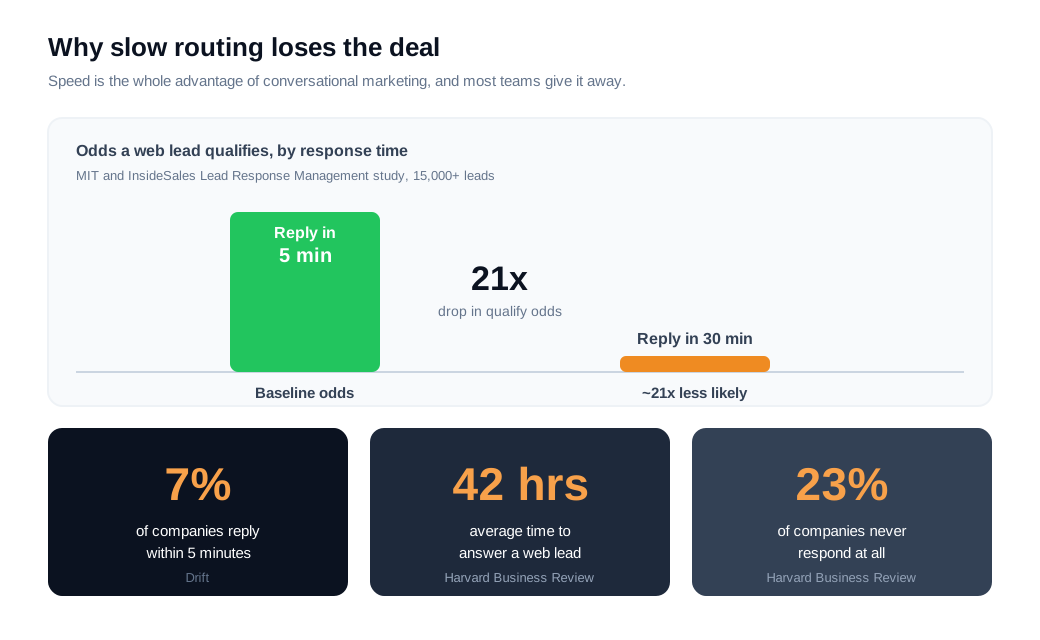
The MIT and InsideSales Lead Response Management study, which analyzed more than 15,000 leads, found that contacting a lead within five minutes rather than thirty made it about 21 times more likely to qualify, as documented in the study PDF. The window is measured in minutes, and slow routing spends it.
Most companies miss that window badly. A Harvard Business Review audit of 2,241 U.S. companies found the average firm took about 42 hours to respond to a web lead, and 23 percent never responded at all, in "The Short Life of Online Sales Leads".
Drift's research frames it another way: only 7 percent of companies answer within five minutes, while 55 percent take five or more business days. A chat widget does not fix this on its own. If the alert lands in an inbox nobody watches, the visitor is gone before anyone opens it.
Here is a worked example. Say your site draws 10,000 visitors a month, and 5 percent of them (500 people) reach a high-intent page and open a chat.
If routing is instant and a rep answers inside two minutes, converting 20 percent of those conversations into meetings gives about 100 meetings.
Now let those chats sit in a shared queue with a 30-minute average response. Apply the rough 21x drop in qualification odds and the practical result is stark: most of the 500 conversations never reach a qualified handoff, and the same traffic yields a handful of meetings instead of a hundred. Same widget, same visitors, and the routing decides the outcome.
The unstaffed widget is the worst version of this mistake. A chat bubble that promises a fast reply and then goes silent converts worse than no widget at all, because it breaks a promise you made on the page.
Cover peak hours with real people, let an assistant hold the rest, and assign qualified conversations to the right rep automatically so the alert is loud and immediate. The guide to routing and notifications covers how to wire that assignment so a hot lead reaches a person during the minutes that matter.
How do you fix a broken chat program?
You fix a broken chat program by auditing it against the mistakes above, then rebuilding it around the buyer's moment instead of the tool.
Start by using it as a customer would. Open your own site on a phone, ask a genuine buying question on three key pages, and time how long a human takes to appear. Most broken programs give themselves away in that one test.
Then work the list in order.
- Map pages to intent. Group your pages into education, consideration, and decision, and write a different opener and goal for each. This ends the generic-opener problem.
- Set escalation triggers. Define the exact signals that hand a visitor to a person, and confirm the transcript carries over. This closes the over-automation trap.
- Move the form to the end. Lead with an answer, qualify with one or two questions, and capture contact details only when the visitor has a reason to share them.
- Fix routing and staffing. Assign leads automatically by territory or product, alert the right rep instantly, and staff peak hours with humans.
- Change what you measure. Track qualified conversations, meetings booked, and pipeline influenced, not raw chat count.
The measurement change matters most, because it keeps the program honest. A dashboard that celebrates total chats hides the fact that most of them went nowhere.
When you measure meetings and pipeline instead, the mistakes become visible: the unstaffed hours show up as missed conversations, the generic opener shows up as low engagement, and the slow routing shows up as qualified leads that never booked.
Wiring chat into your CRM through your integrations is what makes those numbers traceable back to real deals, so you can see which fix moved revenue and which one did not.
Conversational marketing mistakes: FAQs
Is conversational marketing just live chat?
No. Live chat is one channel inside conversational marketing, which also spans AI assistants, proactive prompts, live video, and messaging apps.
Treating the widget as the whole strategy is itself a common mistake, because the openers, triggers, routing, and measurement decide the outcome more than the medium does.
Can you run conversational marketing without a big team?
Yes, if you automate the routine layer and reserve people for high-intent moments.
A small team can staff peak hours, let an assistant cover off-hours and qualification, and route only qualified conversations to a human, which keeps the fast-response promise without heavy headcount.
How do you know if a chatbot is hurting more than helping?
Compare the engagement and outcomes on pages with the bot against pages without it, and read the transcripts.
If conversations stall at the same step, if requests to reach a human keep rising, or if high-intent pages convert worse with the bot than without it, the automation is getting in the way.
Key takeaways
- Most conversational marketing mistakes come from building around the tool, not the buyer. Over-automation, early forms, generic openers, slow routing, and vanity metrics tend to appear together and reinforce each other.
- Over-automation backfires when the bot blocks the human. With 86 percent of consumers preferring a person and 60 percent saying bots miss their issue, the exit to a human has to be obvious and fast.
- Lead with value, not a form. Only 14 percent of people prefer forms over chat, so answer first, qualify in the middle, and capture contact details last.
- One opener cannot fit every page. Match the prompt to intent: light on education pages, direct on pricing and demo pages where a buyer is deciding.
- Slow routing wastes the whole advantage. A five-minute reply makes a lead about 21 times more likely to qualify, yet the average company takes 42 hours and 23 percent never respond.
- Measure meetings and pipeline, not chat volume. Changing the metric exposes the unstaffed hours, generic openers, and slow routing that quietly lose deals.

Written by
Daniel SemeckyCo-founder & CEO
Daniel is the co-founder and CEO of Glimpze. He spends his days talking to revenue teams about how to catch high-intent visitors before they bounce, and writes about inbound sales, lead conversion, and building a motion where marketing and sales actually share a number.


