
On this page
A SaaS company runs two campaigns in the same quarter. One is a research report and a podcast tour that reach 40,000 people in its target market, almost none of whom fill out a form. The other is a gated webinar that collects 300 email addresses a rep can call on Monday. Finance looks at both and asks a fair question: which one actually worked?
That question sits under every argument about demand generation and lead generation. One motion builds a market that will buy from you eventually. The other captures the contact details of people willing to talk now. Treat them as rivals and you either fill a CRM with names nobody remembers meeting, or you grow an audience that never turns into pipeline.
This guide defines both terms, shows exactly how they differ, explains how they feed each other, and walks through how to measure each without handing the credit to the wrong one.
What is demand generation?
Demand generation is the set of marketing activities that build awareness of and interest in a problem and your solution among people who are not yet ready to buy. Gartner describes it as a data-driven strategy focused on building brand awareness and interest through long-term engagement, with high-quality leads as the eventual result, per its demand generation glossary entry.
The work happens at the top of the funnel and mostly stays ungated. Think educational articles, original research, thought-leadership posts, podcasts, YouTube videos, open webinars, PR, and an active presence in the communities where your buyers already spend time. The point is to be useful and memorable, not to collect an email address on the first touch.
That patience is a response to how B2B markets actually behave. The Ehrenberg-Bass Institute's work, popularized as the 95:5 rule, holds that only about 5 percent of business buyers are in-market at any given moment, while the other 95 percent are not buying right now and cannot be rushed into it. Demand generation plants your brand in the minds of that 95 percent, so that when a buyer's problem turns urgent, your company is one they already recognize and trust.
Because it courts people who will not raise their hand yet, demand generation looks inefficient on a weekly dashboard. Its payoff arrives later, as cheaper and warmer pipeline once the audience has matured.
What is lead generation?
Lead generation is the set of activities that convert interested people into identified contacts a sales team can follow up with. Where demand generation creates attention, lead generation captures it, usually by trading something of value for a name, an email, and a little context.
The classic tactics are gated: downloadable reports, template libraries, gated webinars, free trials, demo requests, and newsletter sign-ups, each fronted by a form. HubSpot's breakdown puts it plainly, describing lead generation as the process of collecting contact information and turning brand-aware audiences into sales-ready leads, per its demand gen versus lead gen guide.
Lead generation aims at the narrow band of people already showing intent. Its metrics are immediate and countable: forms filled, leads captured, cost per lead, and the rate at which those leads turn into meetings. That measurability is why it tends to win budget fights, and also why teams over-invest in it, chasing the same small pool of in-market buyers everyone else is chasing.
A lead is only as good as the interest behind it. Capture a name with no real demand behind it and you get a contact who ignores the follow-up, which is the failure mode of lead generation run without demand generation feeding it.
How does demand generation differ from lead generation?
The core difference is the goal: demand generation is built to create interest, while lead generation is built to capture it. Nearly every other contrast, the funnel stage, the audience, the content, the metric, follows from that split in purpose.
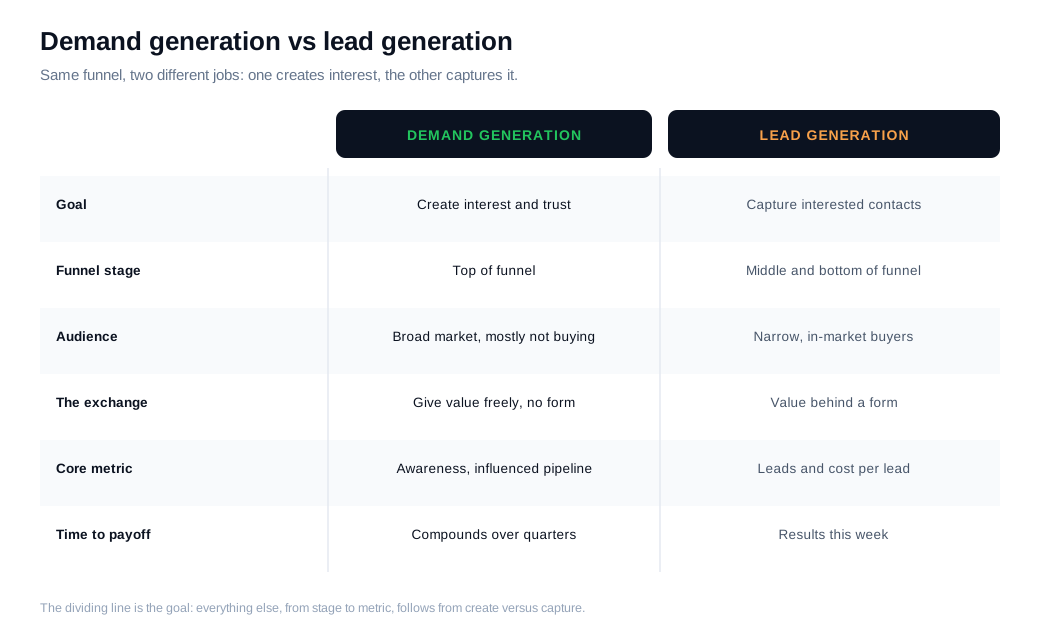
Demand generation works the top of the funnel and speaks to a broad audience, most of whom are months or years from a purchase. It gives content away freely to build reach and trust, and it measures success in awareness, engagement, and eventually influenced pipeline. Lead generation works the middle and bottom of the funnel, speaks to a smaller in-market audience, and puts a form in front of the good stuff so it can hand real names to sales. Its scoreboard is leads and cost per lead.
The exchange is the cleanest tell. Demand generation asks for nothing but attention. Lead generation asks for contact details in return for a resource. Salesforce frames the same divide as building interest versus capturing it, noting that the two serve different stages of the same journey, per its comparison of the two.
One more distinction matters: the time horizon. Lead generation can show results this week. Demand generation compounds over quarters, which makes it easy to underfund and easy to blame whenever a number looks soft.
How do demand generation and lead generation work together?
They work together as two stages of one engine: demand generation creates the interest, and lead generation captures it at the moment a buyer is ready to act. Run without the other, each one breaks. Demand generation with no capture builds an audience you never convert; lead generation with no demand behind it is cold outreach to strangers.
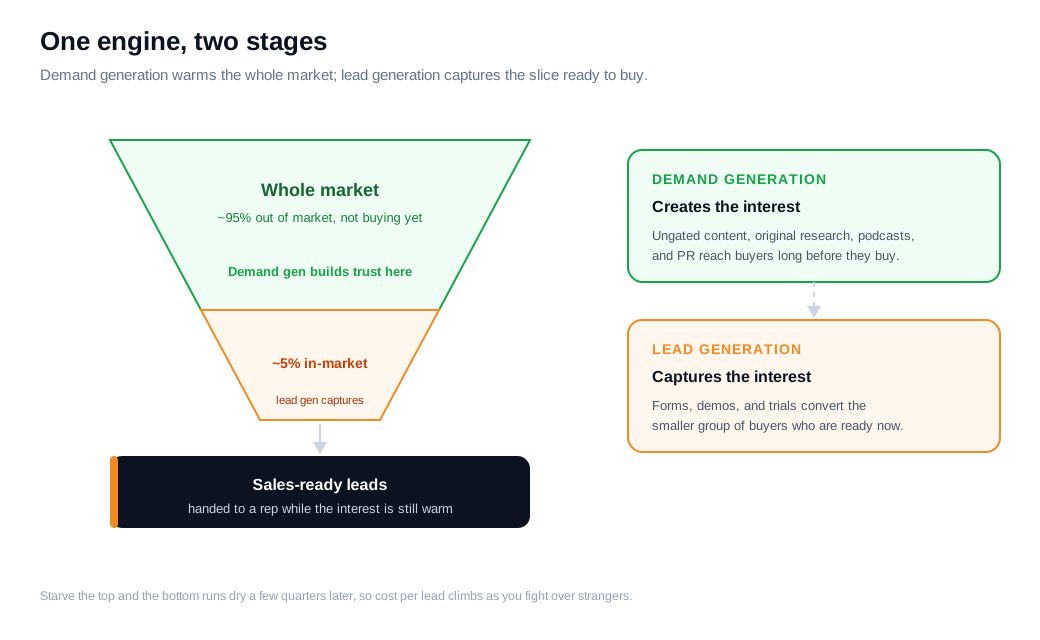
The sequence is what makes the pairing work. Demand generation seeds awareness across the whole market, most of which stays anonymous. Cognism describes this as demand creation warming up your ideal customer profile so that demand capture has something to convert, per its side-by-side comparison. When a buyer finally enters the market, they already know your name, so your capture tactics convert far better than they would cold.
Here is the math on a quarter. Say your demand generation reaches 20,000 accounts in your target market and, over time, 12 percent come to recognize and trust the brand. That is 2,400 warm accounts. When the roughly 5 percent of the market that is in-market this quarter goes looking, about 120 of your buyers are drawn from that warm group. If warm buyers convert on your demo page at 8 percent while cold buyers convert at 2 percent, those 120 warm accounts hand your team far more qualified conversations than the same spend poured entirely into capturing cold traffic. Cut the demand generation, and next quarter that warm pool is empty, so your cost per lead climbs as you fight over strangers.
The handoff is where deals get won or lost. B2B buyers now spend most of their journey researching quietly; 6sense's research finds that buying groups largely build their vendor shortlist early and stay anonymous through months of selection, with the winning vendor usually already on that early shortlist, per its 2025 Buyer Experience Report. By the time a warm lead does raise a hand, speed decides the outcome. The classic MIT and InsideSales lead response study found that reaching a lead within five minutes made a rep 21 times more likely to qualify it than waiting 30. That is why teams running a serious inbound sales motion route hot leads to a person instantly and give high-intent visitors a way to start a live chat while they are still on the page, so the interest demand generation worked months to build does not cool off in a form queue.
How do you measure demand generation and lead generation?
You measure them on different clocks: lead generation on immediate capture metrics, and demand generation on leading indicators and influenced pipeline that show up later. Holding demand generation to a cost-per-lead target is the quickest way to kill the work that feeds your leads in the first place.
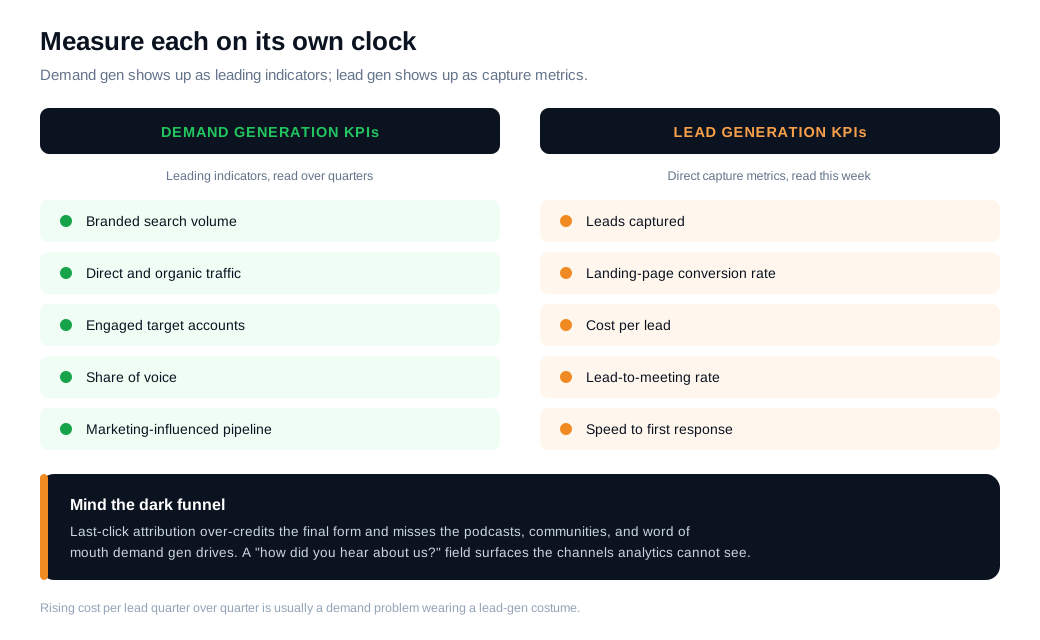
Lead generation metrics are direct and money-adjacent: number of leads, conversion rate on forms and landing pages, cost per lead, lead-to-meeting rate, and how fast a rep follows up. They answer this week's question, which is whether you are capturing the demand that already exists.
Demand generation metrics are leading and harder to pin down: branded search volume, direct traffic, share of voice, engaged accounts, content consumption, and, over time, the share of pipeline that marketing sourced or influenced. Mature B2B programs commonly source a meaningful chunk of total pipeline, and much of demand generation's real effect lands as influenced pipeline, deals where marketing warmed the account long before a form was ever filled.
The measurement trap is the dark funnel, the podcasts, peer conversations, and private communities where buyers research without leaving a trackable click. Last-click attribution credits the final form and ignores the months of demand generation that made a buyer fill it out. One cheap correction is self-reported attribution, a "how did you hear about us?" field on the form, which surfaces channels analytics cannot see. Pair that with an AI chat assistant that asks a qualifying question in the moment, and you capture both the source and the context of a lead instead of just its email address.
The honest way to read the two together is to judge lead generation on efficiency and demand generation on whether the pool it fills is growing. When leads get more expensive quarter over quarter, that is usually a demand problem wearing a lead-gen costume.
Should you focus on demand generation or lead generation?
Focus on both, but if you are choosing where the next dollar goes, weight it toward whichever stage is currently starving your pipeline. A young company with no audience needs demand first; a company sitting on a warm, untapped market needs better capture.
The strategic case leans toward protecting demand generation, because the 95:5 rule means most of your future buyers are not in-market yet and cannot be captured today no matter how sharp your forms are. Pour everything into capture and you exhaust the small in-market pool, watch cost per lead rise, and starve next year's pipeline. That pattern is behind most complaints that leads have gotten too expensive.
Here is a simple budget illustration. Say you have 100,000 dollars a quarter. A capture-heavy plan might put 80,000 into paid search, retargeting, and gated campaigns and 20,000 into content and brand. It looks strong this quarter, then stalls as fewer new names enter the funnel. A more durable split might run closer to 55,000 on demand generation that builds the market and 45,000 on capture that converts it, trading a slightly softer current quarter for pipeline that compounds. The exact ratio flexes with your stage, your margins, and how much warm demand you have already built.
For most teams, lead generation takes care of itself, since it is easy to measure and hard to forget. The trap is treating demand generation as optional because its payoff is slow, then wondering a year later why every captured lead costs more than it used to.
Key takeaways
- Demand generation creates interest; lead generation captures it. One warms a broad market for the future, the other converts the people ready to act now. The goal is the real dividing line, and everything else follows from it.
- They are two stages of one engine. Demand generation with no capture builds an audience you never convert, and lead generation with no demand behind it is cold outreach that gets ignored.
- Most of your buyers are not ready yet. With only about 5 percent of B2B buyers in-market at any moment, demand generation builds memory with the other 95 percent so they choose you when their time comes.
- Measure each on its own clock. Judge lead generation on leads and cost per lead this week, and demand generation on awareness, engaged accounts, and influenced pipeline over quarters.
- Watch the dark funnel. Last-click attribution over-credits the final form; a "how did you hear about us?" field surfaces the podcasts, communities, and word of mouth that demand generation actually drives.
- Fund the starving stage. Weight budget toward demand when you have no audience and toward capture when you have warm demand going unconverted, and treat rising cost per lead as a demand problem.
TAGS

Written by
Daniel SemeckyCo-founder & CEO
Daniel is the co-founder and CEO of Glimpze. He spends his days talking to revenue teams about how to catch high-intent visitors before they bounce, and writes about inbound sales, lead conversion, and building a motion where marketing and sales actually share a number.


