On this page
- What are common video selling mistakes?
- Why do long videos lose viewers?
- How long should a sales video be?
- How does poor setup hurt credibility?
- Does scripting or the hard sell ruin a sales video?
- How do you fix your video approach?
- What does fixing these mistakes look like in numbers?
- Key takeaways
- Sources
You spend twenty minutes recording what feels like the perfect sales video. You walk through the whole product, cover every feature, add a warm personal intro, and send it off pleased with yourself. Then nothing comes back. No reply, no watch past the first ten seconds, no meeting on the calendar.
Video itself is not the problem. Gong recorded and analyzed 121,828 web-based sales meetings and found deals were 127% more likely to close when video appeared somewhere in the process, in its analysis of video's impact on sales.
What sinks most reps is a short list of avoidable errors that turn a strong channel into a waste of effort, and the same four or five show up again and again.
This post covers the most common video selling mistakes, why long videos lose viewers, how long a sales video should actually be, how a careless setup quietly costs you credibility, why scripting and the early hard sell backfire, and how to fix your approach without buying new gear.
What are common video selling mistakes?
The most common video selling mistakes are recording a video that runs too long, using a grainy camera and muddy audio, reading from a rigid script, pitching hard in the first thirty seconds, and ending with no clear next step. Each one is easy to make and easy to fix, and most reps commit several at once.
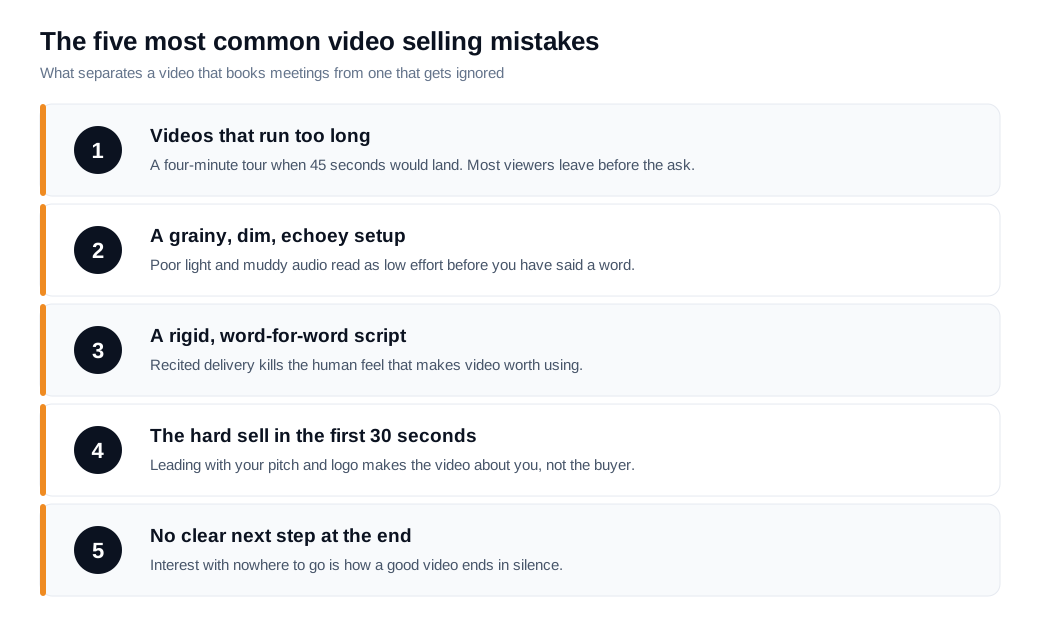
Length is the mistake that shows up most. A four-minute walkthrough feels thorough to the person who made it and feels like a chore to the person asked to watch it.
Setup is the quiet one, because a dim, echoey clip reads as low effort before you have said a word.
The rest are delivery habits: a script that kills the natural feel video is supposed to add, a pitch that leads with "we" instead of the buyer's problem, and a sign-off that leaves the viewer with nowhere to go. IMPACT's rundown of things you should never do in a sales video and MySalesCoach's guide to video prospecting both land on the same offenders.
The pattern underneath them is worth naming. Video works because it feels like a person talking to a person, and every one of these mistakes trades that human quality for something more convenient to record. Fix the trade and the channel starts paying off.
Why do long videos lose viewers?
Long videos lose viewers because attention drops from the first second and keeps dropping, so every extra minute asks a busy buyer to keep paying a cost you have not yet earned. The drop-off is steep and it is well measured.
Wistia, which hosts millions of business videos, reports that viewer retention holds around 70% for videos under two minutes and falls below 50% once a video runs longer, in its guide to optimal video length.
Vidyard's benchmark data, drawn from close to a million business videos, is even more specific:
- 66% of viewers finish a video under one minute.
- 56% finish one that runs one to two minutes.
- 50% finish a two-to-ten-minute video.
- 39% finish ten to twenty minutes.
- Only 22% make it through anything longer than twenty, per its sales and marketing stats.
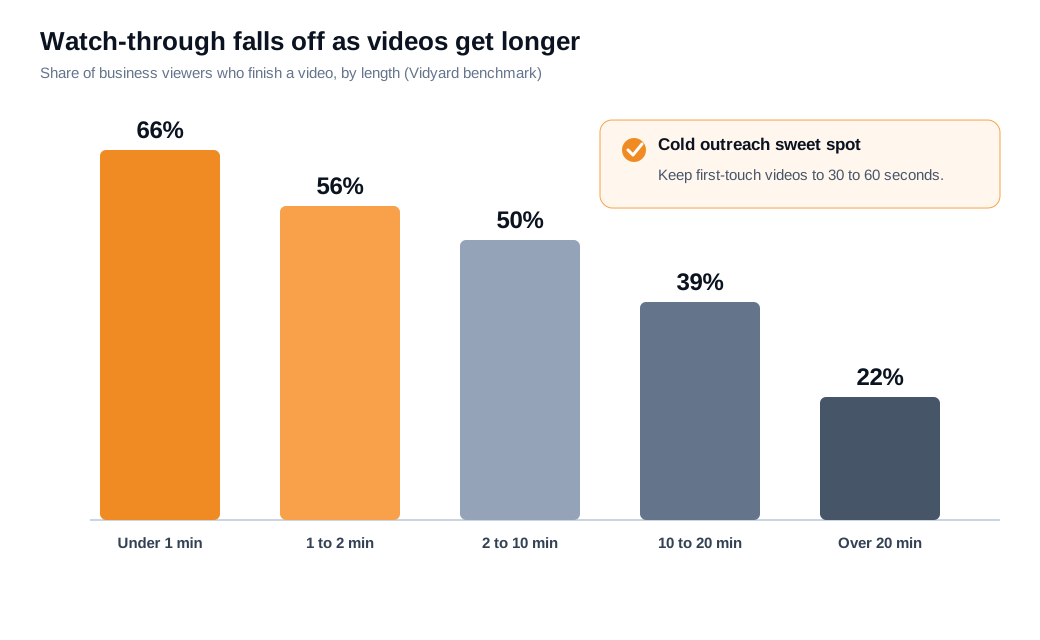
Read those numbers as a tax. A cold prospect owes you nothing, so a video that demands four minutes up front loses most of its audience before the part that matters.
The fix is rarely more editing polish. It is respecting that the meter is running from the opening frame, and cutting until the message fits the time a stranger will actually give you.
How long should a sales video be?
A cold prospecting video should run 30 to 60 seconds, and even a warm demo rarely needs to pass two minutes. Vidyard's own guidance for cold outreach lands in that 30-to-60-second window, because that is where watch-through stays high and the ask still feels small.
Match the length to the temperature of the relationship:
- A first-touch video to someone who has never heard of you gets one clear idea and one question, nothing more.
- A follow-up to an engaged buyer can stretch toward two minutes if every second earns its place.
- A recorded demo for a prospect who asked for one has more room, though "they asked" is not a license to narrate every menu.
Here is the math that makes the case. Say a rep sends 40 cold prospecting videos in a month at four minutes each. On Vidyard's retention curve, a four-minute video keeps about half its viewers to the end, so roughly 20 people hear the actual point and the ask.
Recut the same message to 50 seconds and watch-through climbs toward two thirds, so closer to 26 of the same 40 reach the ask. Same list, same effort, about a third more people actually hearing what you sent, from cutting length alone.
How does poor setup hurt credibility?
A poor setup hurts credibility because buyers read grainy video, dim lighting, and muddy audio as signals about you and your company, not as a webcam problem they mentally correct for. The brain does not cleanly separate the message from how hard it is to process.
Research backs this up. A team led by Norbert Schwarz at USC found that when a talk was harder to hear, listeners judged the speaker as less intelligent and less likeable and rated the underlying work as less important, summarized in USC's write-up on how sound quality shapes belief.
Nobody in that study thought they were grading audio quality. They thought they were grading the person. Your buyer does the same thing to your clip without ever noticing they are doing it.
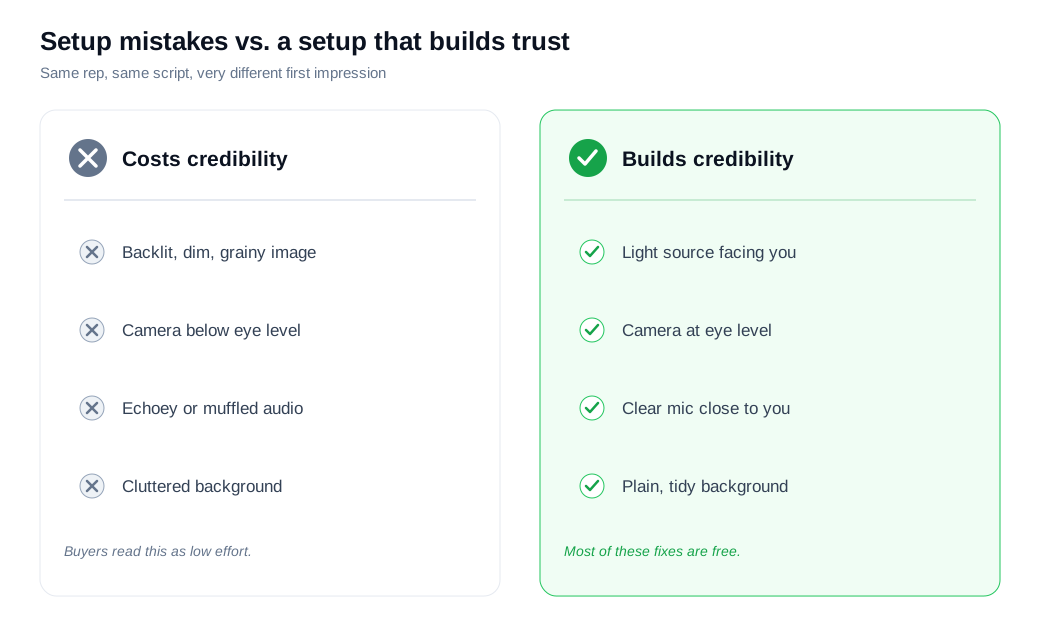
Most of the fixes are free. Sandler's list of videoconference mistakes covers the basics: put your main light in front of you rather than behind, raise the camera to eye level so you are not looking down at the lens, sit against a plain wall, and get the microphone close enough that your voice sounds present instead of distant.
A clean phone camera in good light with clear audio beats an expensive webcam in a dark room. The point is to remove every small friction that makes a buyer work to take you seriously, because the ones who have to work usually stop watching.
Does scripting or the hard sell ruin a sales video?
Scripting and the early hard sell both ruin a sales video because they strip out the natural human connection that makes video worth using at all. A clip that sounds recited or pushy would have been better sent as a plain email.
Reading a script word for word is the more common trap. It produces the flat, glazed delivery everyone recognizes from a bad ad, and buyers tune out the moment they sense it.
The better approach is to know your first line cold and improvise the rest, tripping over a word here and there, because that small imperfection is exactly what signals a real person on the other end. MySalesCoach makes this point directly in its video prospecting guide: perfection is the enemy, and natural beats polished every time.
The hard sell fails for a different reason. Opening a cold video with your pitch, your logo, and your feature list makes the message about you at the exact moment the buyer is deciding whether to care about you at all.
Lead with their problem instead, earn the first thirty seconds of attention, and let the product show up as the answer to something they already feel. And whatever you do, close with a next step. Getting a prospect mildly interested and then leaving them with no obvious action is one of the quickest ways a good video ends in silence.
How do you fix your video approach?
Fix your video approach by cutting length first, upgrading the cheapest parts of your setup, scripting only your opening line, and ending every video with one specific next step. Work in that order, because length and setup fix the biggest leaks for the least effort.
Start with a hard time cap. Draft the message, record it, then cut it until a cold video fits under a minute and a demo fits under two. If you cannot say it in that time, the message is not sharp enough yet, and trimming it will help the buyer as much as it helps your numbers.
Then spend an afternoon on setup. Face a window or a lamp, prop the camera at eye level, find a plain background, and test your audio by watching thirty seconds back with headphones on.
Write only the first sentence and a rough three-point outline, then talk to the person instead of the teleprompter. End with a single clear ask, a proposed time with a calendar link, or one specific question, and never a vague "let me know."
Async video and live conversation solve different halves of the same job, and these fixes carry across both. A recorded video is a good way to open a door, and live video calls with screen share on your site are where a warm prospect and a rep actually work through the deal in real time.
If a buyer would rather type first, pairing that with live chat on your website lets them start with a low-commitment message and step up to video once a rep is on the line. For teams running outbound, a short guide to proactive outreach nudges helps you catch a prospect while intent is still warm, so the next step you offer actually gets taken.
The through-line for any inbound sales team is the same: make it short, make it clear, and make it easy to say yes.
What does fixing these mistakes look like in numbers?
Fixing these mistakes shows up as a higher share of videos watched to the end and more replies from the same list, and the gains stack on each other. Here is a worked example.
Take a rep sending 40 prospecting videos a month. The videos run four minutes, the lighting is dim, there is no clear ask at the end, and about 4 people reply. Now fix the leaks in order:
- Cut the length to 50 seconds, so watch-through climbs from roughly half to about two thirds and far more people reach the point.
- Move a lamp in front of the camera and re-record the audio, so the rep reads as credible rather than careless.
- Add one specific next step to every close, a proposed time with a booking link.
None of those changes cost money or new tools, and none of them require making more videos. They just stop the same 40 videos from leaking viewers at every stage.
A message that reaches more people, sounds like it came from a professional, and tells the viewer exactly what to do next is the version that turns interest into booked calls.
Track two numbers to know it is working: watch-through rate as the leading signal, since a video nobody finishes cannot convert, and reply rate as the outcome that follows it.
Key takeaways
- Length is the number one killer. Wistia and Vidyard data show retention falls below 50% past two minutes, so cap cold videos under a minute and demos under two.
- A careless setup costs trust before you speak. Buyers read dim light and muddy audio as signals about you, so face your light, raise the camera to eye level, and get the mic close.
- Scripts and hard sells flatten the human quality. Know your first line, improvise the rest, and lead with the buyer's problem instead of your feature list.
- Every video needs one clear next step. Getting a prospect interested and leaving no obvious action is how a good video ends in silence.
- Video still works when you avoid the traps. Gong found deals 127% more likely to close when video appears in the process, so the fix is technique, not abandoning the channel.
- Fix the cheap leaks first. Cutting length and improving setup take an afternoon and no budget, and they recover the most lost viewers per unit of effort.
TAGS

Written by
Daniel SemeckyCo-founder & CEO
Daniel is the co-founder and CEO of Glimpze. He spends his days talking to revenue teams about how to catch high-intent visitors before they bounce, and writes about inbound sales, lead conversion, and building a motion where marketing and sales actually share a number.


