
On this page
A software company ran the same customer survey every quarter for three years and filed the results in a slide deck nobody reopened. Then a competitor launched, churn crept up, and the exit interviews said exactly what the surveys had been saying all along: onboarding was confusing and support was slow. The answers had been sitting in the data the entire time. Nobody had turned them into a decision.
That gap, between hearing customers and acting on them, is what a voice of the customer program exists to close. Run well, it catches the frustration before it becomes a cancellation, and it tells product and support teams what to fix next in the customer's own words.
This post covers what voice of the customer means, why it matters, how to collect the data, how to analyze it, how to turn it into action, and how to close the loop so customers can see that their feedback changed something.
What is voice of the customer?
Voice of the customer, usually shortened to VoC, is the practice of collecting and organizing what customers say about their needs, expectations, and experience with your product, then using it to make decisions. It pulls together the structured signals you ask for, like survey scores, and the unstructured ones customers volunteer, like a support chat or a review, into one readable picture of what people actually want.
The term is older than most people assume. Abbie Griffin and John Hauser introduced it in a 1993 Marketing Science paper, where they described VoC as a product-development method for producing a detailed set of customer wants and needs, organized into a hierarchy and prioritized by importance. The modern version keeps that spirit and widens the inputs.
Qualtrics defines VoC as the feedback that captures customer needs, opinions, pain points, and emotional sentiment, gathered across the touchpoints where customers interact with you. Gartner frames a VoC platform as one that integrates collection, analysis, and action in a single system, which is a useful reminder that gathering feedback is only the first step. A pile of survey responses with no owner and no follow-up never becomes a program.
Why does voice of the customer matter?
Voice of the customer matters because most unhappy customers never tell you they are unhappy, so silence is the most expensive signal you can misread. As SuperOffice reports from research by Esteban Kolsky, only 1 in 26 dissatisfied customers actually complains, and the other 25 tend to leave without a word. The handful of angry emails in your inbox is a fraction of a much larger group already halfway out the door.
That changes how you read a quiet quarter. A support queue with few complaints can mean your customers are happy, or it can mean the frustrated ones stopped bothering to write and started shopping for a replacement. Without a deliberate way to listen, you cannot tell the two apart until the churn shows up in the revenue report, by which point the customer is gone and the reason left with them.
The upside is that acting on feedback pays back. SuperOffice notes that 91% of unhappy customers who do not complain simply never return, which means every complaint you surface and resolve is a chance to keep a customer you would otherwise have lost quietly. VoC turns those private, unspoken decisions into signals you can see early enough to do something about.
How do you collect voice of the customer data?
You collect voice of the customer data by combining a few solicited channels you control with the unsolicited feedback customers create on their own, then routing all of it into one place. No single source tells the whole story, so mature programs run several at once and treat them as complementary.
The solicited channels are the ones you initiate. Surveys are the workhorse: NPS asks how likely someone is to recommend you, CSAT rates a specific interaction, and CES measures how much effort a task took. Customer interviews add the depth a survey cannot, since a thirty-minute call and a few open questions surface the reasoning behind a score. HubSpot's rundown of VoC methodologies and Help Scout's collection guide both stress pairing these structured methods with slower qualitative work like focus groups.
The unsolicited channels are the feedback customers give without being asked, and they often carry the sharpest signal. Reviews on sites like G2 or Trustpilot, support tickets, social mentions, and the transcripts of live conversations all say what people think in their own language, unprompted by your question wording. A running live chat channel on your site doubles as a listening post, since the questions and objections people type while deciding whether to buy are voice of the customer data captured at the exact moment intent is highest.
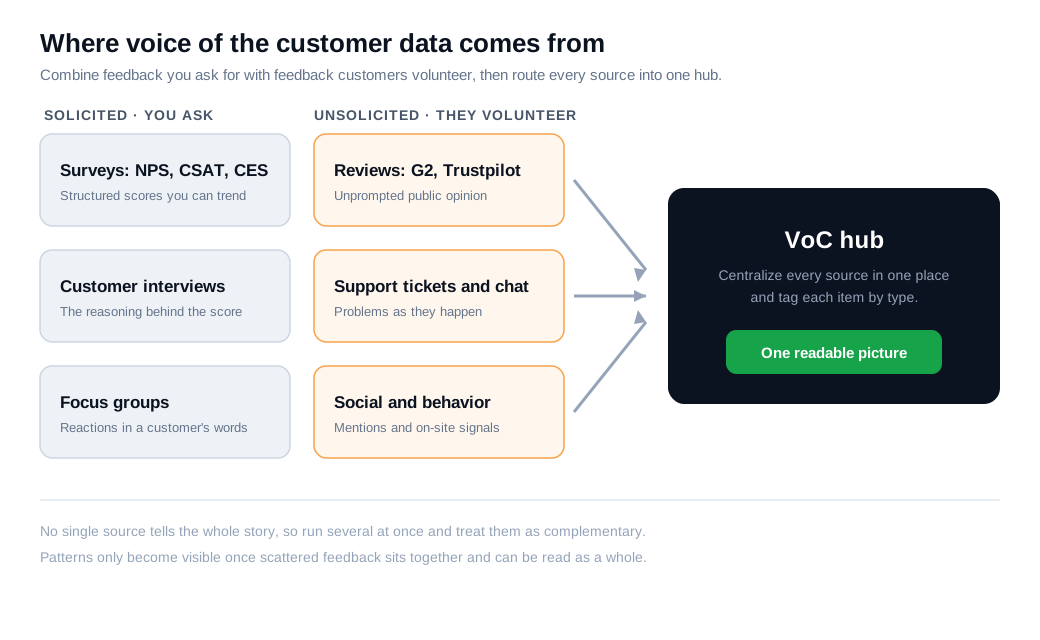
The practical rule is to centralize. Feedback scattered across a survey tool, a help desk, and three review sites is impossible to read as a whole, and patterns only become obvious once the inputs sit together. Pick one destination, send every channel to it, and tag each item by source so you can weigh a considered interview differently from a one-line rating.
How do you analyze voice of the customer feedback?
You analyze voice of the customer feedback by turning scattered comments and scores into a small set of recurring themes you can count, rank, and track over time. Raw feedback is a heap of anecdotes. Analysis is what converts it into a claim like "onboarding confusion drives a quarter of our detractors," which a team can actually act on.
Start by separating structured from unstructured data, because they answer different questions. Structured feedback, the NPS and CSAT numbers, tells you how much and how many. Unstructured feedback, the open text and transcripts, tells you why. The number flags that something moved; the words explain it, which is why the two belong on the same dashboard.
Text analytics is what makes the unstructured pile usable at scale. Thematic and similar tools use machine learning to tag open-ended responses, group them into themes, and score the sentiment attached to each, so a thousand comments collapse into a ranked list of drivers instead of a document nobody has time to read. Most teams find that a consistent feedback set settles into somewhere between five and a dozen recurring themes, and those themes become the vocabulary the whole company uses. An AI chat assistant can help here too, summarizing chat and ticket transcripts into the same themes so real-time conversations feed the analysis rather than getting lost.
The output you want is a short list of themes, each with a count and a direction. A vague read like "customers seem unhappy" helps no one, while "312 mentions of onboarding confusion this quarter, up from 210 last quarter" points to a fix. Numbers and trend lines are what let you argue for a change and prove later that it worked.
How do you turn feedback into action?
You turn feedback into action by ranking your themes on how many customers they affect and how much effort a fix would take, then committing the top few to a roadmap with named owners and deadlines. The trap most programs fall into is treating every request as equally urgent, which spreads the team thin and ships nothing that moves the needle.
A simple scoring model keeps priorities honest. Value versus effort works for quick calls: plot each theme by the size of its impact against the work required, and start with the high-value, low-effort corner. RICE (reach, impact, confidence, effort) adds rigor when you have the data to estimate reach and effort with some confidence. Either way, the point is to force a ranking so the loudest customer does not automatically outrank the most common problem.
Here is a worked example with real arithmetic. A B2B SaaS team collects 1,200 pieces of feedback in a quarter across surveys, support tickets, reviews, and chat logs. Text analysis groups them into nine themes. The top three are onboarding confusion at 312 mentions (26%), slow support replies at 210 (18%), and a missing integration at 156 (13%). Onboarding scores highest on reach and impact while sitting at medium effort, so it goes to the top of the roadmap with a product owner attached. The team rebuilds the setup flow that quarter. The next quarter, onboarding mentions fall from 312 to 118, and NPS among new accounts climbs eight points. The theme that was quietly costing them trials became the fix that stopped the bleed, and the count proved it.
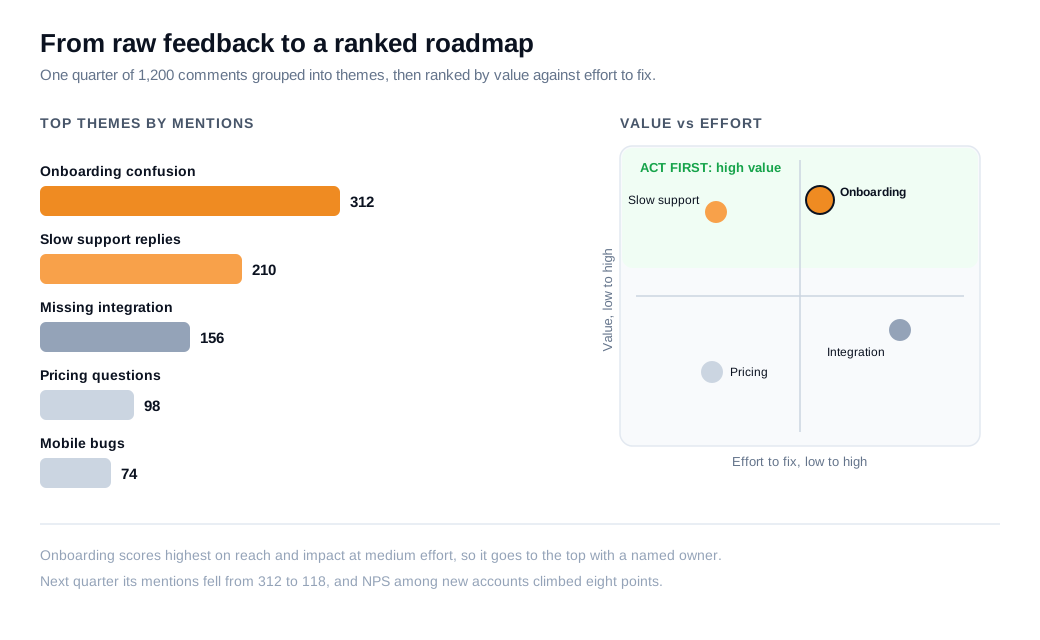
One habit separates programs that ship from programs that stall: assign an owner to every theme you decide to act on. A theme with no owner is a note, and notes do not get built. Put a name and a date next to the top items, review them on a cadence, and let the rest wait their turn in the open.
How do you close the loop with customers?
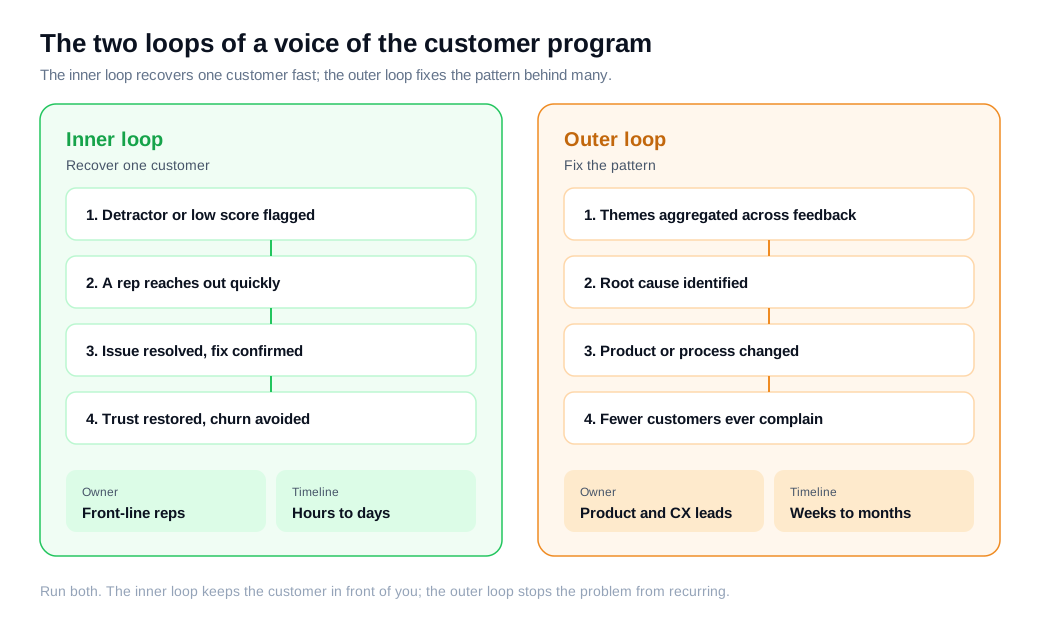
You close the loop by telling the customers who gave feedback what you did with it, using two distinct loops that work together. As Resonate CX describes, the inner loop resolves one person's issue fast, usually within hours or days and owned by a front-line rep, while the outer loop fixes the systemic pattern behind many complaints and is owned by product and CX leaders over weeks or months. Run only the outer loop and individual customers feel ignored. Run only the inner loop and you keep rescuing the same avoidable problem one ticket at a time.
The inner loop is where trust gets recovered. When a detractor leaves a low score or an angry comment, a person reaches out, resolves it, and confirms the fix. The effect is larger than it looks: CustomerSure, citing Harvard Business Review research, notes that simply following up on complaints can raise retention and satisfaction by as much as 50%. The act of responding often matters more to the customer than the original problem did.
Take the SaaS team from earlier. Say they end the quarter with 60 NPS detractors. They route each one to an account owner through instant lead routing and notifications and commit to a personal reply within 48 hours. Thirty-eight of the 60 respond, a dozen upgrade or renew after the conversation, and every reply gets tagged so the reasons flow straight into the outer-loop theme list. The inner loop saved a specific set of accounts this quarter. The outer loop, the onboarding rebuild, makes sure fewer accounts become detractors next quarter.
Closing the loop is also what keeps the feedback coming. Customers who see nothing happen after they answer a survey stop answering, and your response rates decay until the program starves. A short "you asked, we changed this" note, whether to one person or to your whole base, is the cheapest way to prove the feedback was worth giving and to keep the channel open.
Key takeaways
- Voice of the customer is a decision system. VoC collects and organizes what customers say across every channel, then feeds it into product and support choices, a definition that traces back to Griffin and Hauser's 1993 paper.
- Silence is the signal you cannot afford to misread. Only about 1 in 26 unhappy customers complains, so a quiet queue can hide a large group churning without a word, and 91% of the silent ones never return.
- Collect from solicited and unsolicited sources at once. Surveys, NPS, and interviews sit alongside reviews, support tickets, social, and live chat transcripts, and centralizing all of it is what makes patterns visible.
- Analysis means themes with counts, not anecdotes. Text analytics turns open feedback into roughly five to a dozen recurring themes with sentiment and trend lines, which is what lets you argue for a fix and prove it later.
- Rank, assign, and ship. Score themes on reach and effort, commit the top few to a roadmap with named owners, and resist letting the loudest voice outrank the most common problem.
- Close both loops or the program starves. The inner loop recovers individual customers fast (following up on complaints can lift retention by up to 50%), while the outer loop fixes the pattern so fewer customers reach the point of complaining.

Written by
Daniel SemeckyCo-founder & CEO
Daniel is the co-founder and CEO of Glimpze. He spends his days talking to revenue teams about how to catch high-intent visitors before they bounce, and writes about inbound sales, lead conversion, and building a motion where marketing and sales actually share a number.


