
On this page
A visitor types in all caps at 4:47 on a Friday: "THIS IS THE THIRD TIME I've been charged and no one will help me." There is no tone of voice to soften it, no face to read, nothing on the screen except the words. Whatever the agent types back either cools the conversation down or pours fuel on it.
These are the chats that decide loyalty. Zendesk's research finds that a single bad experience is enough to push customers away, with 51% of consumers saying they cut or stop their spending after one (Zendesk). The upside is real too: a complaint handled well can leave someone more loyal than if nothing had gone wrong. The words in your first few replies carry most of that outcome.
This guide covers why anger hits harder in a chat window, how to de-escalate in text, the language that calms a frustrated customer, the phrases that make things worse, when to escalate, and how to follow up so a tense chat actually ends well.
Why does anger hit harder in a live chat window?
Anger hits harder in chat because the customer has nothing but your words to read, so every missing cue, delay, and blunt phrase gets filled in with the worst interpretation. On a phone call, a warm voice and a pause for breath do half the de-escalation work on their own. In text, tone is invisible.
A reply that would sound kind out loud can read as cold or dismissive on a screen, and someone who is already upset tends to assume the harsher reading. Silence compounds it. A thirty-second gap with no typing indicator reads as being ignored, right when the person is least willing to wait.
Speed sets the mood before your first word lands. Live chat users expect a reply in under 30 seconds, 90% say ten minutes is the longest they will tolerate, and more than half abandon a chat that gets no response within three minutes (Helpable). For someone who is already frustrated, those thresholds shrink further.
It also helps to remember that some situations arrive pre-loaded with emotion. Harvard Business Review's work on high-emotion services notes that a lack of control, big consequences if things go wrong, and a process that feels like a black box all intensify feelings before the interaction even starts (HBR). A duplicate charge or a failed order checks every one of those boxes, so the agent is meeting a feeling, not just a ticket. The flip side is that chat gives you time to choose words carefully, a transcript you can scroll back through, and the ability to pull in a teammate without a jarring transfer. Handled with care, live chat can defuse a situation that a phone queue would only inflame.
How do you de-escalate an angry customer in text chat?
De-escalate by acknowledging the emotion before you touch the problem, then working a simple sequence: hear them out, own what went wrong, act on a concrete fix, and confirm the next step. Emotion first, facts second.
The order matters for a physiological reason. When someone is angry, validation calms the fight-or-flight response and makes them able to hear a solution, while leading with policy or a defense does the opposite. Mailchimp's de-escalation guidance puts empathy and acknowledgment first as a kind of circuit breaker that lets rational problem-solving resume (Mailchimp). Myra Golden frames the same move as the "3Rs": read and understand the concern, acknowledge the feeling, then solve (Myra Golden).
A few habits are specific to chat:
- Reply fast, even if the first reply is only "I'm here and I'm going to help with this." Silence reads as indifference.
- Acknowledge before you ask. Name the emotion and the situation in one line before requesting an order number or an email.
- Keep the person updated during any pause. If you need to check something, say so ("Give me one minute to pull up your account") instead of going quiet. Mailchimp notes that unexplained holds make anger worse.
- Mirror their words, not their intensity. Use the customer's own phrasing for the problem so they know you read it, and keep your own tone level.
- Solve completely, and ask if there is anything else before you close.
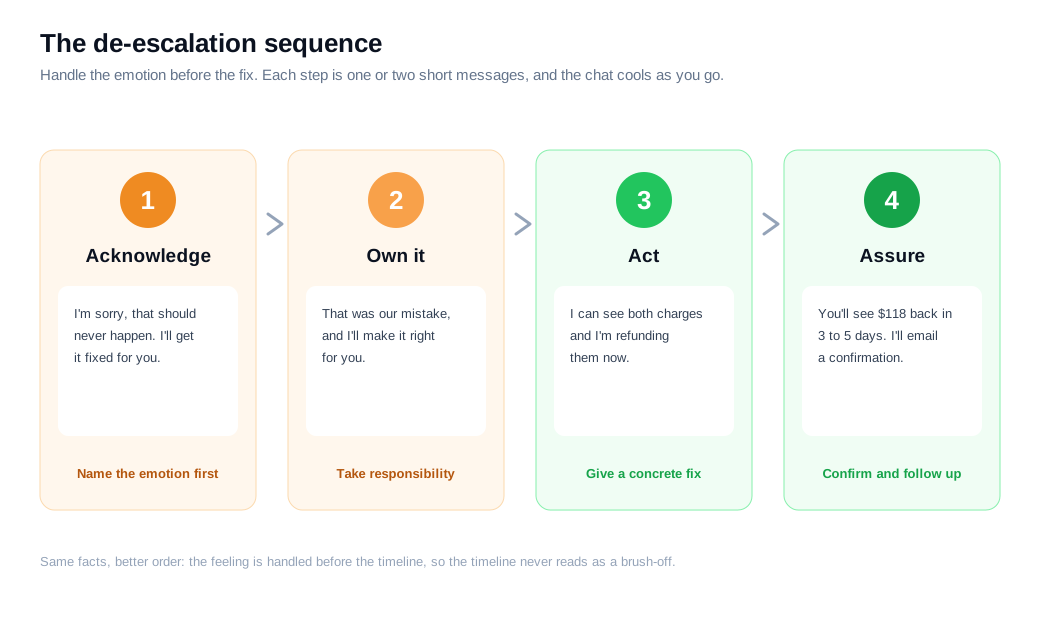
Take that Friday double-charge. A weak reply opens with "Per our policy, refunds take 7 to 10 business days." A strong one runs in sequence. First, acknowledge: "I'm sorry, being charged three times for one order should never happen, and I'll get it fixed." Then act: "I can see both duplicate charges on your account and I'm refunding them now." Then assure: "You'll see $118 back within 3 to 5 business days, and I'll email you a confirmation the moment I submit it." The facts are identical. The emotion is handled before the timeline, so the timeline stops reading as a brush-off.
What language calms a frustrated customer?
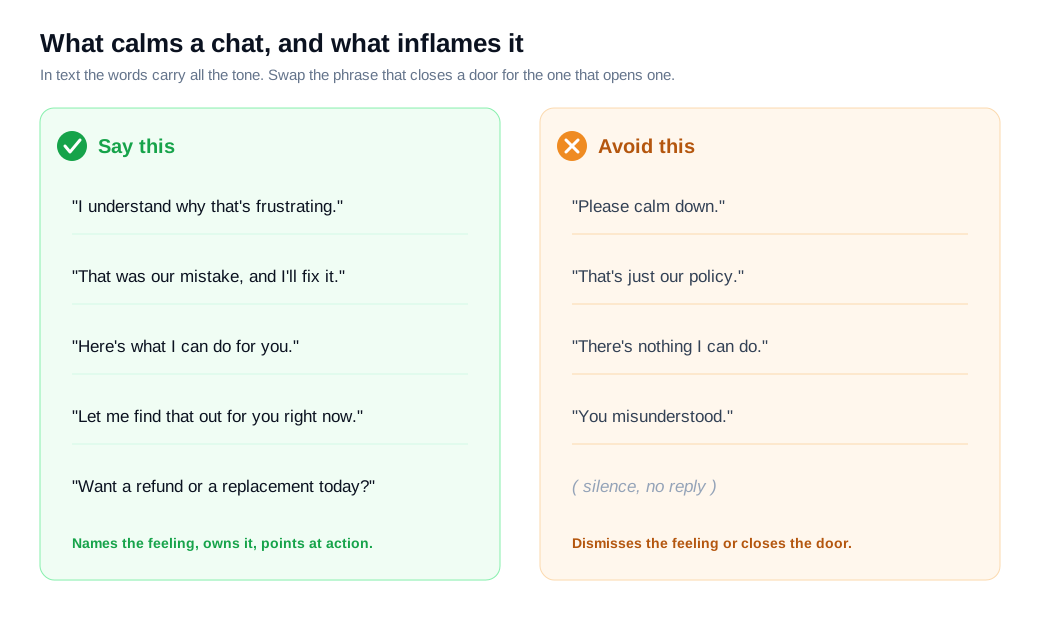
Language that calms a frustrated customer names the emotion, takes ownership, and centers on what you can do, all in short plain sentences that use the person's own words. Empathy statements are the workhorses here. Lines like "I understand why that's frustrating" or "I can see how this would be upsetting, and I want to make it right" acknowledge the feeling before the fix.
A script alone will not do it. What lands is showing that you actually read what happened, which is why a canned apology dropped in cold tends to backfire. Three moves make the words work.
Validate specifically. Reference the real problem instead of a generic "sorry for the inconvenience." "I'd be frustrated too if my order showed up broken" beats a template that could have been sent to anyone.
Own it plainly. If the company got it wrong, say so without hedging. "That was our mistake" does more to cool a chat than any discount code.
Point at action. Replace what the customer cannot have with what you can do. Instead of "I don't know," say "Let me find out for you." Instead of "That's not possible," say "Here's what I can do." CX Today makes that swap the core of calming a chat without ever telling anyone to relax (CX Today).
Give the customer choices where you can. Golden's live-chat guidance points out that offering two clear options ("I can refund it or send a replacement today, which works better for you?") restores a sense of control, and control is usually what an angry customer feels they have lost (Myra Golden). If a customer crosses into abuse, a calm boundary works better than matching their energy: "I want to help, and I can do that better without the name-calling, so let's keep going and I'll fix this."
What should you never say to an angry customer in chat?
Never tell an angry customer to "calm down," never hide behind "that's our policy," and never argue, blame, or go silent, because each one signals that you care more about being right than about helping. "Calm down" is the classic trigger. It reads as a command and dismisses the feeling, which sets off what psychologists call the reactance effect, the instinct to push back when your sense of control feels threatened. CX Today points to that reaction as the reason the phrase reliably makes things worse (CX Today).
"You need to understand" and "you misunderstood" land the same way, because they put the fault on the customer. Then there are the flat deflections: "There's nothing I can do," "That's just how it is," "It's not our policy." Each one closes a door without opening another, and a person who came to chat for help hears a shrug. Even when the honest answer is no, the framing matters. "I can't refund that order, and here's what I can offer instead" keeps a path open.
Two structural mistakes belong on the never list too. The first is silence: a long gap with no update gets read as being ignored. The second is making the customer repeat everything after a transfer, which is why a clean handoff has to carry the transcript with it. Skills-based routing and notifications that pass the whole conversation along mean nobody has to re-explain their problem to a second agent while already angry.
When should you escalate a chat?
Escalate a chat when the issue sits outside your knowledge or authority, when the customer asks for a manager, when a promised fix has already failed once, or when the conversation turns abusive and a level change is the only way to reset it. Escalation is a tool for the customer, and reaching for it early beats grinding a chat into the ground.
Support escalations generally fall into two kinds. A hierarchical escalation moves the chat up a level, from a frontline agent to a senior rep or manager, usually for authority or a high-value account. A functional escalation moves it sideways to whoever has the right expertise, such as a billing specialist or an engineer. Nextiva's guidance is to define the triggers in advance so agents know exactly when to escalate and when to keep going, rather than deciding in the heat of a tense chat (Nextiva).
The practical triggers for a live chat:
- You have tried twice and the problem is not moving. Looping a third time wears everyone down.
- The fix needs an approval or an access level you do not have.
- The customer directly asks for someone more senior. Resisting that only adds heat.
- The issue is a repeat of one you already marked resolved. A second failure needs a different person or a different channel.
- The chat crosses into abuse and a firm boundary has not reset it.
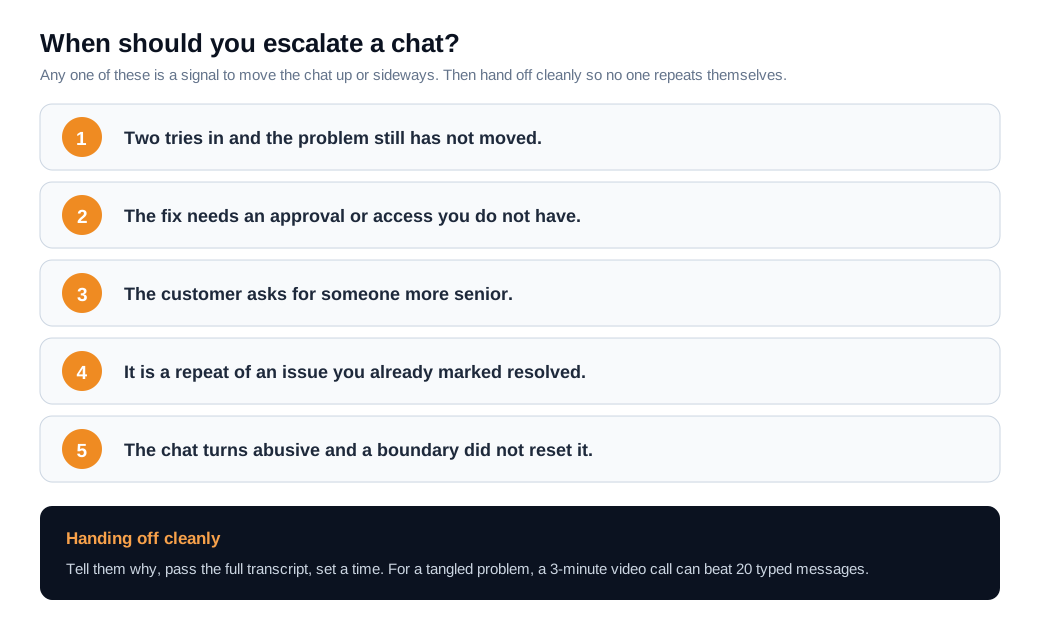
When you escalate, do it cleanly. Tell the customer what is happening and why ("I'm bringing in a billing specialist who can approve this directly"), pass the full transcript so they never repeat themselves, and set a time expectation. For a tangled problem that text keeps failing to solve, the escalation might be a channel change rather than a person change. Moving into a live video call or screen share can settle in three minutes what twenty typed messages could not, because the agent can see exactly what the customer sees.
How do you follow up after a tense chat?
Follow up after a tense chat by doing exactly what you promised, on time, then sending one short proactive message that confirms the fix landed and invites any loose ends. The follow-through is what turns a rescued chat into a retained customer.
The reason it matters is the service recovery paradox: a problem resolved well can leave a customer more loyal than one who never hit a problem at all. Research on service recovery finds the loyalty effect is genuine, though it depends on speed, empathy, and actually closing the loop, and it evaporates if the same failure repeats (Springer). A fix you promised but never confirmed reads as one more broken promise.
The mechanics are simple:
- Keep the promise precisely. If you said the refund posts in five days, check on day five, not day fifteen.
- Send a short confirmation. "Following up: your $118 refund posted this morning, and I've fixed the setting that caused the double charge so it won't happen again." One message, specific, no ask attached.
- Leave the door open. Invite the one more question they might be holding, and make it easy to reply.
- Log what went wrong. A tense chat is data. If ten people hit the same billing bug this month, the real fix lives upstream, not in the chat window.
Here is the math on why the two minutes are worth it. Say your team resolves 200 complaint chats a month, and without any recovery effort roughly 40% of those upset customers would quietly leave, which is 80 people. A strong resolution plus a follow-up message that saves even half of the ones at risk keeps 40 of them. On a $79 plan, that is $3,160 in monthly revenue held onto, close to $38,000 a year, from messages that take a couple of minutes each. Routing the simplest repeat questions to an AI chat assistant frees your agents to spend that attention where it counts, on the chats where a real person is upset and a human reply is the only thing that will land.
Key takeaways
- Emotion first, facts second. Acknowledge the feeling before you touch the problem, because validation calms the fight-or-flight response and lets the customer actually hear your solution.
- The words carry all the tone. In text there is no warm voice to soften a blunt line, so use short plain sentences, the customer's own phrasing, and specific empathy instead of a generic apology.
- Center on what you can do. Swap "there's nothing I can do" and "that's our policy" for "here's what I can do," and never tell an angry customer to calm down, which only triggers more resistance.
- Escalate on clear triggers. Move the chat up or sideways when it stalls after two tries, needs authority you lack, gets a request for a manager, repeats a failed fix, or turns abusive, and carry the transcript so nobody repeats themselves.
- Follow up to lock in the recovery. Do exactly what you promised on time, send one short confirmation that the fix landed, and log the root cause so the same complaint does not come back.
- Speed frames everything. A fast first reply, even a holding line, keeps a frustrated visitor from reading silence as indifference before your real answer arrives.

Written by
Nilas MylerCo-founder & CTO, Glimpze
Nilas is the co-founder and CTO of Glimpze, an inbound sales tool that turns high-intent website visitors into live conversations. A former SEO consultant for some of the largest companies in Denmark, he writes about speed-to-lead, inbound sales, and conversion rate optimization — the technical and operational mechanics of turning traffic into pipeline.


