On this page
Ask ten founders whether they should build an inbound or an outbound sales motion and you'll get ten confident, contradictory answers. The truth is less tribal: inbound and outbound are two different ways to start the same thing — a sales conversation — and the right choice depends on your stage, your deal size, and how much demand already exists for what you sell.
This guide breaks down what inbound and outbound sales actually are, who each one suits, when to reach for which, and why the strongest revenue teams stop arguing and run both.
What is inbound sales?
Inbound sales is the motion where the buyer comes to you. Someone has a problem, goes looking for a solution, finds your content or your product, and raises their hand — by starting a trial, requesting a demo, or striking up a chat on your pricing page. Your sales team's job is to be there fast and help them buy.
The fuel for inbound is everything that makes you discoverable and credible: SEO and content, word of mouth and referrals, a free tier, and conversion surfaces on your own site. Because inbound leads arrive already aware of their problem — and often of you — they tend to be warmer, more educated, and more self-qualified than a cold prospect. The trade-off is patience: it takes months to build the content and search authority that generate that demand.
What is outbound sales?
Outbound sales flips the direction. Instead of waiting for buyers to find you, your team picks the accounts it wants, reaches out, and starts the conversation — through cold calls, cold email, paid ads, and LinkedIn outreach. You're not depending on someone to search for your category; you put your offer directly in front of the people you want to sell to.
The advantage is control and speed. You choose the audience, the message, and the timing, and a well-run campaign can book meetings within days rather than months. The cost is exactly that — cost: outbound carries a higher price per lead and a higher rejection rate, because you're interrupting people who didn't ask to hear from you.
Inbound vs outbound sales: the key differences
The clearest way to hold the two motions in your head is side by side.
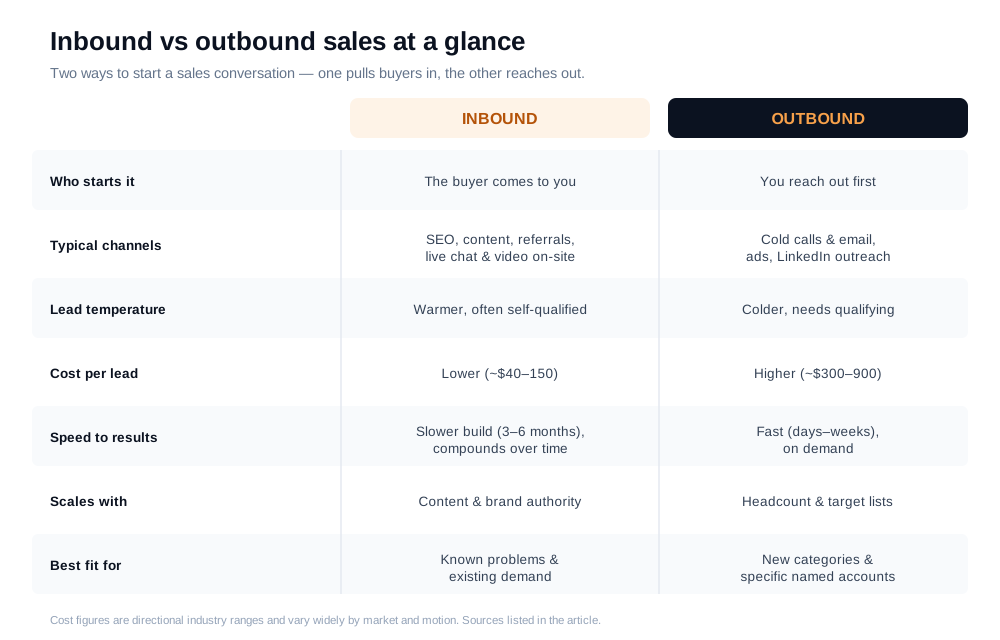
The core distinction is who initiates. With inbound, the buyer starts the conversation, so intent is already present and your job is to not get in the way. With outbound, you start it, so your job is to manufacture relevance for someone who wasn't looking. Everything else — channels, cost, lead temperature, how the motion scales — flows from that one difference. Inbound scales with content and brand authority; outbound scales with headcount and good target lists.
Inbound vs outbound: what the numbers say
The data broadly favors inbound on efficiency and outbound on speed.
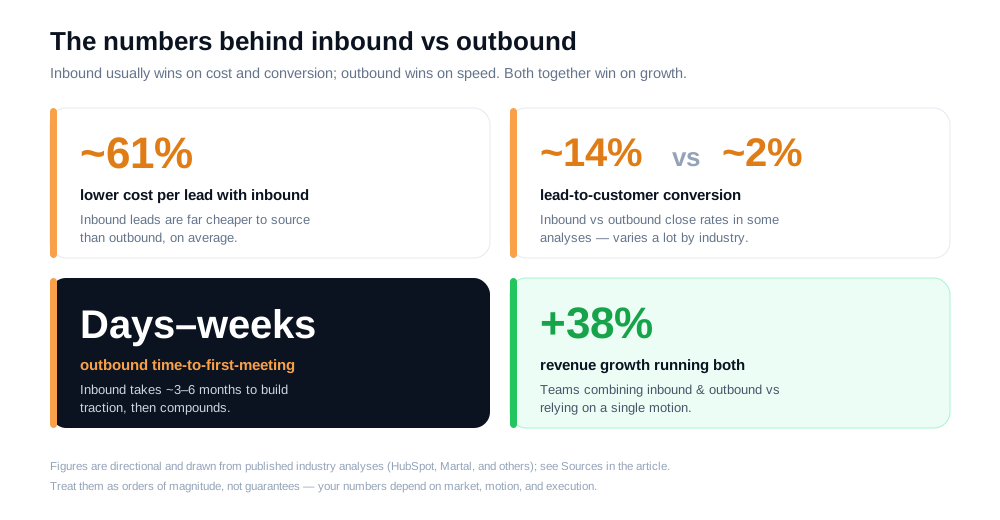
Inbound leads are consistently cheaper to source — by some widely cited estimates around 61% less per lead than outbound — and they tend to convert at materially higher rates, because the buyer arrived with intent. Some analyses put inbound lead-to-customer conversion in the mid-teens against low single digits for outbound, though the exact figures vary widely by industry and motion.
Outbound's edge is that it doesn't make you wait. Where inbound can take three to six months to build traction, a focused outbound campaign can generate qualified meetings in days or weeks. And the headline finding across most of this research is that the two are not mutually exclusive: teams that run inbound and outbound together tend to grow faster than teams that bet everything on one. Treat these numbers as orders of magnitude, not promises — your results depend on your market and execution.
Who should use inbound vs outbound?
Start with three questions: how big are your deals, how much demand already exists for your category, and how fast do you need pipeline?
Inbound tends to fit companies selling lower-ACV or self-serve products into a category buyers already search for. If people are actively Googling the problem you solve, inbound lets you capture that demand cheaply and let it compound. It also fits any team sitting on real traffic that isn't converting — the demand is already arriving; the gap is in capturing it.
Outbound tends to fit higher-ACV and enterprise deals, new or low-awareness categories, and anyone who needs predictable pipeline now. If almost nobody is searching for your category yet, you can't wait for inbound demand that doesn't exist — you have to go create the conversation. That's also why most early-stage startups lean outbound first: it produces results on a timeline a young company can survive on.
When should you use inbound vs outbound?
Beyond company profile, specific situations push you toward one motion or the other.
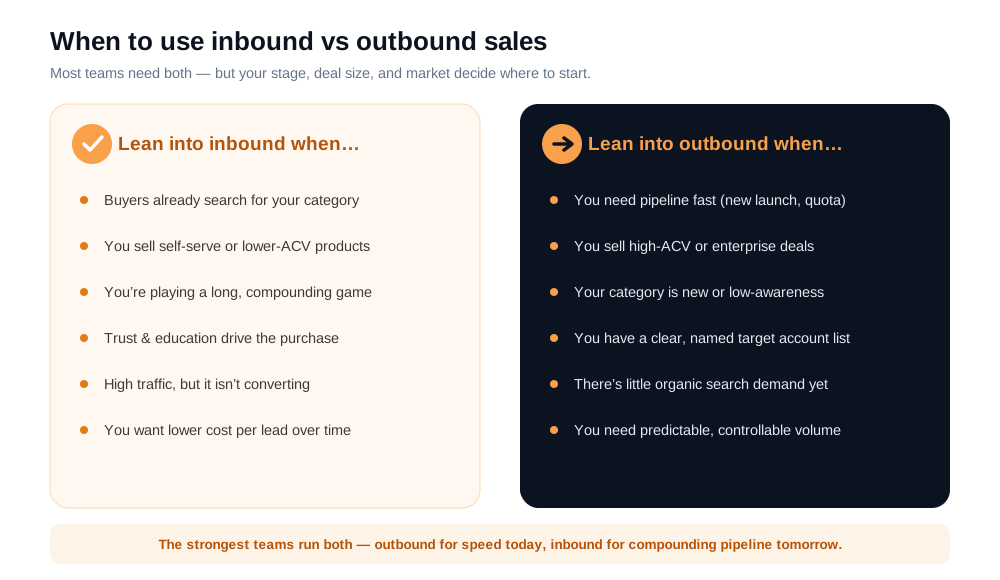
Reach for inbound when buyers already search for your category, when trust and education drive the purchase, when you're playing a long compounding game, or when you have traffic that isn't converting yet. Reach for outbound when you need pipeline fast, when you're selling into a defined list of named accounts, when your category is too new to have search demand, or when you need volume you can dial up and down on command. In practice the honest answer for most teams is "both, in sequence": outbound to create pipeline while inbound is still warming up, then inbound to lower blended cost as it matures.
Why the best sales teams run both
The inbound-versus-outbound framing is useful for understanding the mechanics, but treating it as an either/or is how teams leave money on the table. The motions reinforce each other: outbound creates demand and gathers intelligence; inbound captures demand and lowers cost; and the data on combined motions backs that up.
This is a point Sales Hacker founder Max Altschuler made on the Inside Intercom podcast. For most scaling teams, he argued, the hard problem is outbound efficiency — "figuring out how to leverage your contacts to get referrals, figuring out how to break into enterprise accounts." But he was just as direct about the value of catching inbound intent the moment it appears: "If the person has their attention on your site right now, it's very easy for you to qualify them there and set up the demo. It actually saves a lot of time on the front end."
That second point is exactly where inbound most often breaks. A high-intent visitor lands on your pricing page, has a question, finds a form, and cools off waiting for a reply. This is what we built Glimpze to fix: when an inbound visitor hits a high-intent page, they can start a live video or chat conversation with a rep in seconds — no form, no queue — so your warmest inbound leads turn into conversations instead of unanswered submissions. And because every one of those conversations is captured, your outbound follow-up gets sharper too: you already know the use case, the objection, and the timeline. As Altschuler put it, when things are going badly, "the best cure is a fat pipeline" — and the cheapest pipeline is the inbound intent you're already generating but not yet catching.
Inbound vs outbound sales: FAQs
Is inbound or outbound sales better?
Neither is universally better. Inbound usually wins on cost per lead and conversion rate; outbound wins on speed and control. The right choice depends on your deal size, how much demand exists for your category, and how quickly you need pipeline — and most mature teams run both.
Is inbound sales cheaper than outbound?
Generally yes. Inbound leads are typically far cheaper to source than outbound — often cited at roughly 61% less per lead — because content and search demand compound over time instead of costing more with every new contact. Outbound carries a higher cost and rejection rate per lead, but delivers pipeline faster.
What's the difference between an inbound and an outbound lead?
An inbound lead reached out to you first (a demo request, trial signup, or chat), so they already have intent. An outbound lead is someone you contacted first from a target list, so intent still has to be established. Inbound leads are usually warmer and faster to qualify.
Should a startup start with inbound or outbound?
Most early-stage startups should start with outbound. Inbound takes months of content and SEO to produce results, while outbound can create pipeline in weeks — and early companies need proof and revenue fast. As the brand and content mature, layer inbound on top to lower blended acquisition cost.
Key takeaways
- Inbound vs outbound comes down to who starts the conversation — the buyer (inbound) or you (outbound). Everything else follows from that.
- Inbound wins on cost and conversion; outbound wins on speed and control. Pick based on deal size, category awareness, and how fast you need pipeline.
- Most startups start outbound, then layer inbound to compound pipeline and lower blended cost over time.
- The best teams run both — and the highest-leverage fix is catching the inbound intent you already generate before it cools.
- Don't let warm inbound leads sit in a form. A live conversation at peak intent is the cheapest pipeline you have.
TAGS

Written by
Daniel SemeckyCo-founder & CEO
Daniel is the co-founder and CEO of Glimpze. He spends his days talking to revenue teams about how to catch high-intent visitors before they bounce, and writes about inbound sales, lead conversion, and building a motion where marketing and sales actually share a number.


