On this page
Most lead generation budgets do not fail on the big line items. They bleed out through small, invisible leaks: a list nobody should have bought, a form that fills at 9 a.m. and gets a reply at 5 p.m., a channel that looks cheap per lead and turns out to be the most expensive per customer.
Add those up over a quarter and a large slice of the budget disappears before it ever reaches a real buyer.
The waste is well documented. Most companies take more than a day to respond to an inbound lead, a large share of purchased contact data is dead on arrival, and the majority of marketing-qualified leads never clear the sales bar.
None of these are exotic problems. They are the default state of a program that measures activity instead of outcomes.
This guide walks through the lead generation mistakes that waste the most money: chasing volume over quality, buying lead lists, following up too slowly, and never auditing where the spend actually goes.
What are the most common lead generation mistakes?
The most common lead generation mistakes are chasing raw volume over quality, buying or renting contact lists, following up too slowly, and funding channels you never audit.
Each one shares the same signature: it produces a number that looks like progress, such as leads generated, cost per lead, or list size, while quietly failing to produce customers.
The gap between those two things is wide. In one compilation of lead management data, roughly 71 percent of inbound leads are wasted and only about 27 percent are ever contacted at all, per LeadResponse's lead management statistics. A dashboard can show thousands of leads while most of them sit untouched.
Quality tells a similar story further down the funnel. The average marketing-qualified lead to sales-qualified lead conversion rate sits around 13 percent, which means roughly 87 of every 100 MQLs never become an SQL, according to Flint's compiled MQL-to-SQL benchmarks.
Some of that is unavoidable. A lot of it traces back to the four mistakes below.
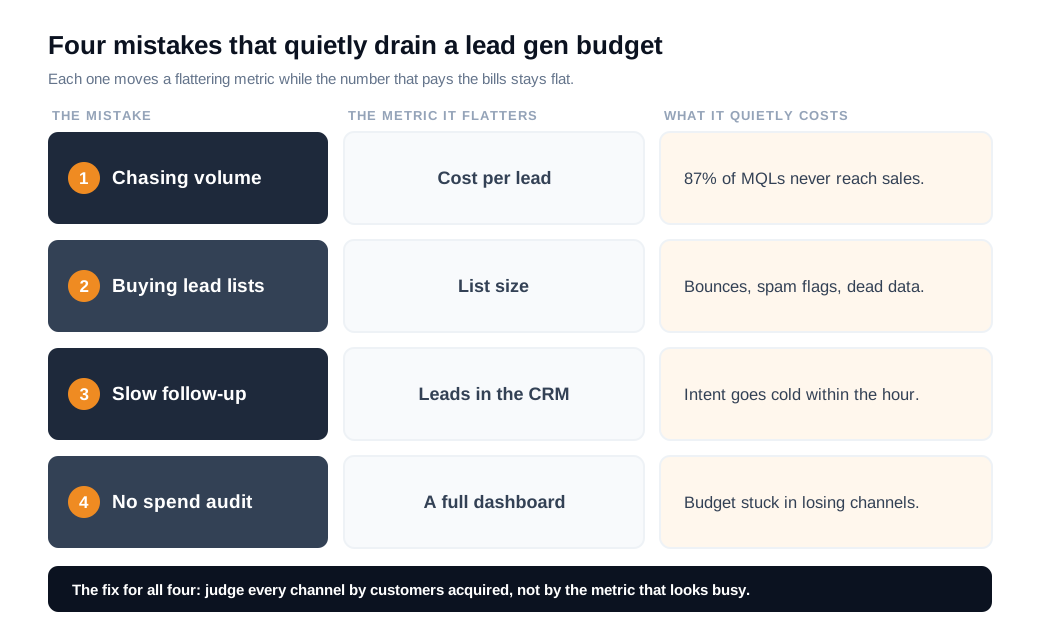
Read the mistakes together and a pattern shows up. Every one of them optimizes for a vanity metric that is easy to move (more leads, a lower cost per lead, a bigger list) at the expense of the metric that pays the bills, which is customers acquired for the money spent.
Why does chasing lead volume over quality waste your budget?
Chasing lead volume wastes budget because most of the extra names you catch with a wider net were never going to buy, so you pay to generate, store, route, and chase leads that go nowhere.
A bigger number at the top of the funnel feels like growth, but when the added leads are a worse fit, every downstream cost rises while revenue stays flat.
The conversion math exposes it. Around 79 percent of marketing leads never turn into a sale, often because they were poorly qualified or never nurtured, as HubSpot's roundup of lead nurturing research notes.
The same roundup cites Gleanster's finding that about half of all leads are qualified but not yet ready to buy, so treating every lead as sales-ready burns rep time on people who need patience instead of a pitch.
There is a hidden cost too. When marketing floods sales with weak leads, reps learn to distrust the whole queue and start cherry-picking, which means genuinely good leads get ignored alongside the junk.
The fix is boring and effective: define the ideal customer profile in writing, score leads against it, and send only the ones that clear the bar to sales while the rest enter a nurture track.
That discipline is the core of running your site as an inbound sales channel rather than a lead-counting exercise, and it lowers cost per customer even when it lowers cost per lead less.
Why does buying lead lists backfire?
Buying lead lists backfires because you pay for contacts who never asked to hear from you, the data is already decaying when it arrives, and the first time you email it you put your own sending reputation at risk. The upfront price is the smallest part of the cost.
Start with decay. B2B contact data goes stale at roughly 2.1 percent per month, which compounds to about 22.5 percent per year, according to the MarketingSherpa research behind HubSpot's database decay simulation.
A list assembled a year ago may already have a quarter of its records wrong before anyone sells it to you. Apollo puts the annual staleness of business email addresses near 28 percent and reports that purchased lists often see first-send bounce rates above 20 percent, in its analysis of why buying email lists fails.
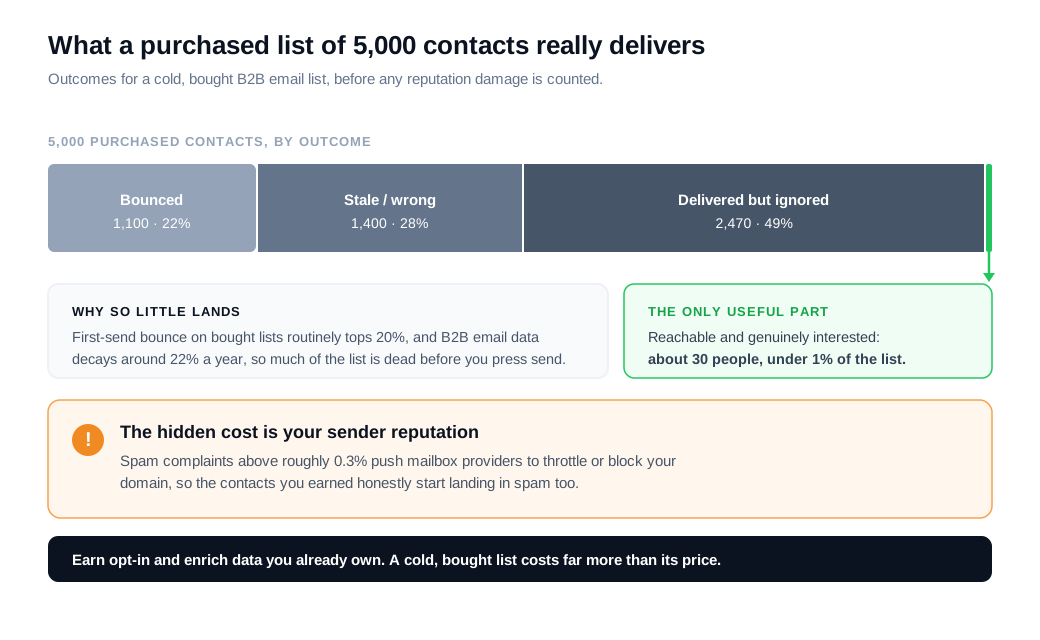
The reputation damage is what makes it expensive. Blast a cold, purchased list and spam complaints climb fast, and once your complaint rate crosses roughly 0.3 percent, mailbox providers begin throttling, filtering, or blocking your domain, which then hurts the deliverability of email to the good contacts you earned honestly.
Between 15 and 30 percent of leads in a typical purchased set also carry invalid or fraudulent contact data, per Landbase's B2B contact data accuracy statistics.
Add the consent and privacy exposure under laws like CAN-SPAM and GDPR, and a cheap list becomes a liability. The better path is to earn opt-in with content and offers, then enrich the contacts you already own so the data stays current.
How does poor follow-up waste your leads?
Poor follow-up wastes leads because intent decays by the hour, so a lead you already paid to generate is often cold by the time anyone replies. The money to create the moment of interest is already spent; slow follow-up throws that spend away at the last step.
The response data is stark. Harvard Business Review's audit of 2,241 U.S. companies in "The Short Life of Online Sales Leads" found an average first-response time of 42 hours, and that firms which reached a lead within an hour were nearly seven times more likely to have a meaningful qualifying conversation than those that waited even 60 minutes longer, and more than 60 times more likely than those that waited a day.
The MIT and InsideSales Lead Response Management study sharpened the point, finding that contacting a lead within five minutes made a rep 21 times more likely to qualify it than waiting 30 minutes.
Almost no one hits that mark. Only about 7 percent of companies respond to an inbound lead within five minutes, while the median B2B response still runs into the tens of hours, per LeadResponse's speed-to-lead statistics.
Because buyers often shortlist the first vendor who engages, that gap is expensive: InsideSales research puts the share of sales going to the company that responds first at roughly half.
This is the cheapest lever in the whole program, because you have already paid for the lead. Closing the gap is mostly a routing and tooling problem.
Instant lead routing and notifications that alert the right rep the second a qualified lead appears, paired with a way for high-intent visitors to talk to a person on the spot through live chat on the page they are already reading, turn a slow queue into a live conversation. A real-time tool like Glimpze exists to catch that interest at its peak instead of letting it sit overnight in an inbox.
How do you audit your lead generation spend?
You audit your lead generation spend by tracing every dollar past the lead all the way to closed revenue, then ranking each channel by cost per customer instead of cost per lead.
Cost per lead is the metric that hides the most waste, because a channel can look cheap per lead and still be your most expensive way to acquire an actual customer.
Set up the plumbing first. A defensible audit needs CRM access with closed-loop attribution, twelve months of channel spend, and a written definition of what counts as a lead, an SQL, and a closed customer, as The Starr Conspiracy lays out in its B2B lead generation cost benchmarks.
Without those, you are comparing channels using inconsistent labels, and the comparison is meaningless.
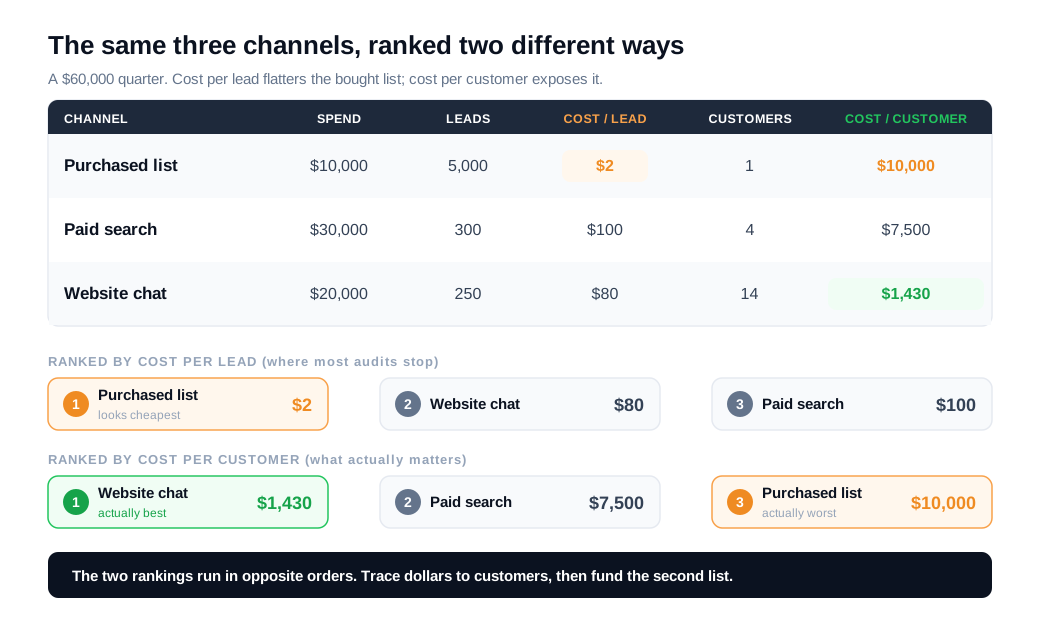
Here is a worked example. Say a company spends $60,000 in a quarter across three channels and looks only at cost per lead:
- A purchased email list costs $10,000 for 5,000 contacts, an eye-catching $2 per lead.
- Paid search costs $30,000 and produces 300 leads at $100 each.
- A website live-chat program costs $20,000 and produces 250 conversations at $80 each.
By cost per lead, the purchased list wins in a landslide. Now trace each to customers:
- The purchased list bounces, draws complaints, and converts almost no one, netting one marginal customer at a true cost of $10,000, before the reputation damage.
- Paid search converts at typical rates to about 4 customers, or $7,500 each.
- The chat leads arrive at the moment of peak intent, qualify at a far higher rate, and produce roughly 14 customers, about $1,430 each.
Ranked by cost per customer, the order flips completely: the "cheapest" channel is the most expensive, and the audit tells you to move budget toward chat and away from the list.
The same discipline catches waste inside a channel. Regular reviews of paid search routinely find money burning on irrelevant search terms, with one analysis of 30 accounts putting the average waste at around 15 percent of spend, per Seer Interactive.
Whatever the channel, judge it against pipeline and revenue, hold each to an LTV:CAC ratio of at least 3:1, and reallocate quarterly. The audit is where a program stops funding what looks busy and starts funding what pays.
Lead generation mistakes: FAQs
How much of a lead generation budget is typically wasted?
A meaningful share, usually because of process failures rather than a single bad campaign. When most inbound leads are never contacted, the median response time runs into the tens of hours, and a chunk of paid spend goes to irrelevant terms, the losses compound.
More budget will not fix that. Closing the leaks will, and it raises the return on the money you already spend.
Is it ever okay to buy a lead list?
Rarely, and only with clear eyes about the tradeoffs. If you buy, treat the data as a research signal rather than a send list, verify and enrich every record before contact, and never blast it, because the deliverability and reputation risk can damage your ability to reach the contacts you earned.
In most cases the money is better spent earning opt-in through content and website conversations.
What is a good lead response time?
Under five minutes for a hot inbound lead is the target, because that is where qualification odds peak. Even responding within the first hour puts you ahead of most competitors, since the median B2B response is far slower.
The practical goal is to route qualified leads to a rep instantly and give high-intent visitors a way to talk to someone the moment they raise their hand.
Key takeaways
- Vanity metrics hide the waste. Leads generated, cost per lead, and list size all move up while customers stay flat, so judge every channel by cost per customer instead.
- Volume without qualification burns money. About 87 percent of MQLs never become SQLs and roughly 79 percent of leads never convert, so define your ICP, score leads, and nurture the ones that are not ready.
- Buying lists backfires on three fronts. The data decays around 22.5 percent a year, purchased lists bounce above 20 percent, and spam complaints past 0.3 percent can wreck deliverability for your whole domain.
- Slow follow-up throws away paid intent. Reaching a lead within five minutes makes qualifying it 21 times more likely, yet only about 7 percent of companies respond that fast.
- Speed is the cheapest lever you have. You have already paid to create the lead, so instant routing and a real-time way to talk lift conversion without new spend.
- Audit by tracing dollars to revenue. With closed-loop attribution and written lead definitions, cost per customer often reverses the ranking that cost per lead suggested.
TAGS

Written by
Daniel SemeckyCo-founder & CEO
Daniel is the co-founder and CEO of Glimpze. He spends his days talking to revenue teams about how to catch high-intent visitors before they bounce, and writes about inbound sales, lead conversion, and building a motion where marketing and sales actually share a number.


