
On this page
Two visitors open the same chat widget in the same minute. One is a shopper comparing two pairs of running shoes who wants to know whether size 10 is in stock before the cart resets. The other is a VP of operations at a 400-person company, three months into evaluating software, asking whether your platform supports single sign-on before she loops in her security team. The widget looks identical to both of them. Almost nothing else about the two conversations is the same.
One of those chats should end in a sale within two minutes. The other will not close for another quarter, and the job in that conversation is different: qualify her, capture her company, and get her to the right rep with enough context to keep moving. Run both through the same script, the same routing, and the same dashboard, and you will overserve the shopper while underserving the buyer.
This post covers how B2B and B2C live chat actually differ: the goal each is chasing, how deal complexity changes the way you use chat, how routing splits, which metrics matter for each, and how to set the tool up for either kind of site.
How does live chat differ between B2B and B2C?
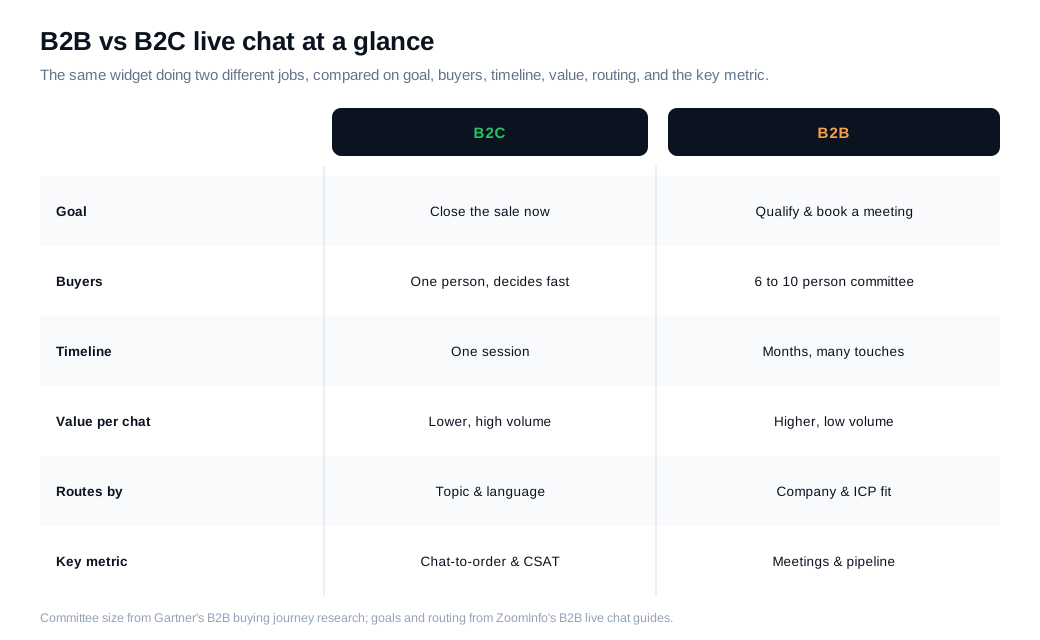
The core difference is what the conversation is for: B2C live chat resolves a transaction inside a single session, while B2B live chat qualifies a lead and feeds it into a sales process that can run for months. Routing, staffing, and the numbers you track all follow from that one split.
On a B2C site, the visitor is usually the buyer. They arrive with a specific, in-the-moment question about sizing, shipping, stock, or a return, and they decide fast, often on price or urgency. A good chat answers the question, removes the last bit of doubt, and the order goes through before the tab closes. Volume is high and each conversation is worth a little.
On a B2B site, the visitor is rarely the whole buyer. They are one person on a committee, gathering information for a decision that involves other departments and a budget that needs sign-off. The chat is one touch in a long sequence, and its job is to figure out who this person is, whether their company fits your ideal customer profile, and how to get them to a real conversation with sales. Volume is lower and each conversation can be worth a great deal.
That is why the plumbing behind the two looks so different. In a B2B setup, firmographic data, routing logic, and a CRM connection are table stakes, while on a B2C site they are close to irrelevant, as ZoomInfo's guide to B2B live chat points out. A widget that cannot see who the visitor's company is or where they sit in your pipeline will underperform in B2B no matter how fast it answers.
How do B2B and B2C chat goals differ?
B2C chat aims to remove the last bit of friction before a purchase, while B2B chat aims to identify the visitor, check whether they fit your ideal customer, and book the next step with a human. Same widget, two different definitions of a win.
In B2C, the win is the order. A shopper asks whether a jacket runs small, an agent confirms the fit and mentions free returns, and the sale closes. Because the buyer decides quickly and alone, speed and reassurance do most of the work, and the payoff shows up directly in conversion. Freshworks' roundup of live chat statistics reports that shoppers who use chat convert at a much higher rate than those who do not, and that a large share of customers will abandon a purchase when no chat is available.
In B2B, the win is a qualified meeting. The rep is trying to learn the visitor's role, company size, and problem, then route them to the right person and get time on the calendar, as ZoomInfo's B2B live chat guide describes. Closing today is not on the table, so the conversation is judged on whether it advanced a good-fit lead.
The stakes on that single B2B chat are higher than they look. Gartner's research on the B2B buying journey finds that buyers spend only about 17 percent of their total time meeting with potential suppliers, and that slice is split across every vendor they are considering. A live chat is one of the rare moments you get direct contact, so wasting it with a generic bot script is expensive. Speed matters too. A Harvard Business Review audit of 2,241 companies found that firms which reached a web lead within an hour were nearly seven times more likely to have a meaningful conversation with a decision maker than those that waited even sixty minutes longer.
How does deal complexity change how you use chat?
Deal complexity decides whether a single chat can finish the job or whether it is one small step in a long, multi-person decision. The more people and money involved, the less any one conversation is about closing and the more it is about moving the deal one notch forward.
A B2C purchase is usually simple. One person decides, the amount is small, and the whole thing can start and finish inside one chat. So you design B2C chat to resolve: answer the question, handle the objection, and let the customer check out without leaving the conversation.
A B2B purchase is a different kind of animal. Gartner puts a typical buying group for a complex solution at six to ten decision makers, each bringing their own research, and mid-market software cycles often run three to six months while enterprise deals stretch past a year. No chat closes that. Instead, chat handles one stakeholder at a time, captures what they care about, and passes clean context to the rep who will work the account over the coming weeks.
Complexity also raises the ceiling on what a single conversation is worth, which changes how far you escalate. When a serious B2B buyer has a technical question that is easier to show than to type, jumping from text into a live video call or screen share in the same session can do the work of a scheduled demo and shorten the cycle. On a B2C site that same move would be overkill for a thirty dollar order. Match the effort to the size of the deal, and let text carry the simple cases.
How do routing needs differ between B2B and B2C?
B2C routing sorts a high volume of chats by topic and language to whichever qualified agent is free, while B2B routing sends a smaller number of high-value chats to a specific person based on who the visitor's company is. One model optimizes for load balancing, the other for account ownership.
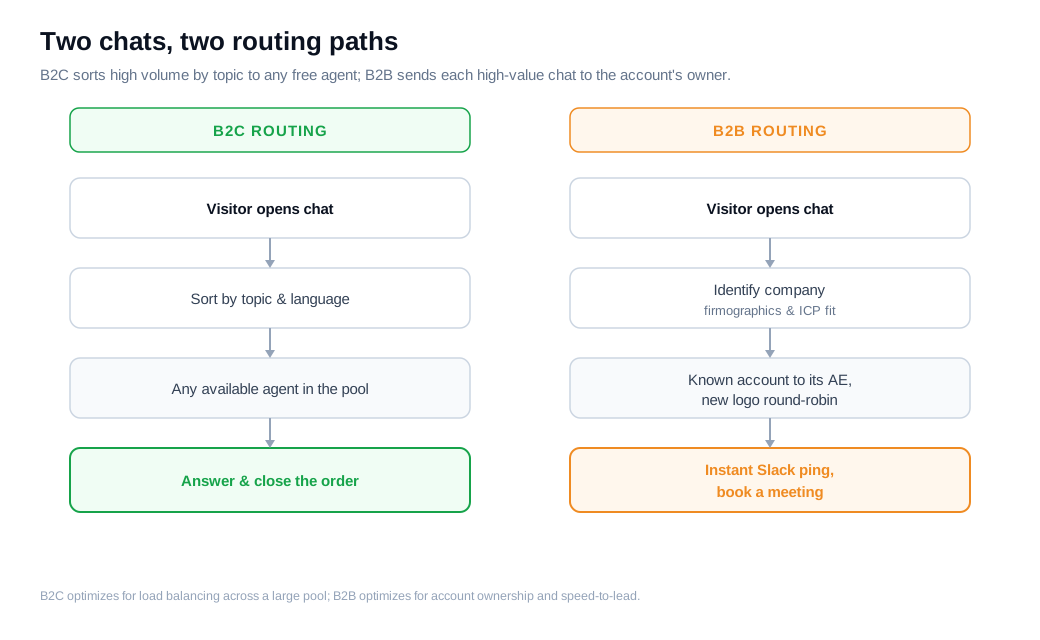
B2C routing is mostly a queue problem. A returns question should reach someone on the returns team, a Spanish-language chat should reach a Spanish speaker, and a VIP customer should skip the line. Beyond that, the system spreads chats across a large pool to keep wait times down, and an AI assistant clears the repetitive questions before a person is ever needed.
B2B routing is an ownership problem. The tool enriches the visitor with firmographic data, checks whether the company matches your ideal customer profile, and then decides where the chat should land. If the account already belongs to an account executive, the chat goes straight to that rep. A brand-new company that fits the profile might round-robin among available reps by territory, while a poor fit gets a lighter touch or the bot. Because speed decides so much in B2B, the rep needs an instant ping, usually in Slack, so they can join while the buyer is still on the page. That firmographic lookup and CRM-aware routing and notification layer is exactly the plumbing a consumer-focused widget leaves out.
What live chat metrics matter for B2B vs B2C?
B2C measures the conversation itself, including response time, satisfaction, resolution, and chat-to-order conversion, while B2B measures what the conversation produces downstream, including qualified leads, meetings booked, and pipeline influenced. A B2B team graded on satisfaction and a B2C team graded on pipeline would both be chasing the wrong number.
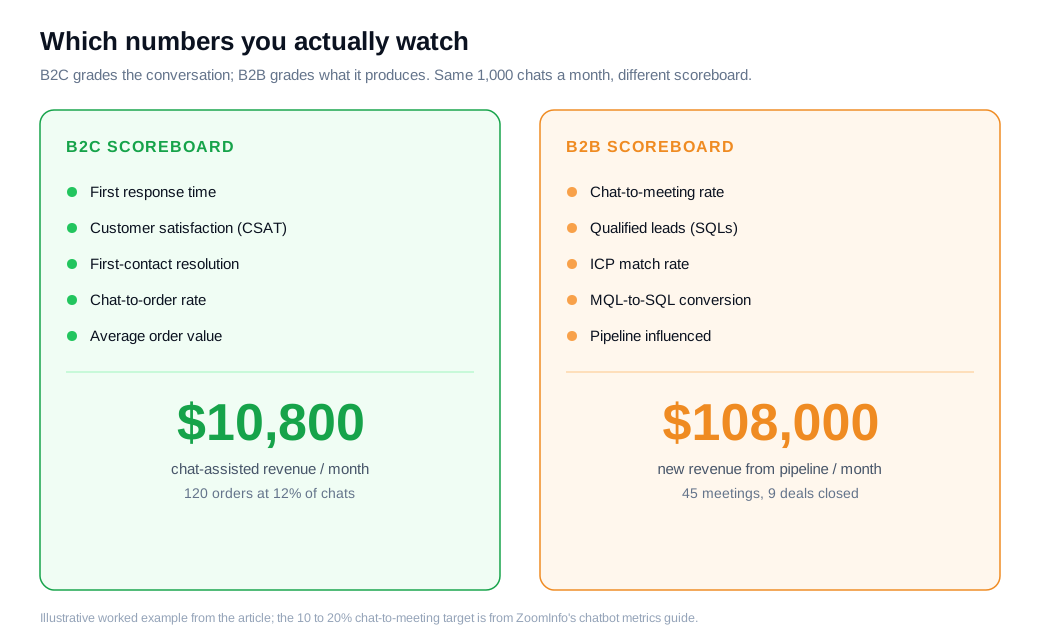
For a B2C team, the scoreboard is operational and immediate. First response time and customer satisfaction show whether the experience is good, first-contact resolution shows whether issues actually get solved, and chat-to-order conversion plus average order value tie chat to revenue. These are the numbers a support or ecommerce lead watches day to day.
For a B2B team, the scoreboard sits further down the funnel. ZoomInfo's guide to chatbot metrics points to chat-to-meeting rate (a reasonable target on a high-intent page is 10 to 20 percent of visitors), qualified leads generated, ICP match rate, MQL-to-SQL conversion, and pipeline influenced. Most of those only exist if the chat tool writes to your CRM, which is why attribution is a B2B requirement and a B2C afterthought.
Here is a worked example with round, illustrative numbers. Two teams each handle 1,000 chats a month.
The B2C store treats every chat as a shot at an order. If 12 percent of chatters buy at a 90 dollar average order value, that is 120 orders, or about 10,800 dollars in chat-assisted revenue, and the team is judged on that conversion rate and its CSAT.
The B2B SaaS company cares only about fit. Say 300 of the 1,000 chats are with companies that match the ICP, and 15 percent of those book a meeting. That is 45 meetings. If sales closes 20 percent at a 12,000 dollar annual contract, chat sourced 9 deals, or about 108,000 dollars in new revenue. Same chat volume, completely different scoreboard, and any dashboard that only reported CSAT would have hidden the entire B2B result.
How should you set up live chat for a B2B or B2C site?
Set it up around the outcome you are actually chasing: a B2C site wires chat for fast, high-volume resolution and cart recovery, while a B2B site wires it for identification, routing, and booking, then grades each on its own scoreboard. The specific tool matters less than fitting the configuration to the model.
For a B2C site, put live chat on product, cart, and checkout pages where hesitation turns into lost orders, and use proactive nudges on shipping and returns questions. Lean on an AI assistant and saved replies to absorb the repetitive volume, since a B2C team lives or dies on efficiency and swift resolution across a large customer base. Staff for your peak hours, cap how many chats each agent juggles, and measure conversion and satisfaction.
For a B2B site, weight chat toward pricing, product, and solution pages where buyers self-qualify. Turn on firmographic enrichment and ICP-based routing so a known account reaches its owner, wire Slack alerts so reps respond in seconds, and let reps escalate to video for a live demo. Because each account is high value and long-lived, B2B support leans on dedicated reps, service agreements, and account managers rather than sheer volume, a contrast Sobot lays out in its comparison of B2B and B2C support. Sync everything to the CRM and grade the channel on meetings and pipeline, not tickets closed.
If your traffic is a mix, which is common for a product that sells to both individuals and teams, segment by page and by firmographic signal rather than forcing one script on everyone. A tool that offers a free tier, Glimpze among them, lets you baseline both paths before committing budget, and the inbound sales motion in particular rewards catching a good-fit visitor while their intent is still warm.
Key takeaways
- The goal splits first. B2C chat closes a transaction in one session, while B2B chat qualifies a lead and hands it to sales, and every other difference follows from that.
- Complexity sets the pace. A B2C buyer decides alone in minutes, while a B2B purchase runs through a six to ten person committee over months, so B2B chat advances a deal rather than closing it.
- Routing works on different keys. B2C routes by topic and language across a large pool, while B2B routes by company and ICP fit to a named rep, with an instant Slack ping to protect speed-to-lead.
- The scoreboards do not overlap. B2C watches response time, CSAT, and chat-to-order conversion, while B2B watches meetings booked, qualified leads, and pipeline influenced.
- Staffing mirrors the model. B2C staffs a larger pool plus automation for volume and coverage, while B2B staffs fewer, more senior reps who can qualify, handle a technical objection, and jump on a call.
- Configure to the outcome. Wire a B2C widget for fast resolution and cart recovery, wire a B2B widget for enrichment, routing, and booking, and grade each on the metric that reflects its job.

Written by
Nilas MylerCo-founder & CTO, Glimpze
Nilas is the co-founder and CTO of Glimpze, an inbound sales tool that turns high-intent website visitors into live conversations. A former SEO consultant for some of the largest companies in Denmark, he writes about speed-to-lead, inbound sales, and conversion rate optimization — the technical and operational mechanics of turning traffic into pipeline.


