
On this page
- What is conversational marketing?
- How does conversational marketing work?
- How is conversational marketing different from traditional marketing?
- What channels and tools does conversational marketing use?
- What are some real conversational marketing examples?
- Does conversational marketing actually work?
- How do you get started with conversational marketing?
- Key takeaways
- Sources
A prospect lands on your pricing page with a budget approved and one question standing between them and a purchase. On most B2B sites, the only way to ask it is a contact form that promises a reply "within one business day." They submit it, close the tab, and start comparing you against two other vendors while they wait.
Conversational marketing removes that wait. Instead of collecting a question and answering it tomorrow, you answer it now, in a chat window or a quick call, while the person is still on the page and still interested. The change sounds minor. Its effect on how many visitors turn into pipeline is not.
This guide defines conversational marketing, shows how it works, compares it with traditional marketing, walks through real examples and the channels behind them, checks whether it actually pays off, and lays out how to get started.
What is conversational marketing?
Conversational marketing is an approach that engages prospects and customers through real-time, two-way conversations instead of one-way messages and delayed follow-up. A visitor asks a question, a person or an assistant answers in the moment, and the exchange moves them toward a next step while their interest is still high.
The idea puts the buyer at the center of the interaction. Rather than pushing the same broadcast at everyone and waiting for a form fill, you meet each person where they are, learn what they actually need, and respond to that specific need. The conversation can run on a website chat widget, a messaging app, SMS, a social channel, or a live call, and it can be handled by a human, an AI assistant, or a handoff between the two.
The term is credited to Drift, the company that built much of the early category and codified it in the 2019 book "Conversational Marketing" by David Cancel and Dave Gerhardt. Their framework describes the goal in three moves: engage the visitor with a relevant opener, understand who they are and what they want, and recommend a next step, whether that is an answer, a demo, or a booked meeting. That three-part loop is a useful way to picture how the whole thing runs.
How does conversational marketing work?
Conversational marketing works by starting a relevant conversation at the moment of interest, learning enough about the person to route them correctly, and then moving them toward a next step without making them wait. The mechanics follow the engage, understand, recommend loop.
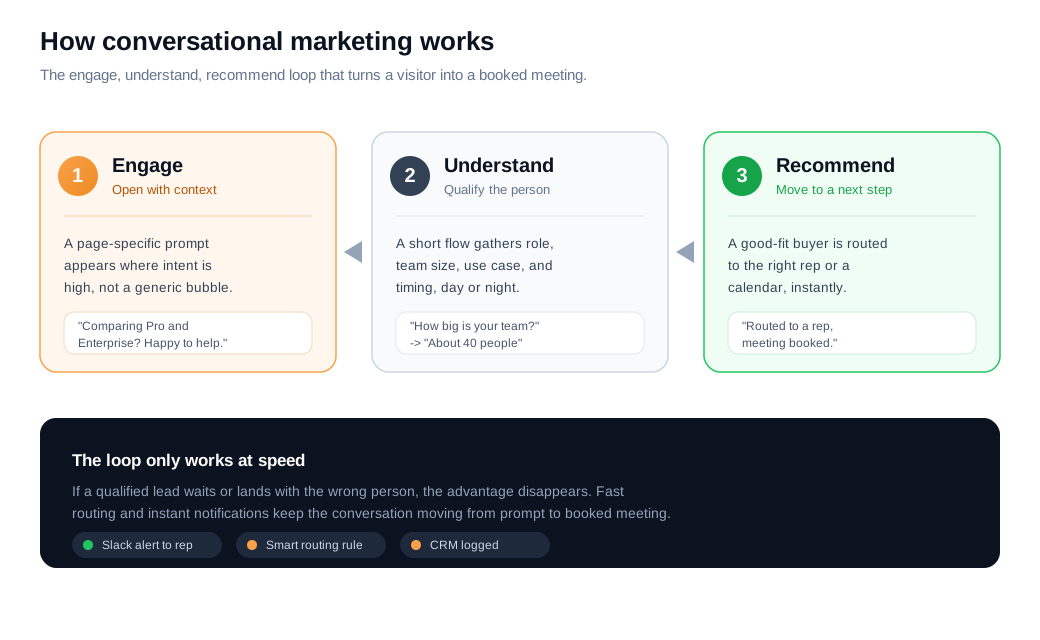
Engage. The conversation opens with context. A visitor reading a top-of-funnel blog post should not see the same prompt as someone comparing plans on the pricing page. A well-timed opener on a high-intent page ("Want a hand comparing the Pro and Enterprise plans?") starts far more conversations than a generic bubble that says "Hi, how can we help?"
Understand. The next few messages gather what a rep would need to know before a real discussion: company size, role, use case, timing, and the specific problem the person is trying to solve. An AI assistant can run this qualification around the clock, so a visitor at 11 p.m. gets the same treatment as one at 11 a.m.
Recommend. Once the system knows who it is talking to, it converts the interaction into momentum. A qualified buyer gets routed straight to the right sales rep for a live chat or a booked meeting. A support question gets an answer or a help article. A low-fit visitor gets a useful pointer and does not consume a rep's time.
The whole loop depends on speed and routing. If a hot lead has to wait, or lands with the wrong person, the advantage evaporates. This is why serious setups pair the conversation layer with instant notifications and rules that send each lead to the right rep the second it qualifies.
How is conversational marketing different from traditional marketing?
The core difference is direction and timing. Traditional marketing broadcasts one message to a large audience and waits for a response, while conversational marketing holds a two-way exchange with one person in real time.
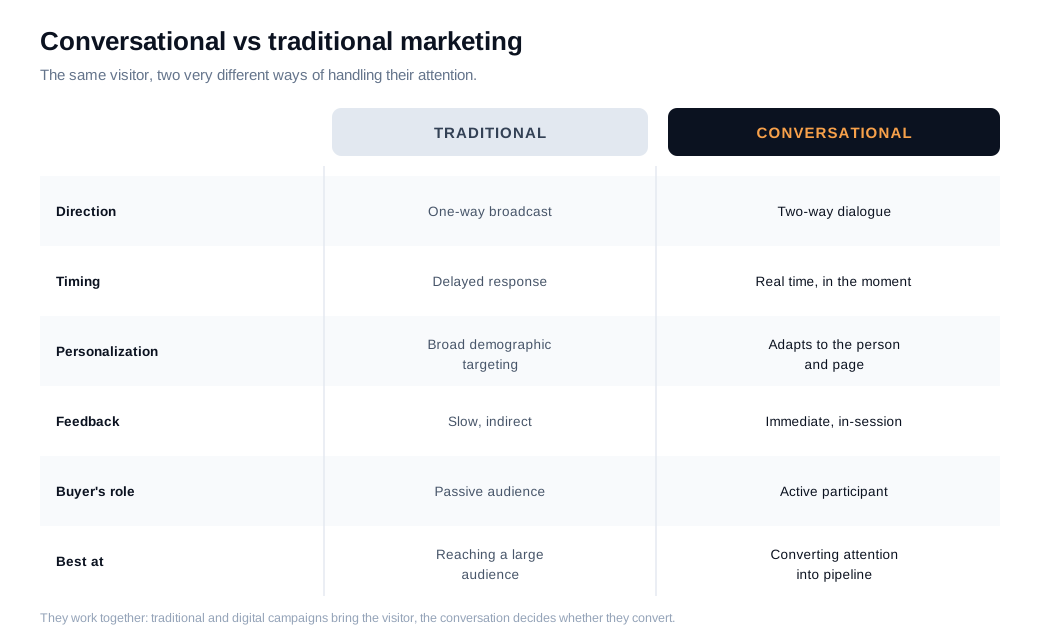
Traditional marketing is largely a monologue. A TV spot, a print ad, a display banner, or an email blast sends a fixed message to a mass audience, and any response happens later, on the buyer's own time. Targeting leans on broad demographics, and feedback arrives slowly through surveys, reviews, or campaign reports that you read after the fact.
Conversational marketing is a dialogue. The message adapts to the person in front of you based on the page they are on, the questions they ask, and the answers they give. Feedback is immediate, because the buyer is talking back, and you can adjust in the same session. A visitor who says "we are a 12-person team" can be shown the plan that fits, not the enterprise pitch.
The two are complements more than rivals. Traditional and digital campaigns still do the heavy lifting of getting people to your site. Conversational marketing is what happens when they arrive, turning attention you already paid for into a conversation instead of another passive page view. The ad brings the visitor; the conversation decides whether they convert.
What channels and tools does conversational marketing use?
Conversational marketing runs on any channel that supports a real-time back-and-forth: website live chat, AI chat assistants, messaging apps, SMS, social direct messages, and live voice or video. Most teams combine several rather than pick one.
Website chat is the anchor for B2B. A live chat widget on high-intent pages lets a person answer a buying question in seconds, and an AI chat assistant can handle qualification and off-hours coverage, then hand off to a rep when the conversation gets serious. For questions that are hard to resolve in text, some tools let a hot visitor jump straight to a live video call or screen share without leaving the page.
Messaging and social extend the same idea beyond your site. Buyers increasingly expect to reach a business the way they text a friend. Twilio's State of Customer Engagement research has found that roughly 9 out of 10 consumers want to use messaging to communicate with brands, and that a large majority want a two-way thread they can reply to, rather than a one-way broadcast. WhatsApp, Facebook Messenger, Instagram DMs, and SMS all support that expectation.
On the tooling side, the category includes purpose-built platforms such as Drift (now part of Salesloft), Qualified, and Intercom, broader suites like HubSpot, and lighter-weight widgets aimed at smaller teams. The right choice depends on your traffic, your sales motion, and whether you need a human on the line fast or an assistant that can carry most conversations alone. Wiring the tool into where your team already works matters too, so a Slack ping or a CRM update through your integrations reaches a rep the moment a lead is worth a human.
What are some real conversational marketing examples?
Real conversational marketing examples range from a pricing-page chat that books a demo to a WhatsApp thread that handles a reorder. The common thread is a live exchange that replaces a form or a wait.
Here are the patterns you will see most often:
- High-intent website chat. A prompt appears on the pricing or demo page, qualifies the visitor, and routes a good-fit buyer to a rep or a calendar. This is the classic B2B play.
- Cart-recovery chatbot. On an ecommerce site, an assistant catches a hesitating shopper at checkout, answers a shipping or sizing question, and nudges the purchase along.
- Messaging for service and reorders. A customer sends a WhatsApp or SMS message to check an order, reorder a product, or resolve an issue, and gets a fast, threaded reply.
- Social DM support. A brand turns Instagram or X mentions and DMs into a support channel, answering promptly and escalating to a rep when needed.
The vendor case studies point in the same direction. Qualified reports that its customer Gamma, a legal services firm, generated more than 150 sales opportunities and over 12 million pounds in pipeline within six months of launching conversational marketing on its site, alongside a 33 percent lift in website conversion and 22 percent more marketing-qualified leads. Intercom has reported that its customer Copper saw a 13 percent higher website conversion rate and 19 new sales opportunities in the first month. Treat any single vendor's numbers as directional rather than typical, but the shape of the result, more conversations turning into pipeline, is consistent.
Does conversational marketing actually work?
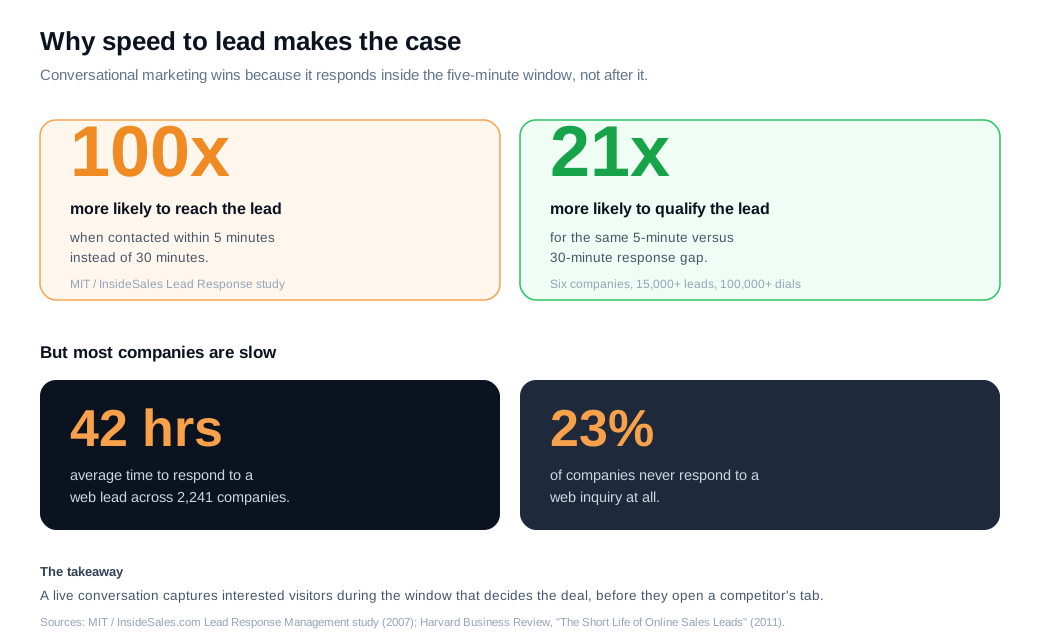
Yes, when it sits on high-intent pages and someone (or something) responds fast, because the payoff tracks speed to lead almost exactly. The research on response time is where the case gets concrete.
The foundational study is the 2007 Lead Response Management analysis run by Dr. James Oldroyd at MIT's Sloan School with InsideSales.com, which looked at six companies, more than 15,000 leads, and over 100,000 dials. It found that a lead contacted within five minutes rather than thirty was about 100 times more likely to be reached and 21 times more likely to be qualified. A later Harvard Business Review audit of 2,241 U.S. companies, "The Short Life of Online Sales Leads," found the average firm took around 42 hours to respond to a web lead and 23 percent never responded at all, which shows how rare fast follow-up still is.
Conversational marketing is a direct answer to that gap, because the conversation happens during the five-minute window instead of after it. Here is a simplified worked example to see the mechanics.
Suppose a B2B SaaS site draws 10,000 visitors a month, and 6 percent of them (600 people) reach a high-intent page like pricing or product. Say a conversational setup engages 12 percent of those visitors in a chat, or 72 conversations, and qualifies half of them into 36 real leads. If reps respond fast and book 40 percent into meetings, that is about 14 booked meetings a month from traffic you already had. At a 25 percent close rate and a 6,000 dollar annual contract value, roughly 3 to 4 of those become customers, adding on the order of 20,000 dollars in new annual recurring revenue. Change the inputs and the total moves, but the lever is the same: catch more of the people who were already interested before they leave.
The catch is the same one that applies to inbound sales generally. A chat widget that nobody answers converts worse than no widget at all, because it promises a fast reply and then breaks the promise. The upside is real only when the response is genuinely fast.
How do you get started with conversational marketing?
You get started with conversational marketing by putting one qualified conversation on your highest-intent page and answering it fast, then expanding from there. It is a launch you can run in an afternoon, not a quarter-long project.
- Pick your highest-intent pages. Start where buying interest is clearest: pricing, product, demo, and comparison pages. Keep chat off low-intent pages at first so every conversation that opens is worth acting on.
- Choose channels and a tool. Decide whether you need a human on the line fast, an AI assistant that can carry most conversations, or both. Many platforms, including Glimpze, offer a free plan so you can test the channel before committing budget.
- Design the qualifying flow. Write the openers for each page and the two or three questions that separate a good-fit buyer from a browser (role, team size, use case, timing). Keep it short; every extra question loses people.
- Set routing and handoff. Decide who gets which conversation and how an AI assistant hands off to a human. Wire up routing and notifications so the right rep is pinged the instant a lead qualifies, in Slack or wherever the team works.
- Staff it honestly and set hours. Cover your peak traffic with real people, and let an assistant or an offline form handle the rest. A widget that pretends to be staffed and then goes silent does more harm than good.
- Measure and iterate. Track conversations started, meetings booked, and pipeline influenced. Move your prompts, flows, and coverage toward whatever converts, and expand to more pages once the first ones prove out.
Start narrow, keep response times honest, and grow the channel once it earns the attention. Conversational marketing rewards discipline more than reach.
Key takeaways
- Conversational marketing means real-time, two-way conversations with buyers, in place of one-way broadcasts and delayed form follow-up, with the customer's need at the center.
- The engine is a simple loop: engage a visitor with a page-specific prompt, understand who they are through a short qualifying flow, and recommend a next step by routing them to the right person or booking a meeting.
- It complements traditional marketing rather than replacing it. Ads and content bring the visitor; the conversation decides whether that attention turns into pipeline.
- The payoff tracks speed to lead. MIT's Lead Response Management study found a lead contacted within five minutes was 21 times more likely to qualify than one contacted at thirty, and most companies still take around 42 hours to respond.
- Channels span chat, AI assistants, messaging, and live video, so match the mix to your sales motion and wire it into Slack and your CRM so hot leads reach a rep instantly.
- Start narrow and staff it honestly. Launch one qualified conversation on your highest-intent page, respond fast, measure meetings and pipeline, then expand.

Written by
Daniel SemeckyCo-founder & CEO
Daniel is the co-founder and CEO of Glimpze. He spends his days talking to revenue teams about how to catch high-intent visitors before they bounce, and writes about inbound sales, lead conversion, and building a motion where marketing and sales actually share a number.


