
On this page
- How does round-robin lead distribution work?
- How does weighted lead distribution work?
- Round-robin vs weighted: which improves conversion rates?
- When should you use a hybrid distribution model?
- How do you set up lead distribution rules?
- How do you measure whether your distribution is working?
- Key takeaways
- Sources
Two sales teams start the quarter with the same 400 inbound leads a month and the same five reps. One team splits every lead in a neat circle, so each rep ends up with eighty. The other sends more leads to the people who close and fewer to the ones still learning the product.
Their headcount is identical. Their close rate is not even close. That gap is the entire argument between round-robin and weighted lead distribution, and it usually comes down to a setting most teams configure once and never revisit.
This guide covers how round-robin distribution works, how weighted distribution works, which one actually lifts conversion, when a hybrid of the two beats either alone, how to set the rules up step by step, and how to tell whether they are working.
How does round-robin lead distribution work?
Round-robin lead distribution assigns each incoming lead to the next rep in a fixed rotation, cycling through the list one at a time so every rep ends up with a roughly equal share. Lead one goes to rep A, lead two to rep B, and so on until the rotation wraps back to the start and begins again.
It works like dealing cards around a table. Nobody has to decide who takes the next lead, which removes the manual hand-off that quietly delays follow-up. Because assignment is instant and automatic, round-robin tends to improve speed to lead, the single biggest lever on inbound conversion.
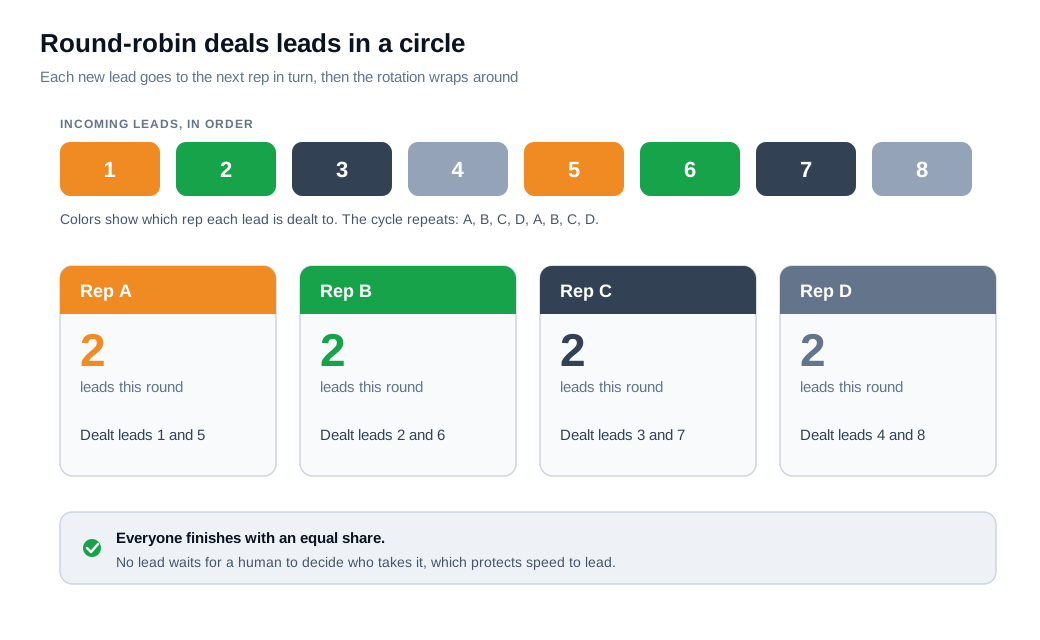
The appeal is fairness and simplicity. Every rep gets the same volume, workloads stay balanced, and no one can cherry-pick the easy leads while colleagues wait. Sales teams reach for it because it is easy to explain and easy to trust, which is why tools from LeadAngel to Salesforce ship it as a default option.
Plain round-robin carries one built-in blind spot. It treats every rep and every lead as interchangeable. A rep who is offline, on vacation, or already buried in active deals still gets their turn in the rotation unless you add guardrails. Real setups pair the rotation with rules that skip unavailable reps, respect working hours, and pre-filter by territory or product before the rotation even starts.
How does weighted lead distribution work?
Weighted lead distribution still rotates leads through the team, but it changes the size of each rep's share, so higher-weighted reps receive proportionally more leads than lower-weighted ones. It is often called weighted round-robin, and the mechanism is a number attached to each rep that says how big a slice of the flow they should get.
You set those weights on something that matters to your team. Common choices are conversion rate, seniority, capacity, or specialization. A senior rep on a weight of three sitting next to a new hire on a weight of one will receive three leads for every one the new hire gets, which is how Lead Prosper's breakdown of weighted round-robin describes the split.
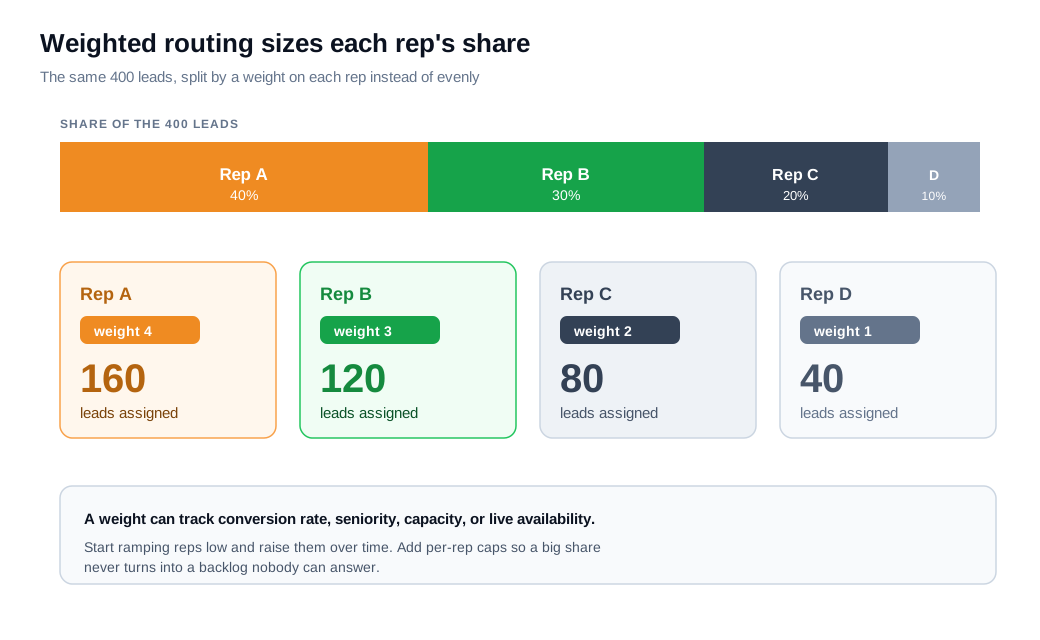
That single number lets you do several jobs at once. You can ramp a new rep slowly by starting them on a low weight and raising it as they find their footing. You can send more volume to your strongest closers. You can match capacity, so a rep who also handles renewals carries a lighter inbound load. Weights can even reflect availability in real time, giving idle reps a bigger share while someone at capacity gets fewer.
The trade-off is that weighted distribution is only as good as the weights behind it. Point them at a rep who looked strong last quarter but has since gone cold, and you are funneling your best leads into a slower pipeline. Weights need caps too, because sending 40 percent of leads to one person accomplishes nothing if they cannot answer them quickly.
Round-robin vs weighted: which improves conversion rates?
Weighted distribution usually produces more deals from the same lead flow, because it sends a larger share to the reps most likely to close, but that advantage only holds when your weights track real, current performance and your top reps have room to keep up.
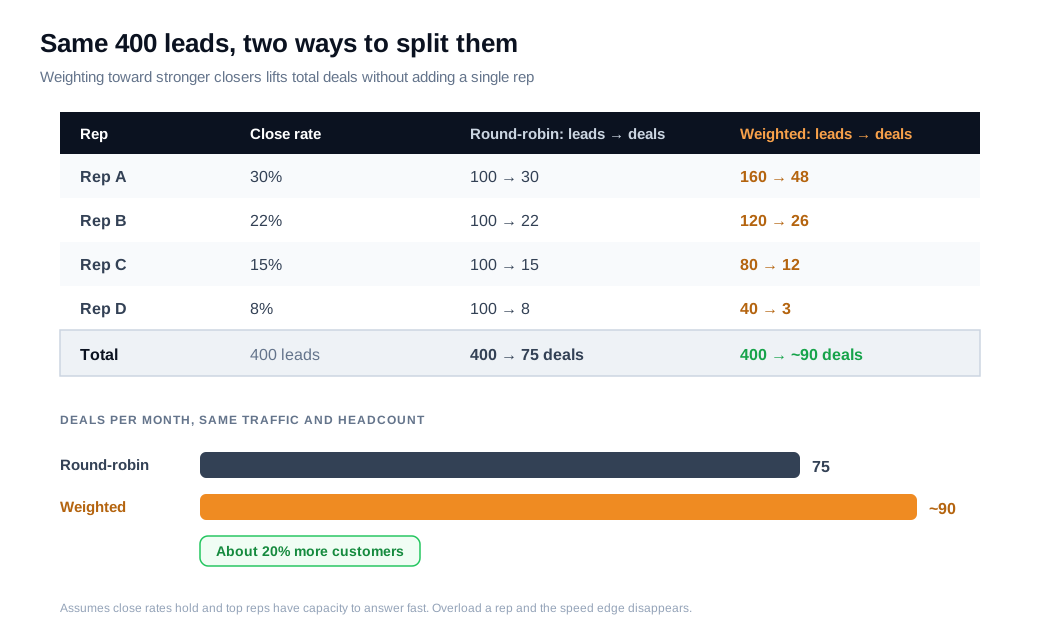
Here is the math on a single month. Four reps split 400 inbound leads, and their historical close rates are 30, 22, 15, and 8 percent.
Under pure round-robin, each rep gets 100 leads. That produces 30, 22, 15, and 8 deals, which adds up to 75 in total.
Now weight the rotation toward the closers: 160 leads to the 30 percent rep, 120 to the 22 percent rep, 80 to the 15 percent rep, and 40 to the 8 percent rep. The same 400 leads now yield about 48, 26, 12, and 3 deals, or roughly 90. Same traffic, same five-person team, about 20 percent more customers, decided entirely by how the leads were split.
That uplift is real, and it is also fragile. Pile 160 leads on one rep and their speed to lead suffers, which matters because speed is where most inbound conversion is won or lost. Harvard Business Review's audit of thousands of companies in "The Short Life of Online Sales Leads" found that firms contacting a lead within an hour were nearly seven times more likely to qualify it than those that waited even 60 minutes. The Lead Response Management study put the swing sharper still, with reps who reach a lead inside five minutes far more likely to qualify it than those who wait thirty. A weighting scheme that buries your best rep can erode the exact speed advantage it was built to create.
There is a second cost that does not show up this month. Starve your junior reps of leads and they never develop, so your bench stays thin and one good quarter from your top closer hides a fragile team. Conversion depends on fit and speed working together: getting the right lead to the right rep fast. The most durable lift comes from routing on fit, matching a lead to a rep with the right skill or account knowledge, which one lead-routing analysis links to meaningfully higher win rates, rather than simply overloading whoever closed best last quarter.
When should you use a hybrid distribution model?
Reach for a hybrid model when no single rule fits every lead, which describes almost every B2B team, so you run round-robin as the baseline and layer weighted or rule-based routing on top for the segments that earn it. Most lead-distribution specialists land on this same recommendation once they get past the theory.
The pattern looks like a series of filters. Named or enterprise accounts route straight to the assigned account executive. Leads that need specific product, language, or territory knowledge go to a rep who has it. High-scoring, high-intent leads go to the fastest available closer. Everything else falls through to a plain round-robin, so the bulk of the pipeline keeps moving evenly.
A common shape is to route by territory first, then run a weighted round-robin inside each territory, with capacity caps so nobody gets more than they can work. That gives you the fairness and speed of round-robin for ordinary leads and the conversion edge of weighting where the stakes are highest, without betting the whole system on one method. LeanData's best-practice guidance frames round-robin as the default with weighted rules layered on for high-value segments, and that layering is what keeps a hybrid from collapsing back into either extreme.
How do you set up lead distribution rules?
You set up distribution rules by deciding what enters the rotation, grouping the right reps into a pool, choosing a method and its weights, and adding guardrails for availability and capacity before you turn it on. Order matters here, because a rule that assigns leads to an offline rep is worse than no rule at all.
-
Define entry criteria. Decide what qualifies a lead for a given rotation: lead score, source, geography, or product interest. This keeps unqualified traffic out of your reps' queues before any assignment happens.
-
Build the pool. Add eligible reps to a team and tag them by role, product, language, and territory so membership stays easy to filter as the team changes. Set each person's working hours.
-
Choose the method and weights. Pick round-robin, weighted, or a hybrid of the two. If you weight, start ramping reps low and seniors at standard, and record why each weight is what it is so you can audit it later.
-
Add guardrails. Skip reps who are offline, set hourly or daily caps, and add an active cap that limits how many hot leads one rep can hold at once. Define a fallback for when everyone is busy, so no lead drops into a void.
-
Wire up notifications. The assigned rep should know within seconds, through a Slack alert or a mobile push, not the next time they happen to refresh a list. A clear lead routing and notification setup is what turns an assignment into an actual conversation.
-
Test on a slice before you roll out. Point one segment or one team at the new rules, watch the assignments for a week, then expand once the balance looks right.
For inbound leads that arrive while a buyer is still on your site, the routing has to happen in the moment, not overnight. A real-time tool such as Glimpze routes a high-intent visitor to an available rep and fires a Slack alert instantly, so the person who wants to talk can start a live chat or a call before their interest cools. That same speed is what makes a strong inbound sales motion work, whichever distribution method sits underneath it.
How do you measure whether your distribution is working?
Measure your distribution by watching four things per rep: how evenly leads actually land, how fast the first touch happens, how many assigned leads get worked at all, and how those splits turn into closed deals. A distribution rule can look perfect on paper and still leak revenue if you never check the follow-through.
Start with the balance itself. Pull assignments per rep against the split you intended, since caps, offline skips, and territory filters often quietly skew a rotation you assumed was even. Then track time to first action, or speed to lead, per rep and per segment, because a rep who wins the rotation but answers slowly is a hidden leak in the funnel.
Watch leakage directly. Count how many assigned leads never get a first touch, and how often leads get reassigned. This is where most pipeline disappears, since an assignment that no one acts on is the same as no assignment. Set a response SLA and measure adherence against it every week.
Finally, tie the splits back to conversion by rep and by segment, and revisit your weights on a schedule. Review caps, weights, and pool membership monthly, then retune the weights against your actual closed-won history rather than last year's assumptions, the way routing playbooks from Kubaru recommend. The point of measuring is to catch the two failure modes early: a top rep quietly overloaded and slowing down, and a junior rep starved of the volume they need to grow.
Key takeaways
- Round-robin trades effectiveness for fairness. It deals leads to reps in a fixed rotation, so everyone gets an equal share and no lead waits for a manual hand-off, which protects speed to lead.
- Weighted distribution sizes each rep's share. A weight on every rep sends more leads to stronger closers or higher-capacity reps, and it can also ramp new hires slowly.
- Weighting can lift conversion, within limits. In a 400-lead month, weighting toward closers produced about 90 deals against 75 for round-robin, but only if weights stay current and top reps have room to respond fast.
- A hybrid fits most B2B teams. Run round-robin as the default and layer weighted or rule-based routing on top for named accounts, skill matches, and high-intent leads.
- Guardrails matter as much as the method. Skip offline reps, cap volume, notify instantly, and route the right lead to the right rep, since a slow assignment wastes the intent it captured.
- Measure balance, speed, leakage, and conversion. Track assignments per rep, time to first touch, uncontacted leads, and closed-won by segment, then retune weights monthly against real results.
TAGS

Written by
Daniel SemeckyCo-founder & CEO
Daniel is the co-founder and CEO of Glimpze. He spends his days talking to revenue teams about how to catch high-intent visitors before they bounce, and writes about inbound sales, lead conversion, and building a motion where marketing and sales actually share a number.


