
On this page
A four-person sales team works through 900 leads a month. Two of the reps spend most of their week on the same three tasks: finding the right contact, writing a first email, and chasing a reply that often never comes. By the time anyone has a real conversation, the buyer has moved on.
An AI SDR is software built to take over that grind. It researches accounts, writes and sends outreach, answers basic questions, follows up on a schedule, and books meetings, then passes qualified conversations to a person. The pitch is straightforward. Give every rep a tireless assistant that works nights and weekends. The reality in 2026 is more mixed, and worth understanding before you sign a contract.
This guide covers what an AI SDR actually does, where it earns its keep, where it breaks, how it stacks up against a human rep on real numbers, whether it can replace your team, and how to run one without burning your domain or your brand.
What is an AI SDR?
An AI SDR is a software agent that automates the sales development representative role, which is the top-of-funnel work of finding prospects, reaching out, qualifying interest, and booking meetings for account executives to close.
Under the hood it combines a large language model for writing and reasoning with a data layer that pulls contact and company information, plus a sending engine that runs email and sometimes LinkedIn or SMS sequences. Some tools run fully autonomously and send on their own. Others work in co-pilot mode, where the AI drafts and a human approves before anything goes out. Both get sold under the same label, so read the fine print.
An AI SDR is a step past a website chatbot. A chatbot answers whatever question a visitor types. An AI SDR owns an outcome, usually a booked meeting, and works a sequence of steps to get there. You will also see the term AI BDR (business development representative), which vendors use interchangeably for the same category of tool. IBM's overview frames the AI SDR as a way to run early-funnel activity around the clock instead of leaving it to a handful of humans and their working hours.
What does an AI SDR do?
An AI SDR handles the repeatable steps of prospecting and first contact: building a lead list, researching each account, drafting a personalized message, sending it, following up, answering common replies, and scheduling a meeting when someone bites.
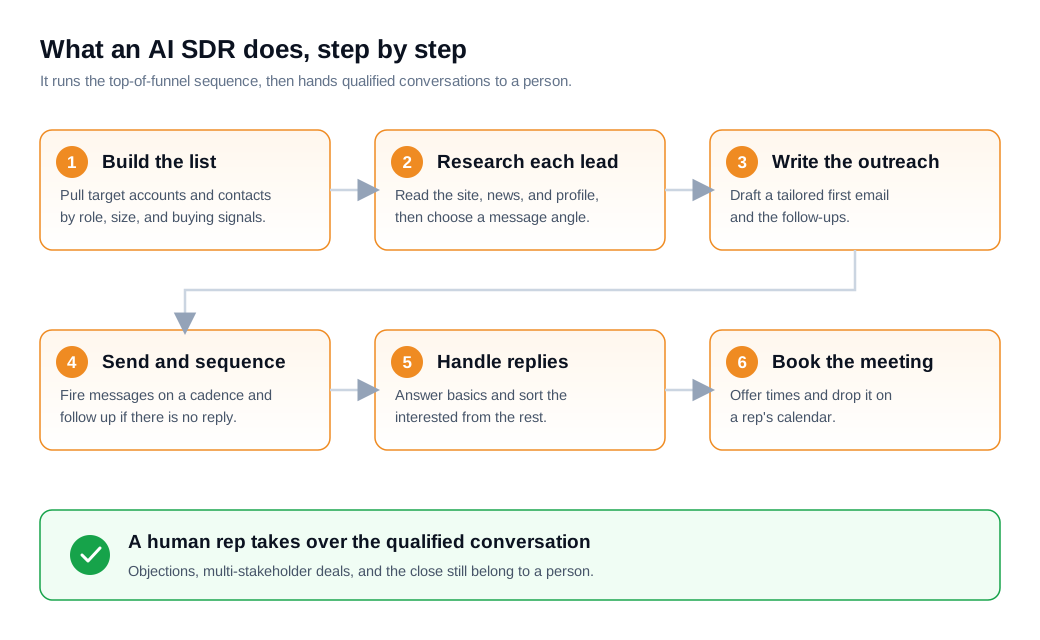
A typical run looks like this:
- Build the list. Pull target accounts and contacts from a data provider or your CRM, filtered by industry, size, role, and signals like a recent funding round or a job change.
- Research each lead. Read the company site, recent news, and the prospect's profile, then pick an angle for the message.
- Write the outreach. Draft a first email (and follow-ups) tailored to the account, with a call to action.
- Send and sequence. Fire the messages on a cadence across one or more channels, then wait and follow up if there is no reply.
- Handle replies. Answer basic questions, sort interested from not interested, and route the hot ones.
- Book the meeting. Offer times and drop the meeting on a rep's calendar.
The appeal is obvious once you look at how reps actually spend their day. Salesforce research on the state of sales has found that reps spend under 30% of their time actually selling, with the rest going to research, admin, and inbox work. An AI SDR aims at that lost majority.
The same pattern runs on the inbound side. Instead of chasing cold contacts, an AI chat assistant greets visitors who are already on your site, answers product questions, qualifies them, and routes the ones with real intent to a rep. The work is the same shape. The difference is that the buyer raised their hand first.
What are AI SDRs good at?
AI SDRs are best at high-volume, repeatable work that follows a pattern: research, list building, first-draft writing, follow-up cadence, speed, and coverage around the clock.
A few strengths stand out in practice.
Speed and scale. An AI SDR can research and message far more accounts than a person can, running 10 to 50 times the raw activity of a single rep. It never forgets a follow-up and never lets a lead go cold because it was busy.
Coverage. It works nights, weekends, and holidays. A lead that comes in at 11 p.m. gets a response before a human rep is even awake, which matters because speed to first contact is one of the strongest predictors of whether a lead converts.
Consistency. Every message follows the playbook. The AI does not have a bad Monday, skip the third touch, or wing the qualifying questions.
Draft speed. Writing a decent first draft for a specific account takes a person a few minutes. The AI does it in seconds, which frees a rep to spend their time on live conversations rather than a blank page.
None of this is the same as booking good meetings, and that gap is where the trouble starts.
What can an AI SDR not do?
An AI SDR cannot handle the parts of selling that need judgment, trust, and real conversation, and it carries a deliverability risk that can quietly wreck your pipeline.
Start with the conversation. When a prospect raises an objection that does not fit a script, hesitates, or hints that the real decision-maker is someone else, a human rep can read it and adjust. An AI SDR tends to push the next step in the sequence. Sarcasm, multi-turn context, and a deal with four stakeholders all sit past what current models handle well. Gartner research makes the split concrete: while many buyers are happy to research on their own, 69% of B2B buyers still turn to a sales rep to validate AI-generated insights before they commit, and buyers are 39 percentage points more likely to say a human rep, rather than generative AI, understood their needs. Gartner's May 2026 survey found reps also lead on making buyers feel confident and on advancing the deal to the next step.
Then there is the quieter problem: deliverability. When an AI SDR sends at high volume from cold domains with near-identical templates, spam filters do exactly what they are built to do. Google and Yahoo now enforce a spam complaint rate ceiling of 0.3% for bulk senders, and Google recommends staying under 0.1% for reliable inbox placement, per the bulk sender requirements. Cold outreach blows past that easily. One 2026 analysis of roughly 100,000 emails found AI-written messages were flagged as spam about 8% of the time versus 3% for human-written ones, and domains running AI outbound at production volume saw sender reputation fall sharply within the first three months. A burned domain hurts far more than one campaign. It can drop the deliverability of every email your company sends.
The last limit is authenticity. Buyers who get a lot of cold email have learned the tells of AI copy: the opener that references one public fact, the vague compliment about "impressive growth," the uniform voice. The personalization moves that felt clever in 2024, like congratulating someone on a funding round, are now so common that filters and humans both read them as spam signals. Volume without judgment does not scale trust. It scales the reasons people stop opening your email.
AI SDR vs human SDR: which performs better?
On raw output, an AI SDR wins on volume and cost per touch; on conversion quality, a human still gets more replies and books more meetings per conversation. Neither one wins across the board.
The numbers from that 100,000-email analysis line up the tradeoff. Human-written emails pulled a 5.2% reply rate against 4.1% for AI, and a 1.1% meeting-booked rate against 0.7% for AI. The gap has been closing, and in some segments like SaaS the AI messages already match or beat humans. Against that, the AI carries the higher spam-flag rate and needs disciplined infrastructure to stay in the inbox at all.
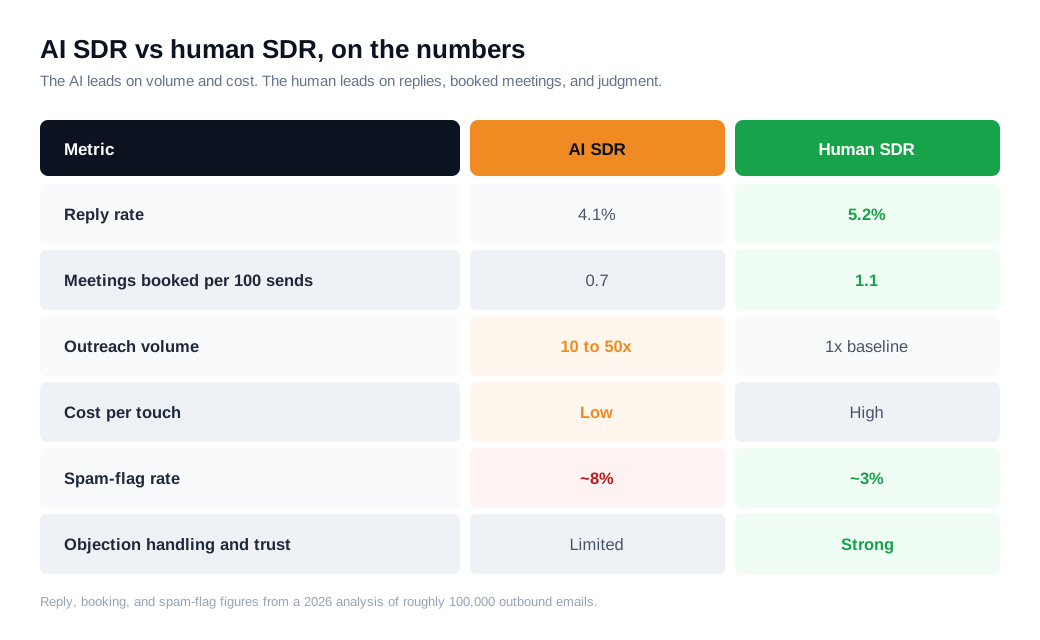
Here is a worked example that keeps the volumes honest. Say an AI SDR sends 5,000 targeted emails in a month. At a 4.1% reply rate that is 205 replies, and at a 0.7% booked rate that is roughly 35 meetings. A human rep working the same list by hand might send 1,000 well-researched emails in that month. At a 5.2% reply rate that is 52 replies, and at a 1.1% booked rate that is about 11 meetings. The AI books around three times the meetings at five times the volume, so on pure count it wins. But the human's meetings tend to be better qualified, and the AI's 5,000 sends at an 8% spam-flag rate is 400 messages landing in complaint territory, which is how domains get throttled. The right read is not which tool books more, but which mix protects the pipeline while it grows.
That is why the strongest inbound teams keep a human close to the high-intent moment. For a buyer sitting on your pricing page, the win is not another sequenced email but a fast route to a person over live chat or a live video call, which is the whole point of an inbound sales motion built around speed.
Can an AI SDR replace human reps?
No, an AI SDR cannot replace the full role, though it can replace specific tasks inside it. Research, list building, first drafts, and follow-up cadence are fair game. The parts that actually close, reading a room, handling a real objection, and building trust across a buying committee, still need a person.
The market data points the same way. Gartner found that 67% of B2B buyers say they prefer a rep-free buying experience, and 45% used AI during a recent purchase, according to its March 2026 survey. The same buyers turn around and lean on reps to validate what the AI told them. Both things are true at once. People want to self-serve the easy parts and talk to a human for the hard, expensive decision.
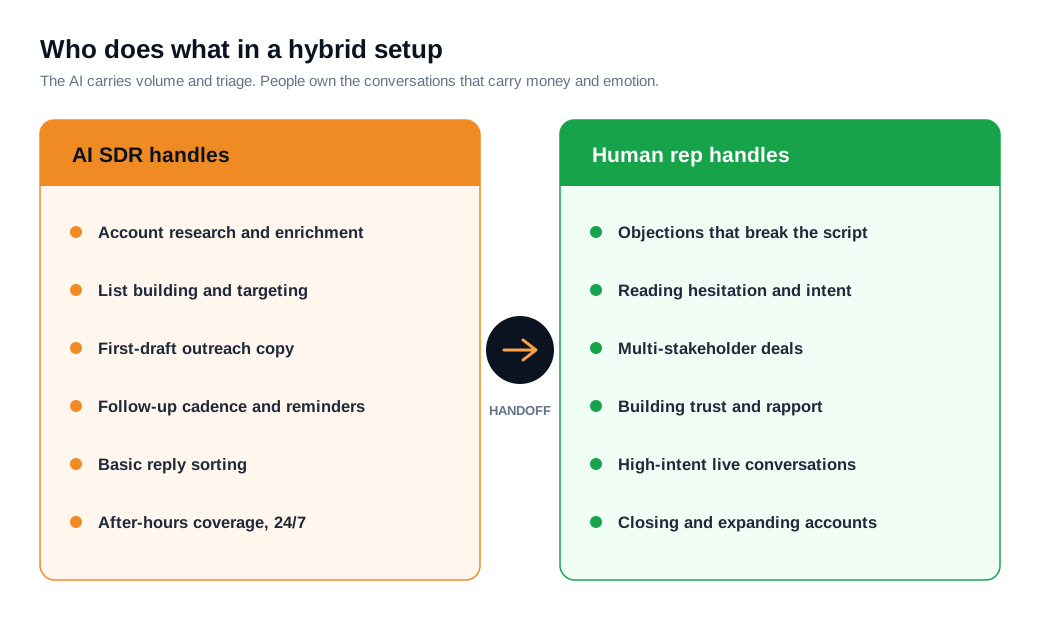
So the practical answer is a division of labor. Let the AI carry volume and triage. Let people own the conversations that carry money and emotion. Teams that try to run the whole motion on autopilot tend to see reply quality and domain health slide, then quietly walk it back within a few months. The ones that use the AI to extend a smaller, sharper human team keep the speed without losing the trust.
How do you use AI SDRs responsibly?
Use an AI SDR as a co-pilot with a human in the loop, tight sending limits, verified data, and honest messaging, so you keep the speed while protecting deliverability and trust.
A short set of guardrails covers most of the risk:
- Keep a human on first touch and real replies. Let the AI draft and research, but have a person review first-touch messages to brand-sensitive accounts and take over the moment a prospect writes back with anything real. Co-pilot mode captures the drafting speed while a human catches what the model misses.
- Verify data before you send. Confirm the address exists and the contact is current. Bouncing off dead inboxes is one of the fastest ways to wreck sender reputation.
- Warm domains and cap volume. Ramp new inboxes over about 30 days, set hard daily caps per mailbox and domain, and use separate sending domains so cold outreach never touches the domain your customers and invoices rely on.
- Watch the complaint rate. Track spam complaints against the 0.3% enforcement line and aim for under 0.1%. Auto-pause a sequence when complaints spike, when someone replies, or when sentiment turns negative.
- Measure meetings and pipeline, not sends. Volume is easy to inflate. Judge the program on qualified meetings and closed revenue, the way you would judge a rep.
- Do not fake the personalization. A generic message dressed up with one scraped fact reads as spam. If the AI cannot say something true and specific, send less.
Route the output to people cleanly. When the AI qualifies a lead, it should reach the right rep in seconds, which is what a routing and notifications setup handles, and the assistant itself should be grounded in your real product docs so it does not invent answers, which is the job of a proper AI assistant setup. The tool is only as responsible as the workflow you wrap around it.
Key takeaways
- An AI SDR automates top-of-funnel work, meaning list building, research, outreach, follow-up, and meeting booking, so human reps can spend their time on live conversations instead of admin.
- AI SDRs win on volume, speed, and cost, running many times the activity of a single rep and covering nights and weekends, which matters most for fast first contact.
- Humans still win on quality, with higher reply and booking rates, real objection handling, and the trust that closes multi-stakeholder deals, which is why 69% of buyers validate AI insights with a rep.
- Deliverability is the hidden risk, because AI-written email gets spam-flagged more often and high-volume sending can push you past the 0.3% complaint ceiling and burn your domain.
- Full replacement does not hold up, so the durable setup is a hybrid where AI handles volume and triage and people own the conversations that carry real money.
- Responsible use comes down to guardrails, which means a human in the loop, verified data, warmed domains, volume caps, complaint monitoring, and judging the program on meetings rather than sends.
TAGS

Written by
Nilas MylerCo-founder & CTO, Glimpze
Nilas is the co-founder and CTO of Glimpze, an inbound sales tool that turns high-intent website visitors into live conversations. A former SEO consultant for some of the largest companies in Denmark, he writes about speed-to-lead, inbound sales, and conversion rate optimization — the technical and operational mechanics of turning traffic into pipeline.


