On this page
- What are the most common sales demo mistakes?
- Why does feature-dumping fail in a demo?
- How does skipping discovery hurt your demo?
- Why do buyers go quiet after a demo that seemed to go well?
- How long should a sales demo be?
- How do you fix a weak demo process?
- What does fixing your demo mistakes look like in numbers?
- Key takeaways
- Sources
A demo can go beautifully and still cost you the deal. The room laughs at the right moments, the buyer says the product looks impressive, and then the thread goes cold for three weeks before a two-line email lands: we have decided to hold off for now.
Most losing demos share a cause, and it is rarely a missing feature or a cheaper rival. They come apart because of a handful of repeatable mistakes that feel productive while you make them. You show more, you explain more, you cover every base, and each of those instincts works quietly against you.
This post covers the most common demo mistakes, why feature-dumping backfires, how skipping discovery wrecks the meeting, why buyers go silent after a demo that seemed to land, how long a demo should really run, and how to rebuild a weak demo process.
What are the most common sales demo mistakes?
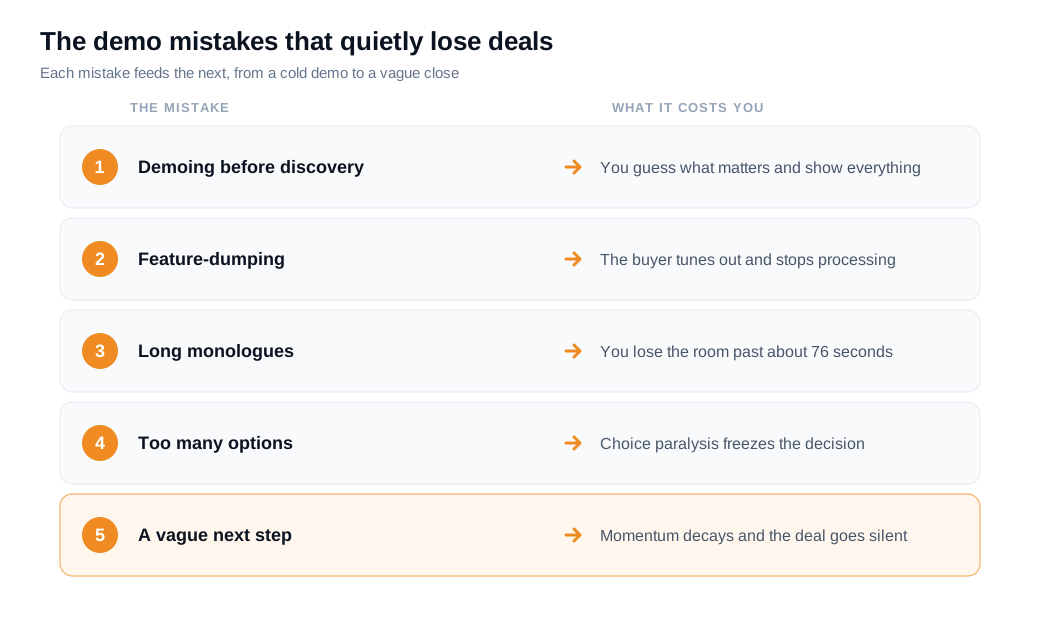
The most common sales demo mistakes are demoing before discovery, dumping features instead of proving one outcome, talking past the buyer in long monologues, flooding them with options, and ending on a vague next step. Each one feels like diligence in the moment, which is why they survive.
These mistakes are not independent. They feed each other. When you skip discovery, you do not know which capability matters, so you show all of them, which turns into a feature dump, which forces long monologues, which crowds out the questions that would tell you whether the buyer is sold.
By the time you reach the close, you have nothing to point to except a general impression that the product is nice.
Gong's data science team gave this pattern a hard edge. Their analysis of 67,149 recorded SaaS demos matched each recording to its outcome in the CRM and found that the demos which closed traded the floor constantly, while the ones that stalled tended to run long, uninterrupted stretches of rep talk.
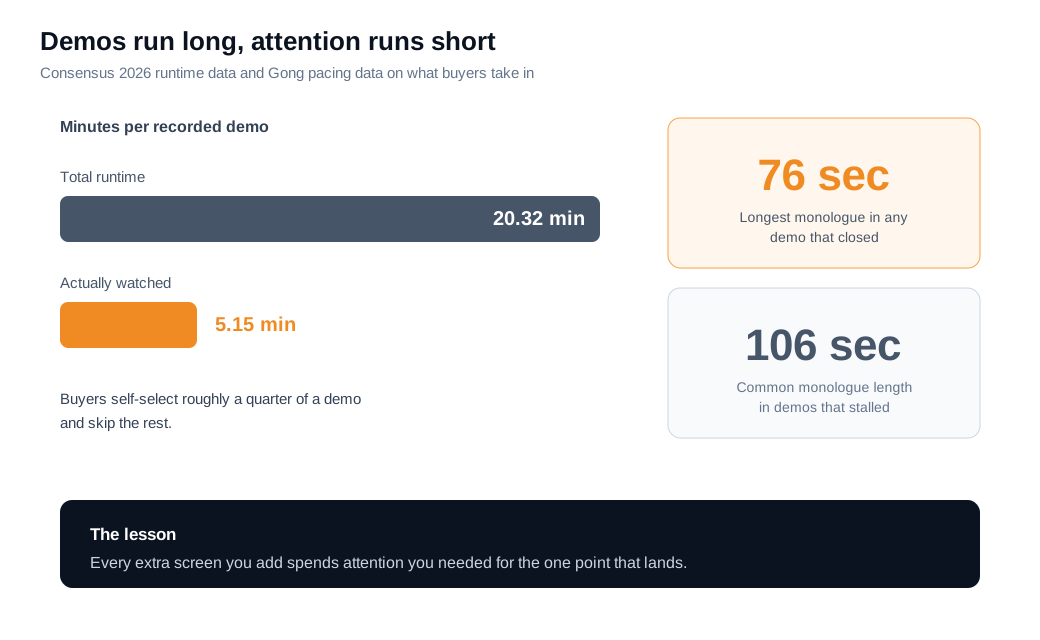
Not a single closed-deal demo contained more than 76 seconds of uninterrupted pitching, and losing demos regularly ran monologues as long as 106 seconds. The mistakes below are the mechanics behind that gap.
Why does feature-dumping fail in a demo?
Feature-dumping fails because a buyer can only hold and act on a fraction of what you show, so every extra screen dilutes the one capability that would have moved them. Showing more surface area proves you know the product. It does not prove the product fits the person watching.
The attention math is unforgiving. Consensus, in its 2026 B2B Buyer Behavior Report, found that recorded demos averaged 20.32 minutes of runtime while buyers actually self-selected and watched about 5.15 minutes of the content most relevant to them.
Buyers skip the filler and replay what matters. A live demo runs on the same attention budget, except you have no rewind button, so anything you tack on to "be thorough" spends minutes you needed for the point that lands.
Feature-dumping also reads as a lack of confidence. When a rep answers every "can it also do X" with a full tour of X, the buyer stops processing and starts waiting for it to end. Gong's work on sales mistakes describes this bluntly: throwing more at a prospect weakens the message and gives them more to object to.
The fix is discipline, not enthusiasm. Spend a minute on the buyer's world, name the single outcome you are proving today, and give every click a job. If a screen does not move that outcome forward, it belongs in a follow-up, not the live demo.
How does skipping discovery hurt your demo?
Skipping discovery hurts because it forces you to guess what the buyer cares about, and a demo built on guesses shows everything to hedge against showing the wrong thing. That hedge is the feature dump in disguise, and it starts before the meeting even opens.
Discovery is what lets you aim. Gong's demo research found that anchoring the message on the pain of the buyer's current situation was more persuasive than listing product benefits, and you cannot anchor on a pain you never uncovered.
A buyer who believes the status quo is genuinely costing them is already leaning toward a decision. A buyer watching a generic tour is just being polite.
There is a measurable cost to demoing cold. One demo-software analysis, drawing on Sales Benchmark Index figures, puts the win-rate gap between reps who run real discovery before demoing and those who lead with the product at close to threefold.
The mechanism is simple: every question you skip on the first call becomes a blocker on a later one. Confirm the use case, the decision-maker, and the timeline up front, and the demo, the proposal, and the negotiation all move on facts instead of assumptions.
Skipping discovery also ignores how buying groups actually work. Gartner's research on the B2B buying journey found that a typical purchase involves six to ten stakeholders and that buyers spend only about 17 percent of their total time meeting with any supplier.
Your live demo is a thin slice of a long, mostly private process, so it has to hit the specific pain your champion will carry into rooms you will never enter. For inbound sales teams, that first conversation is where the aim is set, and a demo pointed at the wrong target rarely recovers.
Why do buyers go quiet after a demo that seemed to go well?
Buyers go quiet after a good demo because the biggest threat at decision time is their own indecision, and most demos do nothing to defuse it. The buyer liked the product, and then got scared of choosing wrong.
The numbers here are striking. In their study of roughly 2.5 million sales conversations behind The JOLT Effect, Matthew Dixon and Ted McKenna found that between 40 and 60 percent of qualified deals are lost to no decision at all.
Of those stalled deals, about 56 percent came from the buyer's fear of making a mistake, and about 44 percent from a preference for the status quo. Once a buyer wants your product, they stop asking how they might win and start asking how they might fail, and loss aversion does the rest.
A demo that ends on "this looks great, let us regroup" hands the buyer straight into that fear with nothing to hold onto. No scoped pilot, no phased rollout, no reference customer who had the same worry, no clear first-30-days milestone.
The mistake is treating an impressed buyer as a closed one. Impressed and uncertain is a loss waiting to happen, and it usually happens in silence. The last stretch of the meeting has to lower the perceived risk of saying yes and give your champion something concrete to defend internally, or the deal drifts into no-decision limbo.
How long should a sales demo be?
A sales demo should run only as long as it takes to prove the outcomes the buyer told you mattered, which for most deals is shorter than the demo you are giving now. Length is a symptom. Reps pad demos to feel complete, and the padding is where attention dies.
The trap is assuming longer means more thorough. Gong's data pushes back on that in a useful way: the demos that closed actually ran longer on average, near 47 minutes against 36 for the ones that stalled, but the extra time was dialogue, not monologue.
Winning demos had far more back-and-forth per minute, so the added length came from the buyer talking, questioning, and reacting. Time spent by the rep narrating extra features is dead weight. Time spent by the buyer engaging is progress.
So the honest answer to "how long" is a question about ratio. If your demo runs 40 minutes and you spoke for 35 of them, it is too long no matter the clock. If it runs 40 minutes and the buyer carried a real share of the conversation, the length is earning its keep.
Plan the demo around the two or three outcomes discovery surfaced, prove each one with the buyer's own scenario, and stop. A demo that keeps going after the point is made is just adding surface area for objections.
How do you fix a weak demo process?
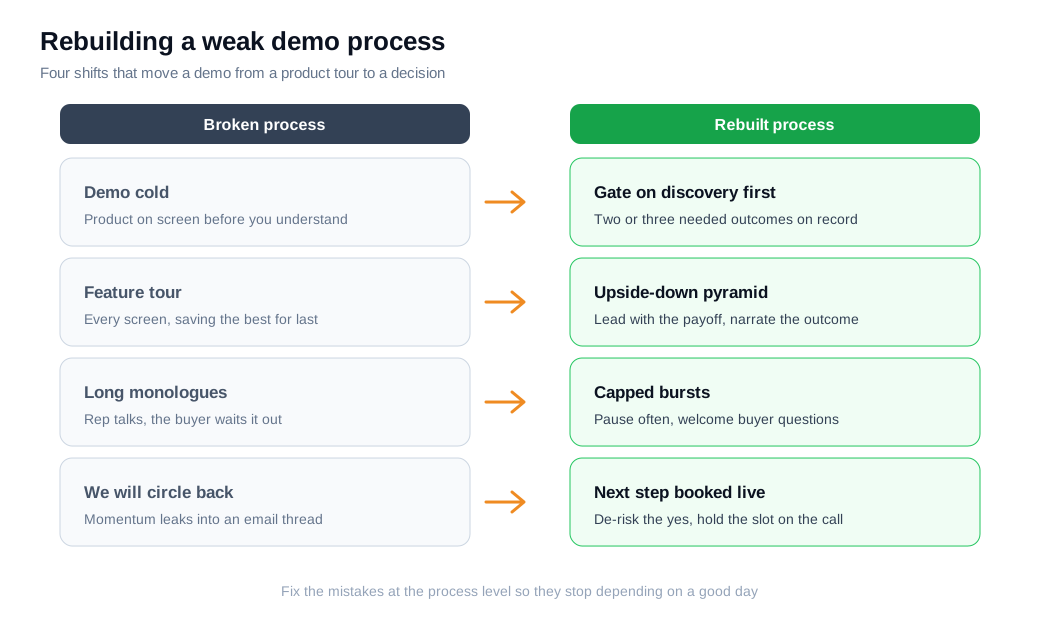
You fix a weak demo process by making discovery a gate, structuring the demo as an upside-down pyramid, capping your monologues, de-risking the decision, and booking the next step live. The point is to remove the mistakes at the process level so they stop depending on any one rep having a good day.
Start by refusing to demo cold. Make a short discovery conversation a required step before the product ever comes on screen, and write down the two or three outcomes the buyer says they need before the demo is booked. Those outcomes become the demo's agenda.
Then flip the structure. Gong found that winning demos most often run as an upside-down pyramid, opening with the single most valuable capability while attention is at its peak instead of building toward a finale most buyers never reach.
Narrate the result, not the clicks, using a tell, show, so-what rhythm: say what you are about to show and why it matters to them, show it with realistic data, then name the payoff in their words.
Cap the monologue. If Gong could not find a closed deal with more than 76 seconds of uninterrupted pitching, treat that as your ceiling and pause for reaction well before you hit it. Answer questions as buying signals, resolve the real concern behind each one, and resist the reflex to tour every adjacent feature.
Finally, close the risk gap and the timing gap together. De-risk the yes with a scoped pilot or a reference, then book the concrete next step before the call ends rather than promising to email times.
When a demo grows out of a live website conversation, the tooling matters here. A rep who can open a real-time screen share or video call while the buyer is still on the pricing page can demo the one relevant workflow in the moment interest peaks, and wiring up routing and notifications so the right rep is alerted the instant a high-intent visitor appears is what makes a same-day next step realistic instead of aspirational.
Momentum decays by the hour, and a booked slot beats a scheduling thread every time.
What does fixing your demo mistakes look like in numbers?
Fixing demo mistakes shows up as a higher demo-to-close rate and a rising share of demos that end with a booked next step, and the math compounds fast. Here is a worked example.
Take a rep who runs 20 demos a month and closes 20 percent of them, which is 4 deals and sits right in the middle of the 15 to 30 percent band that benchmark data from Optifai reports across hundreds of companies. Their demos are polished but front-load a feature tour, run long on monologue, and end on "let us regroup soon."
Now rebuild the same 20 demos on the principles above. They gate on discovery, open with the one capability tied to the buyer's biggest pain, keep the rep's monologues short, address indecision with a scoped pilot, and book the next step live. The close rate moves to 28 percent.
That is between 5 and 6 deals from the same 20 demos, so roughly one to two extra closed deals a month with no additional pipeline and no extra marketing spend.
Track two numbers to know it is working. Demo-to-close rate is the outcome, and the share of demos that end with a scheduled next step is the leading signal, since a demo that produces no next step almost never becomes revenue.
Record your own demos and watch how much the buyer talked and how many questions they asked. Those soft signals move before the close rate does, and they tell you the mistakes are actually leaving your process rather than just hiding.
Key takeaways
- The mistakes compound. Skipping discovery causes feature-dumping, which forces monologues, which crowds out the buyer questions that Gong's study of 67,149 demos found in every deal that closed.
- Feature-dumping spends attention you do not have. Consensus found buyers watch about 5.15 minutes of a 20-minute demo, so prove one outcome and give every click a job instead of touring the product.
- Discovery sets the aim. Anchoring on the buyer's real pain outperforms listing benefits, and reps who run discovery before demoing win far more often, so make it a gate rather than an option.
- Silence after a good demo is usually indecision. The JOLT Effect found 40 to 60 percent of qualified deals are lost to no decision, 56 percent of that to fear of failing, so de-risk the yes with a pilot, a reference, or a milestone.
- Length is a ratio, not a clock. Winning demos ran longer only because the buyer talked more, so plan around two or three outcomes, prove each, and stop.
- Fix the process, then measure it. Moving 20 monthly demos from a 20 to 28 percent close rate is one to two extra deals, tracked through demo-to-close rate and the share of demos that end with a booked next step.
TAGS

Written by
Daniel SemeckyCo-founder & CEO
Daniel is the co-founder and CEO of Glimpze. He spends his days talking to revenue teams about how to catch high-intent visitors before they bounce, and writes about inbound sales, lead conversion, and building a motion where marketing and sales actually share a number.


