On this page
- What is a demo leave-behind?
- How is a demo leave-behind different from a follow-up email or a slide deck?
- What should a demo leave-behind include?
- How does a demo leave-behind help the buyer sell internally?
- How do you personalize a demo leave-behind?
- How do you track whether a demo leave-behind is working?
- Key takeaways
- Sources
The demo ended well. Your champion loved it, said the team would talk it over, and promised to circle back. Two weeks later the deal has gone quiet, and the reason is not a mystery: the six people who actually sign off on the budget never saw the product. Your champion tried to recreate the demo from memory in a hallway conversation, and a secondhand summary lost the argument.
A demo leave-behind closes that gap. It is the asset you hand your champion after the call so the rest of the buying committee can see the product on their own time, without you in the room and without your champion having to play sales rep from memory.
This post covers what a demo leave-behind is, how it differs from a follow-up email or a slide deck, what to put in one, how it helps your champion sell internally, how to personalize it, and how to tell whether it is working.
What is a demo leave-behind?
A demo leave-behind is a self-contained, interactive version of your demo that you hand a prospect after a live call, built for them to explore on their own and forward to colleagues without a rep present. The older version of the idea was paper: a one-pager, a printed deck, a PDF the rep left on the table. The modern version is an interactive demo or a lightweight sandbox that lives behind a link.
Demostack describes the leave-behind as a way to turn your champion into your best salesperson, a tailored environment the buyer can click through and share internally while you track who viewed what. Navattic frames the same asset as a pre- or post-sales tool that reps use to accelerate discovery, personalize follow-ups, and shorten time to first call. Both point at the same job: give the buyer a version of the demo that keeps working after you log off.
Why this matters comes down to how little of a deal happens in front of you. Gartner's research on the B2B buying journey found that buyers spend only 17% of the total purchase time meeting with potential suppliers, and when they are comparing several vendors, any one sales rep gets around 5 to 6% of that time. The same research puts a typical buying group at six to ten people. Most of the decision is made in rooms you are not in, by people you have never met. A leave-behind is the closest thing to being in those rooms.
How is a demo leave-behind different from a follow-up email or a slide deck?
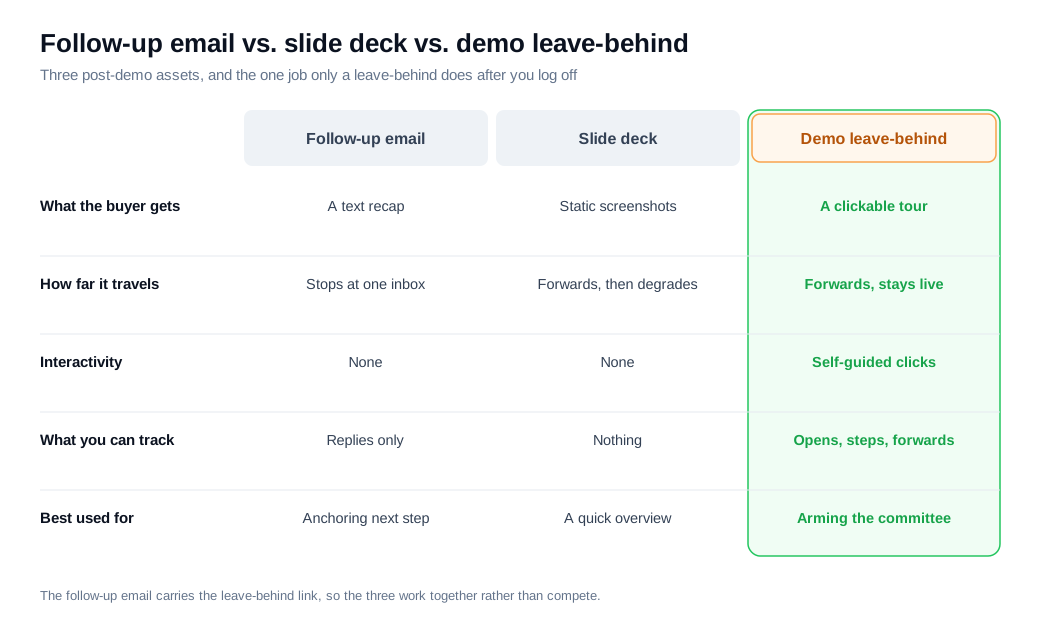
The difference is interactivity and reach: a follow-up email and a slide deck describe the product, while a demo leave-behind lets a committee member use it and tells you who did. All three have a place, and the strongest follow-ups carry the leave-behind inside them.
A follow-up email is a one-to-one recap. It anchors the conversation, restates the next step, and works best when it is short. It cannot show the product, and it stops at the person you sent it to.
A slide deck travels further but degrades as it goes. Screenshots freeze the product at one moment, lose their context when a stakeholder opens them cold, and give you no signal about whether anyone read past slide three.
A demo leave-behind is clickable and self-guiding. A stakeholder who never joined the call can open it, walk the same path your champion saw, and reach the same "I get it" moment on their own. Because it lives behind a link, it also reports back: which accounts opened it, which steps they reached, and who forwarded it to whom. That last signal is the one email and slides cannot give you.
What should a demo leave-behind include?
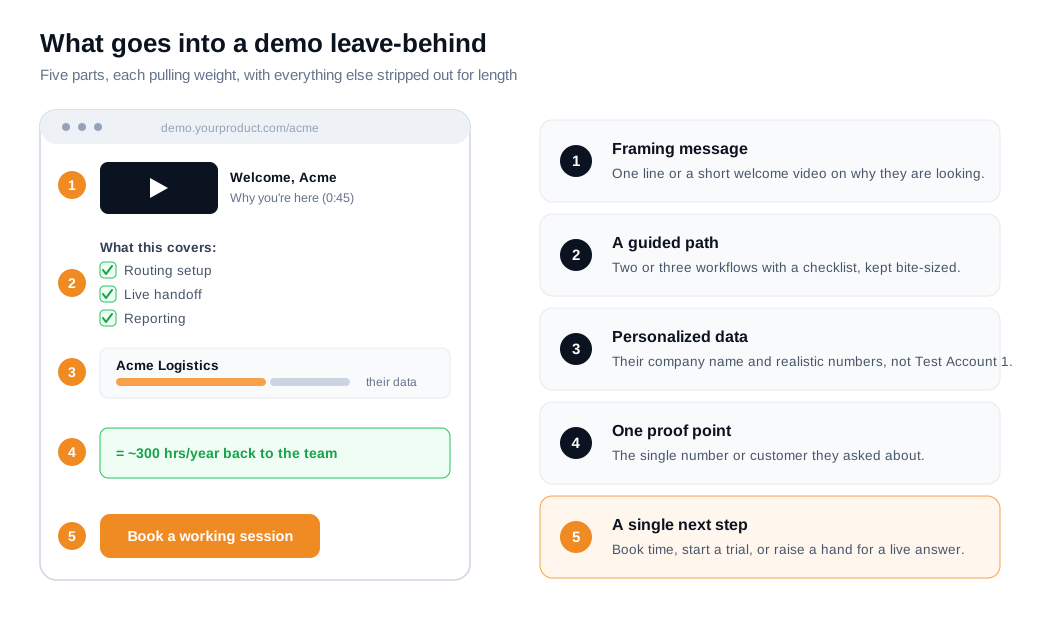
A demo leave-behind should include a short framing message, a guided path through the two or three workflows this buyer cares about, the specific proof they asked for, and one clear next step, with everything else stripped out. Length is the enemy. Navattic's benchmarks show that the top-performing interactive demos are shorter in both word count and step count, and that the top quarter of demos reach a 50.1% engagement rate while a long tail loses people early.
Start with framing. A one-line note or a short welcome video tells the stakeholder why they are looking at this and what they will see. Navattic lists a welcome video and industry-specific data among the moves that keep buyers from zoning out.
Then build the guided path. Pick the two or three workflows that carry your value story and lay them out in order, with a checklist so the viewer can see what the tour covers and jump to the part they care about. Bite-sized beats exhaustive. Several short demos aimed at different roles work better than one long tour that tries to serve everyone.
Include the proof the buyer actually asked for, which is usually one number or one comparable customer rather than a wall of logos. Seed the environment with realistic data instead of "Test Account 1," a point the personalization section covers in more detail.
Close with a single next step. A leave-behind that ends without an obvious action leaves the buyer nowhere to go. Give them one: book a working session, start a trial, or raise a hand for a live answer. If the leave-behind can hand a curious stakeholder straight to a person over live video and screen share the moment they click that button, the interest converts while it is hot instead of cooling in an inbox.
How does a demo leave-behind help the buyer sell internally?
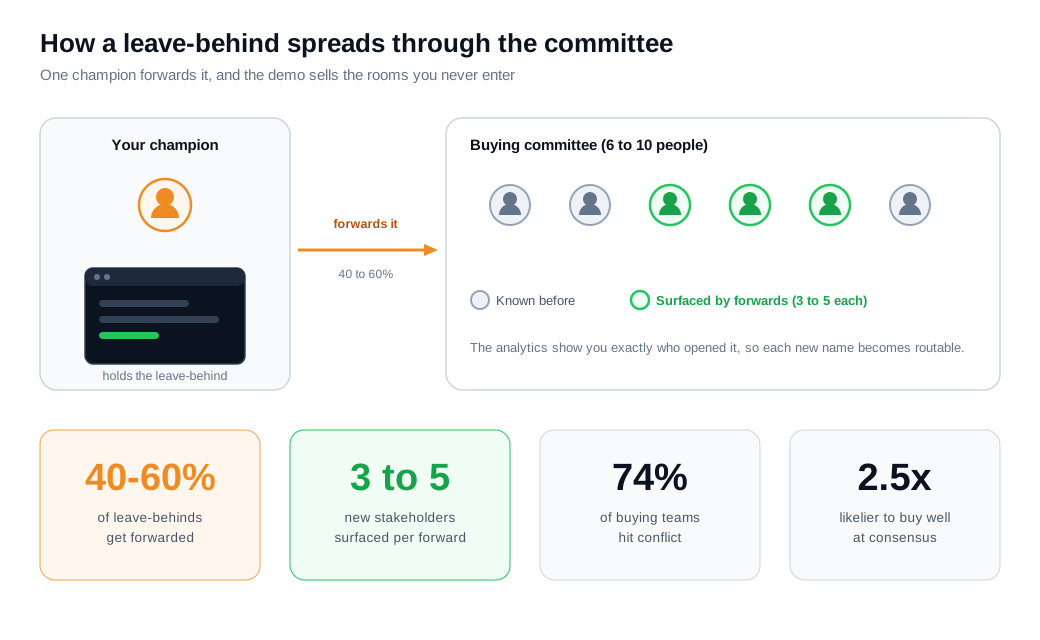
A demo leave-behind helps the buyer sell internally by giving your champion something they can forward that survives the forwarding, so each new stakeholder meets the real product instead of a thirdhand description. The internal sale is where most deals are won or lost, and it is the part you have the least control over.
The numbers explain why that part is so hard. Gartner found that a typical buying group of six to ten people each completes several independent research tasks, then has to reconcile what they found, and that 74% of B2B buying teams show unhealthy conflict during the decision. Groups that do reach agreement are 2.5 times more likely to call the purchase a high-quality decision. Your champion is trying to build that agreement without you, and a memory of your demo is a weak tool for the job.
A leave-behind is a stronger one, and it spreads. Demoboost reports that 40 to 60% of leave-behind demos are forwarded inside the buying committee, and each forwarded demo surfaces three to five new stakeholders on average. Those forwards do two things at once. They put the product in front of people your champion would otherwise have paraphrased to, and they show you, through the analytics, exactly who those people are.
Here is the arithmetic. Say your team runs 40 qualified demos a month and each one is single-threaded to one champion. Add a leave-behind to the follow-up. At Demoboost's forward rate, roughly 16 to 24 of those champions pass it along, and each pass uncovers three to five new stakeholders. That is somewhere between 48 and 120 new contacts a month who were invisible to you before, each one now a name you can route to, tailor a message for, and pull into the deal. For an inbound sales team, that shift from one known contact to a mapped committee is often the difference between a deal that stalls in silence and one you can actually work.
How do you personalize a demo leave-behind?
You personalize a demo leave-behind by tailoring it to the buying group's shared problem first, then layering in the account's name, real-looking data, and the specific use cases that came up on the call. The order matters, because personalizing to the wrong level can backfire.
Gartner's research on buying-group relevance is blunt about this. Content built around the group's shared goals lifts consensus by about 20%, while content aimed at one individual's personal priorities can deepen conflict, with a measured 59% negative effect on group consensus. The lesson for a leave-behind: frame it around the problem the whole committee owns, and resist the urge to flatter one executive at the expense of the group.
With that frame set, the account-level details are what make it feel built for them. Navattic points to a few reliable moves: swap the generic company name for the prospect's, seed the dashboards with data that matches their industry and volumes, and select the use cases that actually came up rather than showing everything. A logistics prospect should see "Acme Logistics" and freight numbers, not "Test Account 1" and a generic dashboard.
Bite-sized personalization scales better than one bespoke masterpiece. Build a short demo per persona or use case, compile them into a single demo center with filters, and let each stakeholder open the one that maps to their job. A rep can then drop the most relevant link into a follow-up in seconds instead of rebuilding a demo from scratch. When a personalized stakeholder does want to ask something, a lightweight live chat or AI chat assistant sitting on the demo can answer in the moment rather than sending them back to a form.
How do you track whether a demo leave-behind is working?
You track a demo leave-behind on three signals: who opened and forwarded it, which parts they engaged with, and whether the deal moved. Polish is not one of them. A beautiful demo nobody opens is worth less than a plain one a whole committee walks through.
Start with engagement, and give yourself a yardstick. Navattic's benchmarks put the top quarter of interactive demos at a 50.1% engagement rate, a 28.9% completion rate, and a 12.8% click-through rate, and note that ungated demos draw roughly 6% higher engagement than gated ones, since a login wall costs you views right when interest is highest. If your leave-behind sits far below those marks, the content or the length is usually the problem.
Then read the forwarding and per-stakeholder data as an intent signal. Demoboost's analytics track leave-behind engagement per stakeholder, showing which demos get rewatched, shared, or trigger a call to action. A stakeholder who opens the leave-behind three times and reaches the pricing step is telling you where the deal is, and who to route to a rep next. Tight lead routing and notifications turn that signal into a same-day conversation instead of a note someone reads on Monday.
Finally, watch the deal metrics the leave-behind is meant to move: how many stakeholders you are threaded into, how fast the deal progresses after the demo, and the win rate on deals that had a leave-behind against those that did not. Engagement that never shows up in those numbers is a vanity metric. Engagement that shortens cycles and widens the committee is the point.
Key takeaways
- A demo leave-behind is an interactive demo you hand a buyer to keep. It lets the rest of the committee explore the product on their own time and forward it to colleagues, doing the demo's job in the rooms you never enter.
- It does what an email and a deck cannot. A follow-up reaches one person and a deck degrades as it travels, while a leave-behind stays clickable, personalizes to the account, and reports who opened and shared it.
- Keep it short and pointed. Include a quick framing message, a guided path through two or three workflows, the one proof the buyer asked for, and a single next step, since the top interactive demos win on brevity.
- Its real job is arming your champion. With 74% of buying teams in conflict and consensus 2.5 times more likely to produce a good deal, a forwardable demo helps your champion build agreement, and each forward surfaces three to five new stakeholders.
- Personalize to the group before the person. Framing a leave-behind around the committee's shared problem lifts consensus about 20%, while over-tailoring to one individual can deepen conflict, so lead with the shared goal and layer account data on top.
- Measure opens, forwards, and deal movement. Track engagement against benchmarks like the top quarter's 50.1% engagement rate, read per-stakeholder activity as intent, and judge the asset on cycle time and win rate rather than looks.
TAGS

Written by
Daniel SemeckyCo-founder & CEO
Daniel is the co-founder and CEO of Glimpze. He spends his days talking to revenue teams about how to catch high-intent visitors before they bounce, and writes about inbound sales, lead conversion, and building a motion where marketing and sales actually share a number.


