On this page
A buyer reads your comparison page, lingers on pricing, and submits the demo form at 2:14 p.m. She is ready to talk. Forty-two hours later a rep finally replies, and by then she has booked two competitor calls and stopped thinking about you. The product never entered into it. The handling did.
That is the shape of most inbound sales mistakes. A hot lead arrives, and a slow reply, an over-built form, an abandoned follow-up thread, or a plain contact form quietly converts a winnable deal into a competitor's win. None of it shows up as one dramatic failure, which is why these mistakes survive for years inside otherwise healthy teams.
This post covers the inbound sales mistakes that leak the most revenue, why each one hurts, what the research says about the cost, a worked example with real numbers, and a step-by-step way to audit and fix your own funnel.
What are the most common inbound sales mistakes?
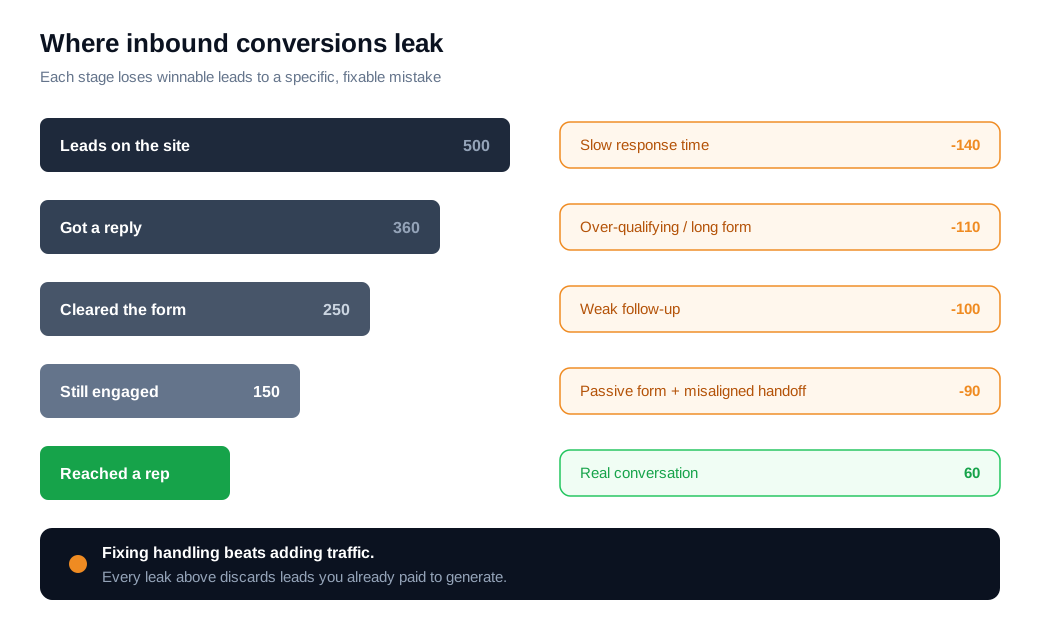
The most common inbound sales mistakes are failures of handling rather than a shortage of demand: responding too slowly, over-qualifying with friction, giving up on follow-up too early, dropping hot buyers into a passive form, and letting sales and marketing run on different definitions of a good lead. Each one sits at a different point in the funnel, and each quietly discards leads you already paid to generate.
Most teams spend their energy at the top: more traffic, more content, more form fills. The larger gains usually sit in how existing leads get handled once they raise a hand, because those leads are already qualified enough to have shown up. Avoma's teardown of leaky inbound funnels puts speed-to-lead gaps and marketing-sales misalignment at the top of its list, ahead of anything to do with traffic volume (avoma.com). The rest of this post takes the highest-cost mistakes one at a time.
How does slow response time hurt conversions?
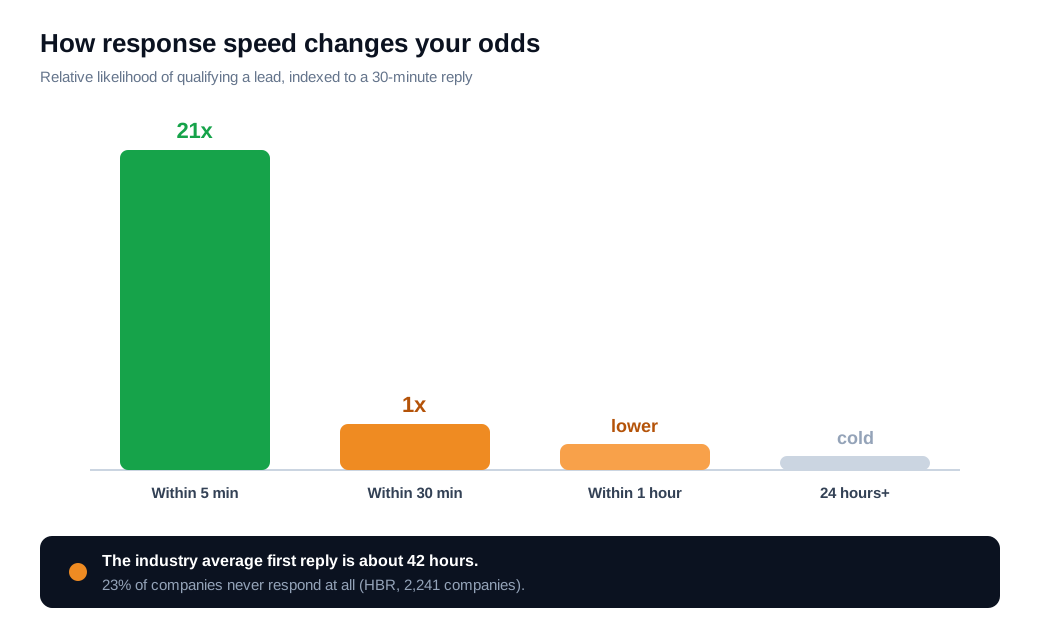
Slow response time hurts conversions because inbound intent decays within minutes, and the first company to reach a live buyer usually wins the conversation before the others even dial. This is the single most studied mistake in inbound sales, and the numbers have held the same shape for more than a decade.
The foundational MIT and InsideSales study led by James Oldroyd found that contacting a new lead within five minutes rather than thirty made a rep about 21 times more likely to qualify it and 100 times more likely to reach a person at all. Harvard Business Review's audit of 2,241 U.S. companies found the same pattern from the other side: firms that responded within an hour were far more likely to have a meaningful conversation than those that waited longer, yet the average response time was 42 hours and 23% of companies never responded at all. The gap between what the research says and what most teams actually do is enormous.
Put numbers on it. Say you get 500 inbound leads a month, and today reps reach only 40% of them while intent is still warm, roughly 200 live conversations. If 25% of those qualify and 25% of qualified deals close at an average value of $6,000, that is 200 times 0.25 times 0.25 times $6,000, about $75,000 a month. Now cut median response time under five minutes so you reach 80% of leads warm, 400 conversations, and hold every downstream rate constant. The same math gives 400 times 0.25 times 0.25 times $6,000, about $150,000. You doubled revenue without adding a single lead, purely by answering faster.
Gartner's research on the B2B buying journey explains why the window is so tight. Buyers spend only about 17% of their total purchase time meeting with all potential suppliers combined, split across a buying group of six to ten people. Miss your slot while the buyer is actively thinking about the problem, and you are left competing for a sliver of attention that has already moved on to whoever answered first.
Why does over-qualifying backfire?
Over-qualifying backfires because every extra question you demand before helping is friction, and friction thins the pool of hot buyers faster than it improves the quality of the ones who remain. The instinct behind it is reasonable. Reps want clean, sales-ready leads, so someone adds fields to the form and a checklist to the first call. The cost lands squarely on volume.
Form length is the clearest example. Aggregated studies of lead-generation forms find that conversion tends to fall as the number of required fields rises, with the sharpest drop-off once a form pushes past three or four fields (ventureharbour.com). Ask a ready buyer for role, team size, budget, phone number, and use case before you have given them anything, and a meaningful share of them close the tab.
The fix is not to strip qualification to zero. A CXL experiment found that adding one well-placed qualifying step to a B2B lead form raised conversions by about 20%, because the right friction filtered out tire-kickers and signaled that a real conversation was on offer. The lesson is about sequence and restraint. Ask the two or three questions you need to route the lead, then earn the rest of the answers in the conversation or read them from behavior, rather than gating first contact behind a nine-field form and a budget interrogation. The same discipline applies on calls: leading with a qualification checklist before the buyer has said what they want to solve reads as an audit, and audits do not close.
Why does weak follow-up leave deals on the table?
Weak follow-up leaves deals on the table because most inbound buyers do not reply on the first touch, and most reps quit before the touch that would have converted them. The gap between how many follow-ups a deal needs and how many it actually gets is one of the widest in sales.
The commonly cited figures paint a consistent picture: roughly 80% of non-routine sales require at least five follow-ups, yet 44% of salespeople give up after one, and only about a fifth of leads are ever followed up at all. Read those together and the problem is obvious. Teams abandon most of their leads, and the ones they do keep, they drop right before the point where replies tend to arrive.
A working sequence is not complicated. Start with a fast first reply, then send a handful of spaced, useful touches across a couple of weeks, each adding something concrete: an answer, a relevant resource, or a specific question. "Just checking in" is not a follow-up. Automating the reminders so no lead falls off the list is usually a bigger win than any single clever message, because the failure here is one of consistency more than wording.
Why do contact forms leak your hottest leads?
A plain contact form leaks your hottest leads by taking a buyer who is ready to talk right now and dropping them into an asynchronous queue, where a reply lands hours later in front of a person who has already moved on. A form is fine as one option among several. As the only path on a high-intent page, it manufactures the exact delay the response-time research warns against, and the person it delays most is the demo-form buyer you most wanted to reach in minutes.
The counter is to give high-intent visitors a synchronous option in the moment. A live chat box on your pricing and comparison pages lets a ready buyer ask a real question and get an answer while they still care, and escalating to a live video call or screen share turns a hard-to-type question into a two-minute demo. Pairing that with instant lead routing and notifications so the right rep is pinged the second a qualified visitor appears is what makes the whole thing move at the speed the buyer expects.
This is the premise behind treating your website as an inbound sales channel rather than a form that files leads for tomorrow. Tools that put chat or one-click video on the page, Glimpze among them, exist to close that last gap. Keep the live path on your highest-intent surfaces so it stays a signal of intent rather than noise on every page, and let well-timed proactive outreach nudges open the conversation before the visitor even reaches for the form.
How do you audit and fix these mistakes?
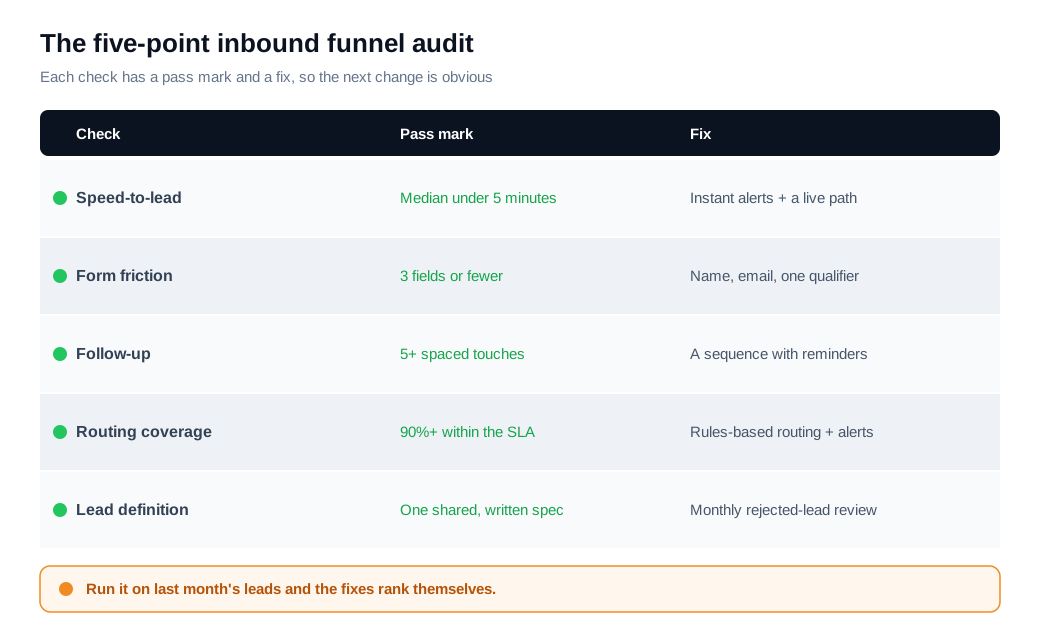
You audit these mistakes by measuring five things most teams do not track: median and 90th-percentile speed-to-lead, form and first-call friction, follow-up touches per lead, routing coverage, and whether sales and marketing share one lead definition. Each has a clear pass mark and a clear fix, which turns a vague "we should convert better" into a short list of specific changes.
Work through them in order.
Speed-to-lead. Measure the median and the 90th percentile rather than the average alone, because a few fast replies hide a slow tail. Pass mark: a median under five minutes for high-intent leads. Fix: instant alerts, a live path on your top pages, and an on-call rotation so no hand-raise waits in an inbox.
Form and call friction. Count the required fields on your highest-intent forms and the qualifying questions a rep asks before offering any value. Pass mark: three or fewer fields on a high-intent form. Fix: cut to name, email, and one qualifier, and gather the rest live.
Follow-up. Count the touches per unconverted lead over a month. Pass mark: at least five spaced touches before a lead is marked dead. Fix: a defined sequence with automated reminders.
Routing coverage. Check what share of qualified leads reach a named, available owner within your service-level agreement. Fix: rules-based routing plus notifications instead of a shared queue nobody owns.
Lead definition. Confirm that sales and marketing agree in writing on what a qualified lead is, with a feedback loop for rejected leads. Fix: one shared definition and a monthly review of what sales sent back.
Run the audit on last month's leads and the fixes usually rank themselves. A team that finds a 30-hour median response, a seven-field form, and an average of 1.3 follow-ups per lead does not need a new CRM or more traffic. It needs a live path on two pages, a shorter form, and a five-touch sequence, three changes that each attack a mistake the data just exposed. The point of the audit is to make the next fix obvious.
Key takeaways
- Most inbound sales mistakes are handling failures, not demand problems, so the biggest gains sit in how you treat leads that already raised a hand, not in more traffic.
- Slow response time is the costliest mistake, with a five-minute reply making qualification roughly 21 times more likely, while the industry average response time sits near 42 hours.
- Over-qualifying trades volume for a marginally cleaner list, so ask the two or three questions you need to route and earn the rest in conversation instead of gating first contact behind a long form.
- Weak follow-up abandons deals right before they convert, since most sales need five or more touches yet 44% of reps stop after one, so run a spaced sequence with automated reminders.
- Plain contact forms bottleneck your hottest buyers, so add a live chat or one-click video path on high-intent pages to answer while intent is still warm.
- Audit five things and the fixes rank themselves: speed-to-lead, form and call friction, follow-up touches, routing coverage, and a shared lead definition.
TAGS

Written by
Daniel SemeckyCo-founder & CEO
Daniel is the co-founder and CEO of Glimpze. He spends his days talking to revenue teams about how to catch high-intent visitors before they bounce, and writes about inbound sales, lead conversion, and building a motion where marketing and sales actually share a number.


