On this page
TL;DR
- Inbound has shifted from educating buyers to capturing demand that already exists. Today's buyers self-educate, prefer to buy rep-free, and form opinions before they ever talk to you — yet still want a human at the moment they decide.
- Organize around buyer intent, not your internal process. You only get a sliver of the buying journey, and not on your schedule, so be genuinely useful in the few minutes the buyer grants you.
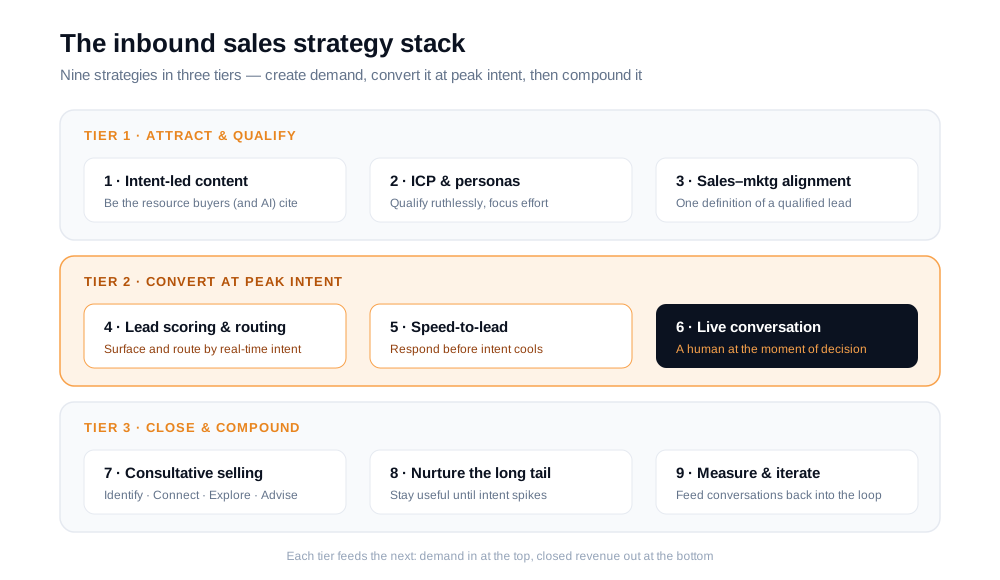
- The nine strategies stack in three tiers: attract and qualify (intent-led content, sharp ICP, sales-marketing alignment), convert at peak intent (lead scoring and routing, speed-to-lead, live conversation), and close and compound (consultative selling, nurture the long tail, measure and iterate).
- Speed-to-lead is the cheapest lever most teams ignore. Responding in minutes rather than hours often returns more than any other single change.
- Add a live, synchronous path on your highest-intent pages so hot buyers can talk to a human while they're still deciding, instead of waiting in an email queue.
Most inbound sales advice is quietly out of date. It still pictures a buyer who arrives a little confused, waits patiently in your nurture sequence, and lets a rep walk them gently through awareness, consideration, and decision.
That buyer is mostly gone. Today's buyer has already read your docs, watched a teardown on YouTube, asked an AI assistant to compare you to two competitors, and decided what they think before your team even knows they exist.
That shift doesn't make inbound sales less important. It makes it harder to do well — and far more valuable when you get it right. Inbound is no longer about educating strangers from scratch; it's about capturing demand that already exists and being genuinely useful at the handful of moments a buyer actually wants a human.
This guide lays out what inbound sales is in 2026, why the old playbook breaks, and nine concrete strategies for building a motion that matches how people buy now.
What is inbound sales?
Inbound sales is the motion where the buyer comes to you. Someone has a problem, goes looking for a solution, finds your content or your product, and raises their hand — by reading a comparison page, starting a free trial, requesting a demo, or striking up a chat.
The sales team's job is to meet that intent quickly and help the buyer make a confident decision, rather than to manufacture interest in someone who wasn't looking.
That last part is what separates it from outbound. With outbound, you pick the accounts and start the conversation cold; with inbound, the buyer starts it, so intent is already present and your job is mostly to not get in the way. (If you're weighing which motion to build first, we cover that trade-off in depth in inbound vs outbound sales.)
Because inbound leads arrive warmer and more self-qualified, they tend to convert at materially higher rates — often cited in the 5–10% range against low single digits for cold outbound — and cost less to source.
The fuel for inbound is everything that makes you discoverable and credible: SEO and content, word of mouth, a free tier, an active community, and the conversion surfaces on your own site. The strategies below are how you turn that raw discoverability into closed revenue.
Why the old inbound playbook breaks in 2026
Before the tactics, it's worth being honest about what changed, because it reframes every strategy that follows.
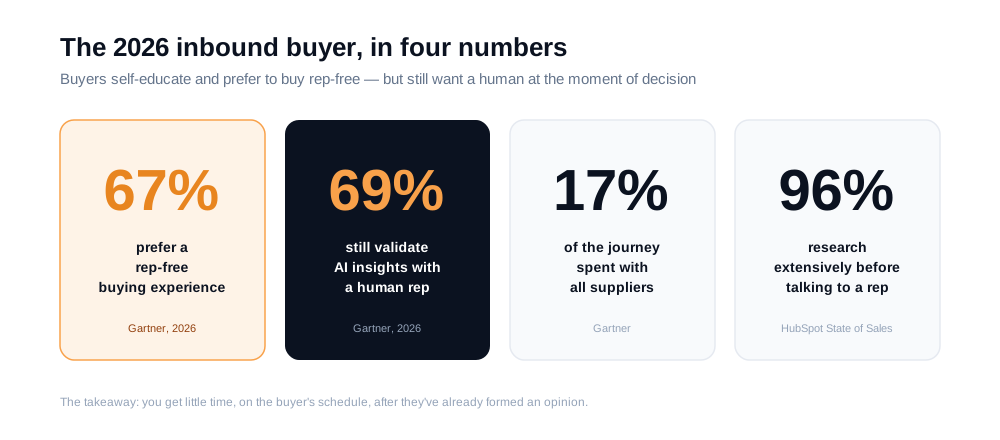
The headline finding from Gartner's 2026 research is a paradox. On one hand, 67% of B2B buyers now prefer a rep-free buying experience, and a similar share want to self-serve as far into the journey as possible.
On the other, 69% of buyers still turn to a sales rep to validate AI-generated insights before they commit — because they're not sure they can trust what an AI told them, and they want a human to confirm they're not about to make an expensive mistake.
Layer on two long-standing realities. By Gartner's widely cited buying-journey research, buyers spend only about 17% of the entire purchase journey meeting with potential suppliers — split across every vendor they're evaluating — and 96% of prospects research extensively before they ever talk to a rep.
Put together, the message is clear. You don't get much time with the buyer, you don't get it on your schedule, and by the time you get it, they've already formed an opinion. The winning inbound motion isn't the one with the most touchpoints — it's the one that is most useful in the few minutes the buyer actually grants you.
That single idea drives everything below.
9 inbound sales strategies for 2026
Think of these as a stack rather than a menu. The top layers create and qualify demand; the middle layers convert it at the moment of intent; the bottom layers turn one good conversation into a closed deal and a repeatable system.
1. Build content around buyer intent, not keyword volume
Inbound starts with being findable when someone has a problem you solve. But the teams that win in 2026 don't chase the highest-volume keywords — they map content to specific buyer intent.
A problem-aware buyer searching "why is our lead response so slow" needs a different page than a solution-aware buyer searching "live chat vs scheduling tool for demos."
Build a cluster: one comprehensive pillar page on the core topic, surrounded by focused posts that answer the precise questions buyers ask at each stage.
Optimize for the questions, not just the phrases — AI assistants and search engines increasingly reward content that answers a real query completely. The goal is to be the resource a buyer (or their AI) cites when forming an opinion, because that opinion is being formed with or without you.
2. Define your ICP and personas — then qualify ruthlessly
Inbound generates noise as well as signal. The more discoverable you are, the more unqualified hand-raisers you attract, and a rep who treats every demo request identically will burn the day on tire-kickers.
A sharp ideal customer profile (ICP) and a small set of buyer personas let you concentrate effort where it converts. Document, for each persona:
- The trigger that sends them looking.
- The goal they're chasing.
- The objection they'll raise.
- The budget reality they live in.
This isn't a marketing exercise that gets filed away — it's the qualification logic your reps use in real time to decide who gets a fast, high-touch response and who gets a lighter, self-serve path.
3. Align sales and marketing on one definition of a qualified lead
Inbound only works when the team generating demand and the team closing it agree on what "ready" means. Yet only about 30% of sales professionals say their sales and marketing teams are closely aligned — which is why so many inbound leads get fumbled at the handoff, with marketing complaining reps ignore leads and reps complaining the leads are junk.
Fix the definition first. Sales and marketing should share one written, agreed definition of a qualified lead, one set of stages, and one service-level agreement for how fast each lead type gets worked.
As one marketing leader put it bluntly, "inbound only works when marketing and sales share the exact definition of a 'qualified lead.' Start there." Everything downstream — routing, scoring, follow-up — depends on that shared language.
4. Score and route leads by real-time intent
Not every raised hand deserves the same response, and the signal that matters most is intent. A visitor on your pricing page, a comparison page, or in an active trial is telling you something a blog reader isn't.
Lead scoring that weights behavioral and contextual signals — pages viewed, trial actions, company fit — lets you surface the sales-ready minority automatically instead of asking reps to guess.
Then route fast and route for availability. A perfectly assigned lead that sits because its owner is in a meeting is a lost lead. For high-intent, real-time moments, send the lead to whoever is qualified and available now, and reconcile formal ownership afterward. Speed beats tidiness when intent is perishable.
5. Win on speed-to-lead
Of every variable in inbound conversion, response time is the most controllable and the most undervalued — and most teams are far slower than they think.
A 2026 benchmark of 939 B2B SaaS companies found the average lead response time was a staggering 47 hours, with only 23% of teams answering inside five minutes and 42% taking longer than a full day.
Yet that same study found leads contacted in under five minutes closed at 32% — roughly 2.6 times the rate of leads answered after 24 hours. Treat any single vendor benchmark as directional, but the direction here is unmistakable.
That distance between how fast buyers expect a reply and how fast they actually get one is the cheapest growth lever most teams have. Buyer intent is perishable — the prospect who fills out your form has a tab open and a problem in mind right now, and an hour later they're comparing you to two competitors.
We made the full case for treating responsiveness as a structural advantage in speed-to-lead is a moat, not a tactic; the short version is that being first to a hot buyer is worth more than almost any feature on your roadmap.
6. Meet high-intent buyers with a live conversation
Speed only matters if there's somewhere fast for the buyer to land. The highest-velocity inbound teams are collapsing the gap between intent and conversation by letting high-intent visitors talk to a human on the page, while they're still browsing — instead of routing a form fill into a multi-day email sequence.
This is also where the 2026 paradox resolves itself. Buyers want to self-serve right up until the moment they need a human to validate what they've concluded — and that moment usually happens on a high-intent page, mid-research, when a single answered question decides whether you make the shortlist.
Live chat that escalates to a call, or a one-click video conversation with a rep, meets them exactly there. It's a pattern that consistently lifts conversion: businesses adding live chat commonly see around a 20% increase in conversions, with chat engagers roughly 2.8x more likely to convert than visitors who don't engage.
This is the gap Glimpze was built to close: a buyer reading your pricing page can start a live video or chat conversation with a rep in seconds, right on the page, instead of dropping a form into a multi-day email sequence.
Whatever tool you use to do it, the principle is what matters — keep a live path on your highest-intent surfaces only, so it stays a signal rather than noise, and you meet the rep-free majority at the one moment they actually want a human.
7. Sell consultatively through the buyer's journey
When you do get the conversation, how you run it matters. The durable inbound framework maps the buyer's three phases — awareness, consideration, decision — to four selling actions: identify, connect, explore, and advise.
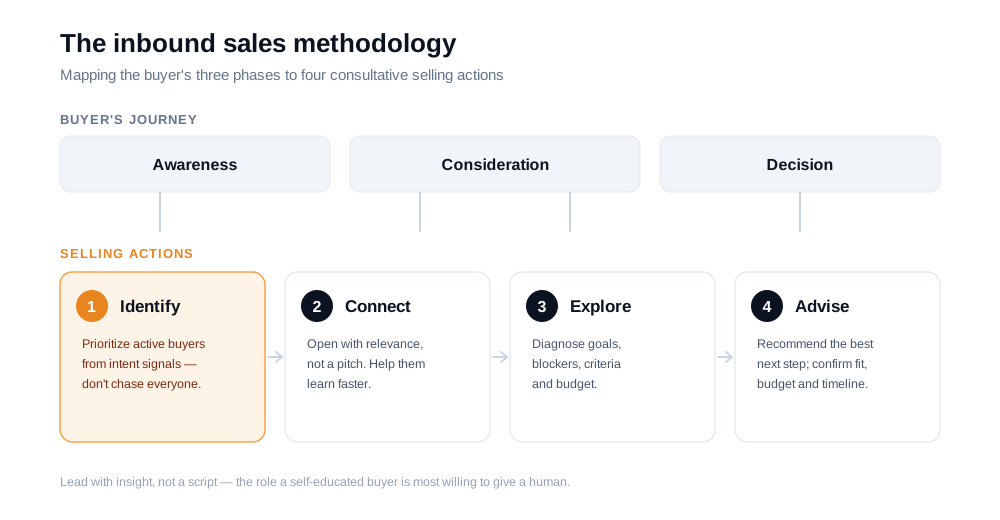
- In identify, you prioritize active buyers using intent signals rather than chasing everyone.
- In connect, you open with relevance — reference what they engaged with and offer a next step that helps them learn faster, rather than pushing a demo on someone fresh out of the awareness phase.
- In explore, you diagnose: ask about goals, blockers, decision criteria, and budget, and listen for the gap between where they are and where they want to be.
- In advise, you recommend the best next step, confirm budget, authority, and timeline, and make a specific case for fit.
Lead with insight, not a script — opening with a relevant, data-backed observation positions the rep as an advisor, which is precisely the role a self-educated buyer is willing to give a human.
8. Nurture the long tail without nagging
Most inbound leads aren't ready to buy the day they arrive, and that's fine — provided you nurture them with genuine usefulness rather than a drip of "just checking in" emails.
The buyers who self-educate respond to content that helps them make a better decision: a relevant case study, a comparison they were about to go looking for, an answer to the objection they didn't voice.
Let buyers move at their own pace and give them autonomy. Interactive demos, self-guided tours, and a sandbox filter out the unqualified and let the genuinely interested raise their hand again when they're ready.
The aim of nurture is to stay the most helpful option in the buyer's orbit so that when intent spikes, you're the one they return to.
9. Measure what matters and iterate
Inbound runs on measurable signals, which makes it improvable in a way outbound rarely is. But measure the things that reflect buyer experience, not just closed deals:
- Your true speed-to-lead (median and 90th percentile).
- Lead-to-opportunity conversion by source and intent level.
- The conversion rate of your high-intent surfaces.
- The share of leads that get a real human touch versus an autoresponder.
Then close the loop. Feed what reps learn in conversations back to marketing so the content, the personas, and the qualification rules sharpen over time. Inbound isn't a campaign you launch; it's a system that compounds — every conversation should make the next one easier to win.
How to build your inbound sales strategy
If you're starting from a blank page, sequence the work roughly in this order:
- Audit your current motion. Pull the timestamp of every inbound lead and the first genuine human touch, and find where prospects drop off. Most teams are horrified by their real speed-to-lead, and that single audit usually justifies the whole project.
- Agree the definition of a qualified lead with marketing and write it down.
- Instrument intent. Identify your high-intent pages and put scoring and fast routing on them specifically.
- Add a live, synchronous path on those surfaces so hot buyers never sit in a queue.
- Train reps to sell consultatively through identify-connect-explore-advise.
- Build the measurement and feedback loop so the system improves itself.
You don't need to do all six at once — fixing response time on your highest-intent pages alone tends to return more than any other single move.
Common inbound sales mistakes to avoid
The failures are predictable:
- Treating every lead identically, which drowns high-intent buyers in the same queue as tire-kickers.
- Letting warm leads sit in a form for hours because routing is tidy but slow.
- Confusing activity with progress, sending more nurture emails to people who needed one fast conversation.
- Pitching features to a buyer who has already self-educated and just needs a specific question answered.
- Running sales and marketing as separate kingdoms with different definitions of success, so leads die at the handoff.
Nearly all of these trace back to the same root cause: optimizing for the seller's process instead of the buyer's intent.
Inbound sales strategies: FAQs
What are the main inbound sales strategies?
The core strategies are: create intent-led content that makes you discoverable, define a sharp ICP and qualify against it, align sales and marketing on one definition of a qualified lead, score and route leads by real-time intent, respond fast (speed-to-lead), offer a live conversation at peak intent, sell consultatively through the buyer's journey, nurture the rest with genuine usefulness, and measure and iterate.
The unifying principle is to organize around the buyer's intent rather than your internal process.
What is the difference between inbound sales and inbound marketing?
Inbound marketing creates the demand and discoverability — the content, SEO, and brand that bring prospects to you. Inbound sales is what happens once a prospect raises their hand: qualifying, engaging, and helping them buy.
They're two halves of one motion, which is exactly why aligning them on a shared definition of a qualified lead matters so much.
How is inbound sales different from outbound sales?
With inbound, the buyer starts the conversation, so intent already exists and your job is to be useful fast. With outbound, you start it cold, so you have to manufacture relevance first.
Inbound leads are generally warmer, cheaper to source, and convert at higher rates; outbound gives you more control and faster pipeline. Most mature teams run both — see our full breakdown of inbound vs outbound sales.
What is the inbound sales methodology?
It maps the buyer's three journey phases — awareness, consideration, decision — to four selling actions: identify active buyers from intent signals, connect with relevance, explore their goals and constraints, and advise on the best next step.
It's a consultative framework designed to help buyers decide rather than to push a product.
Do inbound sales strategies work for small teams?
Yes, and arguably better, because inbound rewards focus over headcount. A small team that responds fast to high-intent leads and runs sharp, consultative conversations can out-convert a larger team that treats every lead the same.
Start with speed-to-lead on your highest-intent pages; it's the highest-ROI move available to a lean team.
Key takeaways
- Organize around buyer intent, not your process. Buyers self-educate, prefer rep-free buying, and grant you very little time — the winning motion is the most useful one in the few minutes you get.
- Resolve the 2026 paradox at the moment of decision. Buyers want to self-serve but still need a human to validate before they commit. Be available, live, on your highest-intent pages.
- Speed-to-lead is the cheapest lever you have. Qualifying odds fall roughly 10x after five minutes, yet most teams respond in hours. Fixing it usually returns more than any other single change.
- Qualify ruthlessly and route by intent. Concentrate fast, high-touch responses on pricing, demo, comparison, and trial surfaces; give low-intent traffic a lighter, self-serve path.
- Inbound is a system, not a campaign. Align sales and marketing on one definition of a qualified lead, sell consultatively, and feed every conversation back into the loop so it compounds.
TAGS

Written by
Daniel SemeckyCo-founder & CEO
Daniel is the co-founder and CEO of Glimpze. He spends his days talking to revenue teams about how to catch high-intent visitors before they bounce, and writes about inbound sales, lead conversion, and building a motion where marketing and sales actually share a number.


