
AI for Sales
What Is Intent Detection in Conversational AI
 Nilas MylerOct 17, 2026 · 9 min
Topic
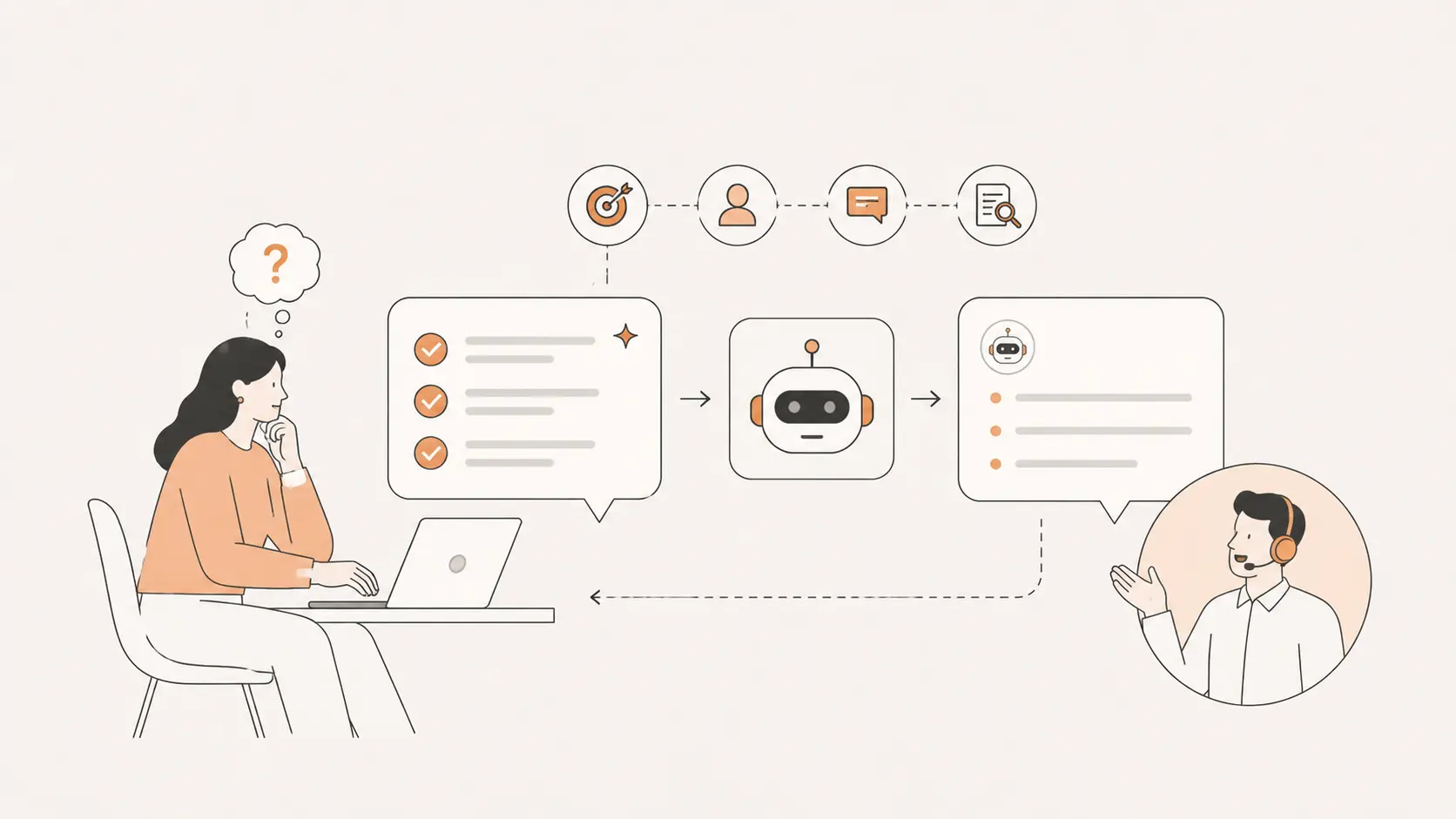
AI for sales and support uses conversational AI to answer questions, qualify leads, and handle routine requests instantly, at any hour, then hands the high-value moments to a human. Used well, it adds speed and coverage without replacing the judgment a person brings.
Modern AI assistants can hold a natural conversation, pull answers from a knowledge base, qualify a lead, and book a meeting, all in seconds and around the clock. That makes them powerful for the first touch and for the long tail of repetitive questions that would otherwise sit in a queue.
The limits matter as much as the capabilities. AI can be confidently wrong, struggles with ambiguity and high-stakes decisions, and frustrates people when it blocks the path to a human. The winning pattern is a clear handoff: let AI handle speed and volume, and route to a person the moment the conversation needs judgment, empathy, or authority.
Nilas MylerOct 17, 2026 · 9 min Nilas MylerOct 11, 2026 · 9 min
 Nilas MylerOct 4, 2026 · 10 min
 Nilas MylerSep 28, 2026 · 10 min
 Nilas MylerSep 20, 2026 · 9 min
 Nilas MylerSep 14, 2026 · 9 min
 Nilas MylerSep 7, 2026 · 9 min
 Nilas MylerAug 31, 2026 · 10 min
 Nilas MylerAug 24, 2026 · 8 min
 Nilas MylerAug 17, 2026 · 9 min
Not fully. AI is excellent at instant responses, qualification, and handling volume, but it lacks the judgment, empathy, and relationship-building that close complex deals. The realistic model is AI handling the first touch and the routine, with humans taking the conversations that need a person.
When the visitor is high-intent or frustrated, when the question is ambiguous or high-stakes, or when the AI is not confident in its answer. A good handoff is fast and keeps the full context, so the person picks up mid-conversation without making the customer repeat themselves.
It is reliable for well-defined, common questions when grounded in an accurate knowledge base. It becomes risky when asked to handle edge cases, make judgment calls, or answer beyond its sources, where it can produce confident but wrong answers. Guardrails and a human fallback are essential.